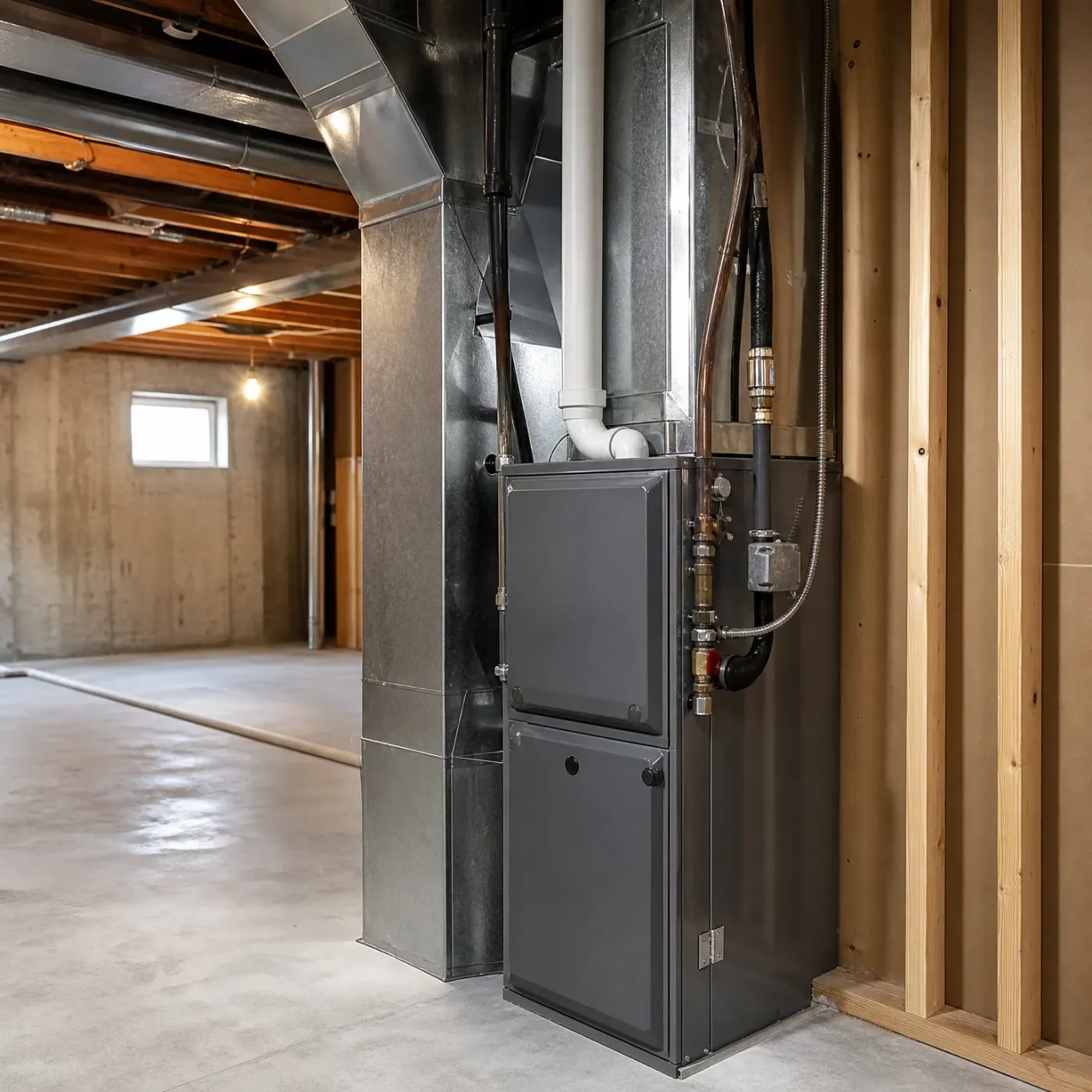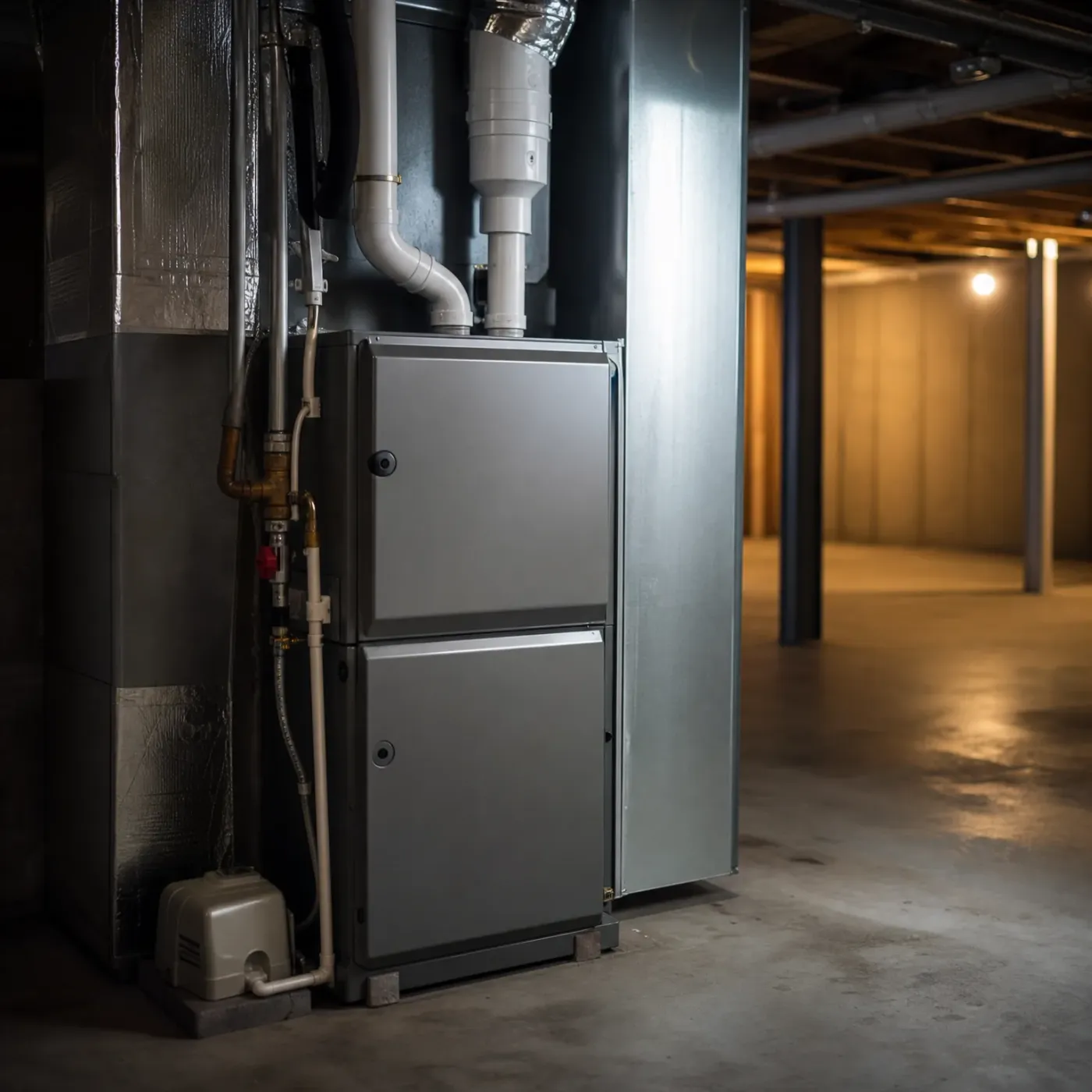





A gray high-efficiency furnace with PVC venting, copper and plastic piping, and a condensate pump sits beside sheet-metal ductwork in a concrete-floored basement.

Get matched with a furnace pro in King County

Furnace pilot light won't stay lit in Seattle, WA

A pilot that won't stay lit usually comes down to the thermocouple, a draft in the furnace closet, or dirt in the gas valve. Most homes around Seattle heat with electricity, so a furnace like this is doing real work on cold nights. Below, what to check first and when it's time to hand it off to a contractor who can take a look.

Find a furnace pro

A pilot light that won't stay lit is almost always the thermocouple. That's the small metal rod sitting in the pilot flame, and its job is to sense the flame and tell the gas valve to stay open. Once it wears out or sits slightly out of position, it cools fast after you let go of the gas knob, and the valve shuts the gas back off. Dirt or soot on the tip can cause the same thing, since it keeps the rod from reading the flame correctly. A draft in the furnace closet can also blow the pilot out on its own, which matters more on a cold night when that furnace is running long hours to keep up. Less often, the gas valve itself is failing. None of these are something to leave alone through the winter. A furnace that won't hold a pilot won't give you heat when the temperature drops, and a gas valve problem is not one to troubleshoot yourself.

Why does a pilot light struggle to stay lit here

  • Winter nights average 32°F

    Winter nights average 32°F, so a pilot that won't hold means the furnace can't back up the heat when it's needed most.

  • Heat runs September through June

    Heat runs September through June here, nearly ten months, which means a lot of hours for a worn thermocouple to fail.

  • 54.5% of homes heat with electricity

    54.5% of homes in King County heat with electricity, so the gas furnaces still running often depend on an aging pilot assembly.

NOAA nClimDiv 1991-2020 · ACS 2020-2024

Call it in yourself

If the pilot has gone out more than once or twice, you can shut off the gas, hold the pilot button down longer on the next relight, and watch whether the flame holds once you let go. A thermocouple that's just out of position sometimes reseats on its own. This takes patience and a few tries, and it only tells you something if you're willing to sit by the furnace closet and test it twice or three times over a few days. If the flame still drops every time, you've ruled out the easy fix and know it's the part itself or something further into the gas valve.

Have someone look at it

A gas furnace that won't hold a pilot isn't something to leave half fixed going into a cold stretch, and most people don't want to keep relighting it every few hours. Getting matched with a contractor means you skip calling around to find one who works on older gas furnaces, explaining the same problem twice to different companies, and sorting through quotes that don't line up. You describe what's happening once, and a contractor who handles this in the Seattle area follows up with you directly. They bring a meter to test the thermocouple's actual output, something you can't do from the kitchen table.

A woman in a gray turtleneck sweater stands by a window looking outside at snowy ground, with a dimly lit living room containing a sofa, shelves, lamp and a lit candle behind her.
A woman in a cream cable-knit turtleneck sweater stands in a warmly lit living room with a fireplace and shelves behind her, looking out a window toward snow-covered trees and a railed deck.
A woman in a cream knit turtleneck sweater stands by a window looking out at snow, with a lit fireplace, sofa and lamp in the room behind her.
A woman in a gray knit sweater sits by a window looking out at falling snow, with a dimly lit living room containing a sectional sofa, pillows, a lamp and houseplants behind her.

How the thermocouple actually fails

  • The thermocouple sits directly in the pilot flame and generates a small voltage that holds the gas valve open.
  • If the flame doesn't fully wrap the thermocouple tip, it reads as too weak and the valve shuts the gas off.
  • A thermocouple can test fine with a multimeter and still fail once it heats up under normal operation.
  • Soot or a bent bracket can push the thermocouple out of the flame without the pilot assembly looking obviously wrong.
  • The pilot orifice can partly clog with dirt, which starves the flame and keeps it too small to satisfy the thermocouple.
  • Some furnaces use a flame sensor and igniter instead of a standing pilot, and that failure points to a different part entirely.

The thermocouple is a simple part. It sits in the pilot flame, and the heat of that flame generates a small voltage, just enough to hold a switch open inside the gas valve. No voltage, no open valve, no gas to the burners. That's the whole job. What fails is usually the fit, not the part itself. If the flame has pulled back, or the thermocouple tip has drifted to the side, the flame only touches part of it instead of wrapping around it fully. The voltage it generates drops, the valve reads that as no flame at all, and it shuts the gas off even though the pilot is lit. This is why a thermocouple can come out, test fine cold on a multimeter, and still fail once the furnace is running and everything's heated through. It's also why soot buildup or a bent mounting bracket can cause the exact same shutoff without anything looking broken. The orifice that feeds the pilot flame matters too. If it's partly clogged with dirt, the flame burns smaller than it should, and a small flame can't heat the thermocouple enough to hold the valve open, even with the thermocouple sitting exactly where it belongs. Newer furnaces skip the standing pilot and thermocouple altogether, using a flame sensor and an electronic igniter instead, which is a different part and a different fix if that's what's installed.

Winter nights average 32°F

At 32°F overnight, your furnace is running most of the night to keep up. If the pilot drops out around 2 or 3 a.m., the house has already been losing heat for a while before anyone notices.

NOAA nClimDiv 1991-2020

A gray high-efficiency furnace stands on a concrete basement floor beside galvanized sheet-metal ductwork, white PVC vent pipes, copper and black piping, and unfinished wood stud framing.

Pilot lit and steady

A flame here burns steady and blue, fully wrapped around the thermocouple tip. The gas valve stays open, the burners fire when the thermostat calls, and the furnace carries the house through a cold night without you thinking about it.


A gray furnace with two access panels stands on a concrete basement floor beside sheet-metal ductwork, with pipes, flexible conduit and an electrical box on the concrete wall to the left.

Pilot won't hold

The flame catches, then drops out once you let go of the button, or sometime after. Gas pipes and panels look the same as always, but the furnace behind them is down, and on a 32°F night that means no backup for the cold.

A beige gas furnace with a metal flue pipe stands in a basement against concrete block walls, beside sheet-metal ductwork, copper and white plastic pipes, and a water heater at right.
Before you get your furnace repair
A gray high-efficiency furnace with white PVC vent pipes stands beside sheet-metal ductwork and a water heater in an unfinished basement with concrete walls and wood framing.
After you get your furnace repair
A gray furnace with copper and flexible piping stands against a wood-framed wall in an unfinished basement, connected to galvanized sheet-metal ductwork and PVC venting, with a concrete floor and exposed joists.

Find a furnace repair pro in King County

Explain the furnace problem once instead of to every shop in King County.

Get matched with a pro who works on furnaces in King County.

Get a local pro

There's no charge for the request.

Thermocouple or Something Else

Thermocouple issue

  • The flame holds while you press the pilot button, then dies within a minute of letting go.
  • Testing it takes the furnace apart at the pilot assembly, so most homeowners can't confirm it alone.
  • Replacement parts cost little, but the furnace stays unreliable until the part is swapped.
  • A bent or misaligned thermocouple can look fine and still fail the same way a worn one does.
  • Once replaced, the pilot should hold on the first try, with no more relighting at 2 or 3 a.m.

Draft or dirty valve

  • The flame blows sideways or flickers even when nothing in the closet seems to be moving air.
  • A door left open, a vent nearby, or the furnace closet itself can be pulling enough air to pull the flame off the thermocouple.
  • Dirt or soot in the gas valve or pilot orifice can starve the flame so it never fully wraps the tip.
  • This kind of problem can come and go, holding fine some nights and failing on others for no clear reason.
  • Finding it means checking the closet, the orifice and the valve in person, not just the thermocouple.
  1. Gas flows to the pilot and you hold the button down to light it

  2. Flame wraps around the thermocouple tip and heats the metal rod

  3. Thermocouple generates a small voltage that signals the gas valve

  4. Gas valve reads that signal and stays open once you release the button

Can I just replace the thermocouple myself?

You've seen it holds while you press the button and dies once you let go, so you're fairly sure it's the thermocouple. The part itself isn't expensive, and it looks simple enough: unscrew the old one, thread in the new one. Before you buy one at the hardware store, it's worth knowing what the job actually involves inside the furnace and why a lot of homeowners stop partway through.

You can, but the fit has to be exact

Thermocouples aren't universal. The length, the thread, and how it mounts into the pilot bracket all vary by furnace, and the wrong one won't seat where the flame can fully wrap the tip. That's the part that actually matters: if it sits even slightly off, the flame reads as weak again and the pilot drops out the same way it did before, even with a brand new part. Getting to it also means working inside the pilot assembly next to a live gas line, which is where most homeowners stop and call someone in. If the thermocouple turns out not to be the problem, you've opened up the furnace for nothing and you're back to a pilot that still won't hold.

A beige high-efficiency furnace in an unfinished basement, with white PVC vent pipes, a yellow gas line, metal ductwork, and exposed wood framing on a concrete floor.

Furnace running the way it should

This is a furnace doing its job. The ductwork and exhaust pipes are tight, the gas line runs clean into the valve, and the pilot or ignition system holds without a second thought. On a cold night it just keeps firing when the thermostat calls.

An older beige furnace with two louvered vent panels stands on a concrete basement floor, connected to galvanized ductwork and a metal flue pipe, with gas piping and flexible conduit on the wall behind.

Furnace losing the fight

This is the furnace behind the question. Older iron gas pipe, a flue pipe doing the work of venting exhaust up through the duct above it, and a pilot assembly that's had years to drift out of position or collect dirt. This is where the flame stops holding.

A woman in a gray sweater and jeans stands in an open wood front door of a white stucco house while a man in a dark jacket walks toward her on the entry path.

A pilot that keeps going out has a cause, and it's findable

Most of the time it's the thermocouple, worn or sitting just off the flame. Sometimes it's a draft in the closet pulling the pilot sideways, or dirt in the gas valve keeping it from reading the flame right. Whichever it is, it's a small part doing a specific job, and once it's fixed the pilot holds the way it's supposed to. You don't have to figure out which one on your own.

On a night near 32°F, with the furnace carrying most of the house's heat, this isn't something to leave for later. A contractor who works on furnaces like yours around Seattle can look at the thermocouple, the draft, and the valve, tell you which one it is, and get the pilot holding again. You won't need to call around or describe the problem twice. Share what you're seeing and you'll be matched with someone who takes it from there.

A large weathered ceramic vase and a shallow wooden bowl sit on a rustic wooden table beside a window with linen curtains, with a blurred sofa with cushions and a hanging fabric panel in the background.
A bearded man in a plaid flannel shirt sits indoors looking out a window at snow-covered trees, with a steaming mug on the sill and wooden kitchen shelves behind him.
A bearded man in a navy T-shirt sits on a light-colored couch indoors, smiling while looking down at a laptop screen in the foreground, with a framed picture and a potted plant blurred behind him.

Furnace Repair

The right pro for this job

Skip calling shops to ask who repairs furnaces in King County.

A black smartphone standing upright against a plain light gray background, its screen filled with solid green.
RepairFurnace or heatingKing County, WA
Step 1 of 2

What ZIP code is the job in?