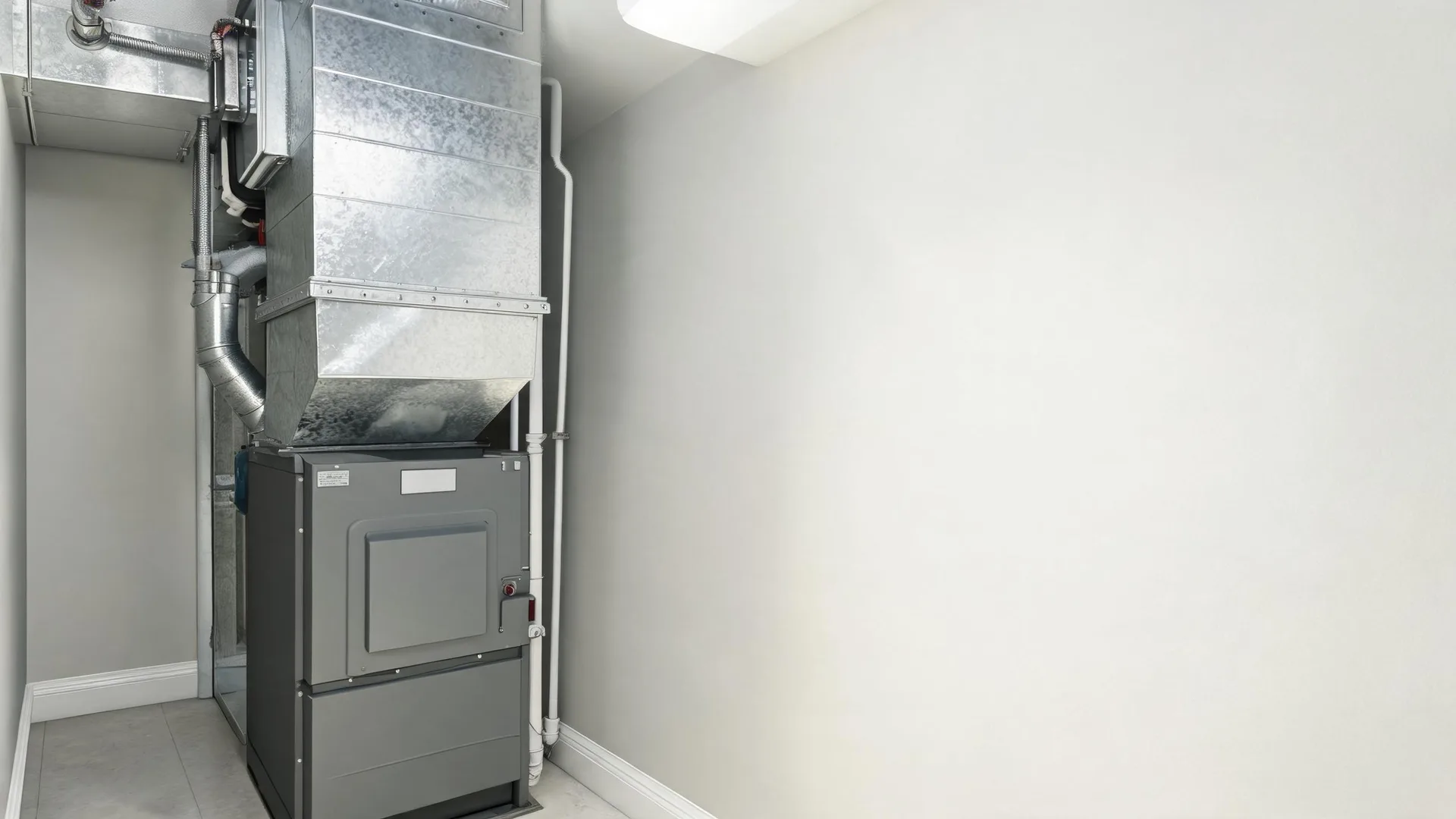
A gas furnace and sheet-metal air handler unit installed in an unfinished concrete basement.

Furnace Installation in Cathlamet, WA

Tell us about the job

Takes about a minute. No obligation.

New system or replacementFurnace or heatingWahkiakum County, WA
Step 1 of 2

What ZIP code is the job in?

The size has to match the house

A furnace that's too big cycles on and off instead of running steady, which wears out parts faster and leaves rooms uneven. One that's too small runs constantly and still can't keep up on the coldest days. Getting the size right means someone measures the house and checks the ductwork, not just swapping in the same tonnage as before.


The ductwork decides what else gets touched

If the existing ducts are undersized, leaky, or routed poorly, a new furnace won't fix that on its own. Sealing joints, adding a return, or resizing a trunk line are separate jobs from the furnace itself, but they often need to happen for the new system to actually heat the way it's rated to.

10 months
September through June, your furnace is on duty
35°F
the average winter night it heats against
80% AFUE
the federal minimum any new unit must meet
Isometric cutaway illustration of a house showing interior rooms with furniture, a furnace unit with a tall flue pipe outside, and ductwork running through the attic.
Your furnace works hardest from October through April.

NOAA nClimDiv, 1991–2020 normals

Half the homes in Wahkiakum County were built in 1978 or earlier.

A furnace sized to the house still fits fine here, whether the house is old or new.

June to September is a short break here, not a long one. Get the furnace in before heat season starts back up.

Heat runs September through June
Winter nights average 35°F
Climate zone 4C
Most homes here heat with electricity72.7% of homes in Wahkiakum County run on electric heat, so an electric furnace is the straightforward match.

Wahkiakum County falls in climate zone 4C, a marine zone that asks real work of both heating and cooling. Any gas furnace installed here has to clear 80.0 percent AFUE, the federal minimum for non-weatherized furnaces. That floor is set to rise to 95.0 percent for furnaces built a few years out, so the minimum itself is about to change. A furnace at today's minimum is still a legal install right now. One built above it costs less to run through the cold months this zone sees, and a federal tax credit is available for qualifying high-efficiency equipment.

A standard furnace, sized for your house, is enough

Ten months of heat a year and overnight lows averaging 35°F call for a furnace that's sized right, not one that's oversized or priced above what the job needs. A standard unit, properly matched to your house, handles this climate the same way it handles most places.

Find a contractor
A gray high-efficiency gas furnace installed in an unfinished basement, surrounded by gas lines, a condensate drain, and sheet-metal ductwork.

What to ask before you pick one

When you're comparing furnaces, ask about the heat exchanger first. It's the part that does the real work and the most expensive one to replace, so find out what the warranty covers and for how long. Ask whether the blower motor runs at a single speed or ramps up gradually, since a motor that ramps tends to wear more evenly than one that kicks on at full output every time. Ask who stocks parts for the brand locally. A furnace needs a filter change and a yearly check no matter who makes it, and a brand nobody nearby services turns a routine fix into a wait for a part to ship. Get the AFUE rating in writing, and ask the installer to walk through what size was calculated for the house, not just quoted from the unit that's leaving.

The old furnace gets disconnected and hauled out

Before the new furnace goes in, the gas line or electrical circuit feeding the old one gets capped or disconnected, and the unit itself gets removed from the plenum or ductwork it was tied into. The old thermostat usually comes out too if it isn't compatible with the new system. None of this is optional work tacked onto the job. It has to happen before the new furnace can be set in place and connected.

What's salvageable gets pulled before the rest is scrapped

The heat exchanger and blower wheel are usually too worn or corroded to have any resale value, but the sheet metal cabinet and copper line sets, where present, get stripped out for scrap. A furnace near the end of its life has typically already lost refrigerant or developed exchanger cracks, which is part of why it's being replaced rather than repaired. There's no decision to make here. The old unit doesn't go back into service once the new one is running.

AFUE is just a measure of how much of the fuel burned turns into heat in the house versus what goes out the flue. A furnace at the federal minimum wastes a meaningful share of every therm it burns. A high-efficiency furnace recovers more of that heat, usually by pulling a second heat exchanger into the design that pulls additional warmth from the exhaust before it vents out. That second exchanger is also why high-efficiency furnaces vent through PVC pipe instead of a metal flue, since the exhaust is cooled enough not to need metal venting. The rating on the label is tested under set conditions, so it tells you how the furnace performs against another furnace, not what your specific house will see once it's installed. Ask to see the AFUE number in writing and ask what size flue or venting the install requires, since that changes between a minimum-efficiency unit and a high-efficiency one.

Installation day starts with the old furnace coming out, then the new one gets set, connected and tested before anyone leaves. The gas line or electrical feed gets hooked up first, then the ductwork ties into the plenum, then the venting goes in. If the new furnace is high-efficiency, that venting is PVC pipe run to an outside wall, which usually means new holes drilled through siding or a rim joist, not just a reconnection to an existing flue. The thermostat gets wired next, and on a lot of installs that's new too, since an old thermostat doesn't always talk to the new control board. Once it's all connected, the furnace gets fired up and run through a full cycle while someone checks gas pressure, temperature rise and airflow against what the manufacturer specifies for that model. The last step is a carbon monoxide check at the furnace and anywhere exhaust could leak into the house, because that's not something you can skip and call the job done.