





An unfinished basement containing a metal furnace with ductwork, exposed wooden joists on the ceiling, cardboard boxes, a coiled cable, and a single hanging incandescent bulb.

Furnace Installation in Davenport, WA

Tell us about the job

Takes about a minute. No obligation.

New system or replacementFurnace or heatingLincoln County, WA
Step 1 of 2

What ZIP code is the job in?

Electricity in Washington ran $34.87 per million Btu in 2024. A furnace with a low AFUE rating wastes more of that in every hour it runs. The rating tells you how much of the fuel actually becomes heat in your house instead of going out the flue. Over a winter of steady use, a few points of AFUE is the difference between a furnace that earns its keep and one that just costs more to own.

10 months
September through June, your furnace is on duty
23°F
the average winter night it heats against
80% AFUE
the federal minimum any new unit must meet
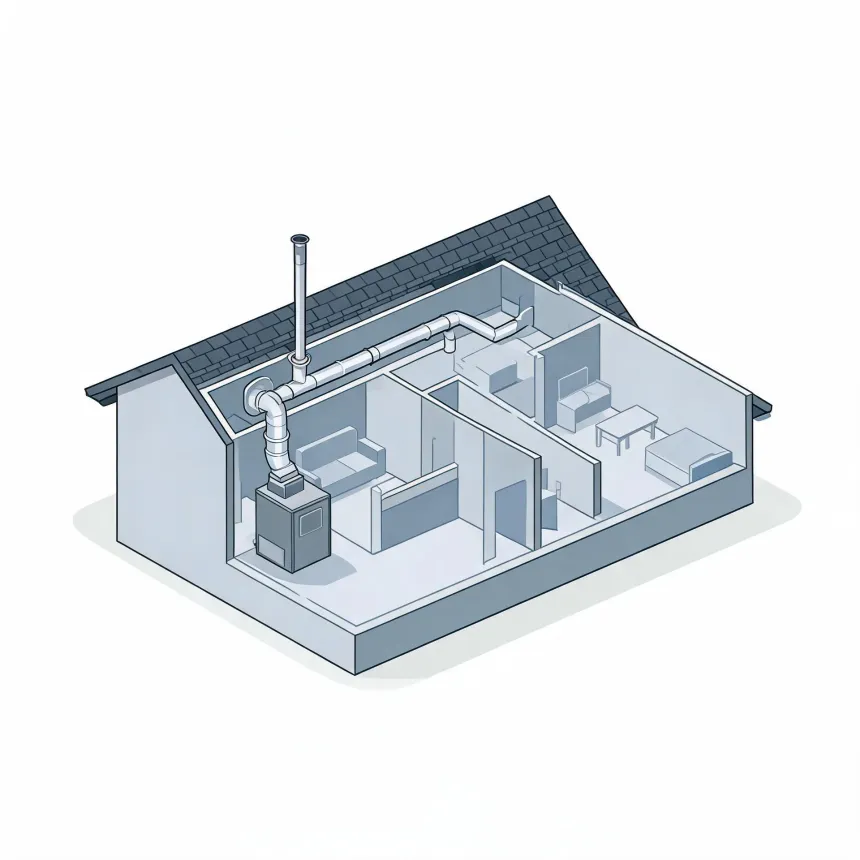
Isometric cutaway illustration of a single-story house showing interior rooms with furniture and a furnace connected to ductwork and a vertical flue pipe extending through the roof.
Your furnace works hardest from November through March.

NOAA nClimDiv, 1991–2020 normals

Furnaces in Lincoln County run from September through June, with overnight lows averaging 23°F in December, January and February.

A new furnace here carries most of the year's work, so getting the size right matters more than picking a model off a shelf.

Ten months of heat means almost no season to do this job in a hurry

Heat runs September through June
Climate zone 5B
Winter nights average 23°F
Winter storms hit this county hardWinter storms hit Lincoln County 209 times between 2015 and 2024.

Half the homes in Lincoln County were built in 1972 or earlier. A furnace going into a house that age is going into ductwork and a layout sized for whatever ran there before, not a blank slate. If your system came with the house, the ducts were likely sized for that furnace, not necessarily the one going in now. A contractor sizing the replacement has to work from the house as it stands, the duct runs, the windows, where the heat loss actually happens, rather than just matching the old unit's output. Get that sizing wrong and the furnace either short cycles or struggles to keep up, no matter how good its AFUE rating looks on paper.

Most homes here heat with electricity. Start the replacement with that.

Almost half the homes in Lincoln County heat with electricity, more than any other fuel here. A quarter run on utility gas. If your house already has a furnace, matching the fuel it uses is usually the straightforward path, and a contractor can size the new unit to the ducts and the house rather than guessing from scratch.

Find a contractor
A man in a cap, gray shirt and brown work pants, seen from behind, carries a canvas tool bag up steps toward a dark navy front door beside a potted shrub.
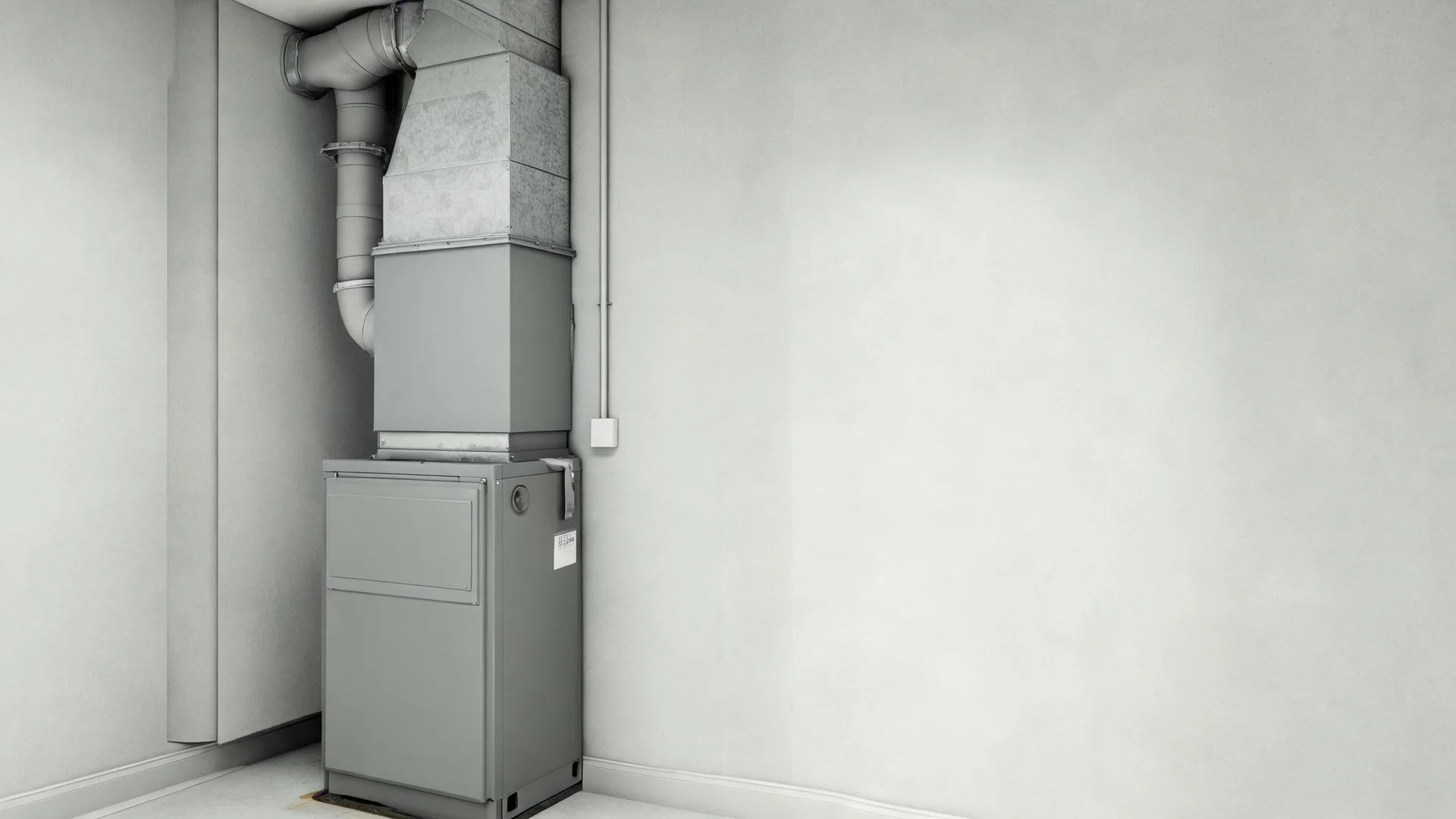
A gas furnace with attached ductwork, gas piping, and condensate lines installed in a concrete-block basement.

Ten months of runtime leaves no room for a bad guess

Ten months of runtime will find a bad guess fast. An oversized furnace cycles on and off and never settles in. An undersized one runs long on the coldest nights and still can't keep the house where you want it. A load calculation done on the actual house, the windows, the duct runs, where the heat loss happens, is what sizing should come from, not the square footage on a listing. Ask a contractor for that number and compare it between bids, not just the equipment they're quoting.

The old furnace comes out in pieces

A contractor disconnects the gas line or electrical circuit, cuts the furnace free from the supply and return plenum, and removes the cabinet in sections if it won't clear the doorway whole. The flue or vent pipe comes down too, since a new furnace usually vents differently than the one it replaces.
What's inside it doesn't go in the trash

The heat exchanger, blower motor and cabinet are steel and aluminum, and scrap yards take them. Older furnaces may have refrigerant lines or components that need to be handled separately rather than dumped whole. A contractor hauling out the old unit should already have a plan for where it goes, not just a truck bed to put it in.

What a furnace costs to install comes down to more than the box itself. A bigger cabinet means more sheet metal, a bigger blower, a bigger heat exchanger, and all of that costs more before a contractor even shows up. Ductwork is the other part of it. If the existing runs can carry the new furnace as is, the job is mostly a swap. If the return is undersized or a run needs to be added or resized to carry the right airflow, that's labor and material on top of the unit. Venting matters too. A furnace that vents differently than the one it replaces needs new pipe run to the outside, sometimes through a wall or roof that wasn't set up for it. The gas line or electrical circuit feeding it has to match what the new furnace draws, and if it doesn't, that gets upgraded as part of the job. None of that shows up on the price tag of the furnace itself, but it's where the bid actually comes from.

Installation day starts with the house going cold for a few hours. The old furnace has to come out before the new one goes in, so the gas or power stays off and the blower stays quiet until the new unit is set, connected and tested. A contractor will check the supply and return plenum fit the new cabinet, run new vent pipe if the furnace vents differently than the old one, and test the gas line or electrical circuit under load, not just at idle. Once it's running, the work isn't done. Airflow gets checked at the registers, the flue draft gets checked, and the furnace gets cycled a few times to make sure it fires, runs and shuts off the way it should before anyone calls it finished.