






A single-story dark wood house with a low moss-covered roof set among tall conifer trunks, viewed across a green lawn with ferns in the foreground.

Furnace Installation in Ellensburg, WA

Tell us about the job

Takes about a minute. No obligation.

New system or replacementFurnace or heatingKittitas County, WA
Step 1 of 2

What ZIP code is the job in?

Washington runs on electricity that costs $34.87 per million Btu, among the higher rates in the country. An electric furnace that wastes heat burns through that expensive power every time it cycles on. The difference between a furnace that converts most of what it draws into heat and one that doesn't shows up on every bill through an Ellensburg winter. Sizing and installing the right furnace for this house is what keeps that cost down year after year.

10 months
September through June, your furnace is on duty
23°F
the average winter night it heats against
80% AFUE
the federal minimum any new unit must meet
Isometric line illustration of a cutaway house showing interior rooms with furniture and a furnace with ducting and a flue pipe extending through the roof.
Your furnace works hardest from October through April.

NOAA nClimDiv, 1991–2020 normals

Electricity heats almost 6 in 10 homes in Kittitas County.

Most furnace swaps in Ellensburg replace one electric furnace with another.

Heat starts again in September, so get it done this summer

Heat runs September through June
Climate zone 5B
Winter nights average 23°F
Ten months of heat a yearFurnaces here run September through June, with overnight lows averaging 23°F in January.

Ask what size furnace each bid is based on, not just the price. A furnace too big for the house cycles on and off fast, so the air near the thermostat heats up while rooms farther away stay cold. One sized right runs longer, steadier stretches and spreads heat more evenly. Ask too what happens to the ductwork, since even a well-built furnace loses its advantage if the ducts feeding it are undersized or leaking. And ask how the installer plans to set the airflow for your home, because that number changes how hard the blower works and how long the heat exchanger lasts.

Get the sizing right before the bills start adding up

Electricity here runs $34.87 per million Btu, so a furnace that fits this house matters more than it would somewhere cheaper to heat. Get the sizing and the ductwork checked before the heat has to run again.

Find a contractor
A man in a dark long-sleeve shirt and brown work pants, seen from behind, carries a worn canvas tool bag as he steps up porch stairs toward a navy blue front door of a light gray clapboard house, with a potted shrub beside the entry.
A gray high-efficiency gas furnace installed in an unfinished basement, surrounded by gas lines, a condensate drain, and sheet-metal ductwork.

This furnace doesn't get an off season

Ten months of the year, this furnace is what stands between the house and 23 degrees outside. That is more run time than almost anywhere else in the country gets out of a heating system, and it means less room for a bad fit. A unit sized for a different house will short cycle through all of it, and the wear shows up early. Get the load calculation done before the bids come in, not after.

The rating measures conversion, not heat output

An efficiency rating tells you how much of the fuel or power a furnace draws gets turned into heat in the house, and how much goes out the flue or gets lost in the cabinet. It says nothing about how big a furnace is or how much heat it can put out. A high rating on an undersized furnace still leaves the house cold. The rating and the sizing are separate questions, and a bid needs to answer both.
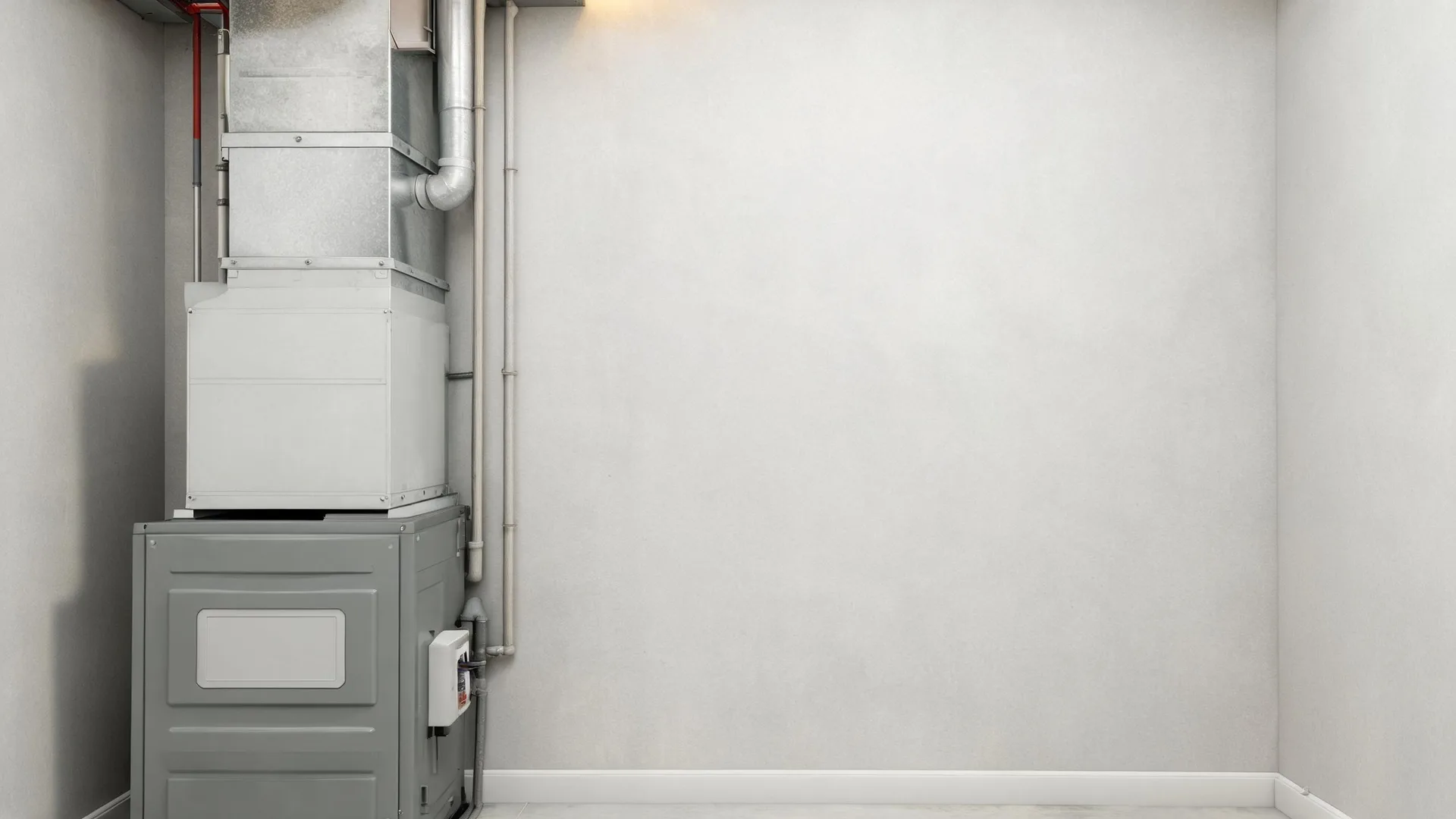
The installation decides whether the rating holds

A furnace earns its rating in a lab, vented and wired exactly as the manufacturer spells out. Vent it wrong, starve it for return air, or leave the ductwork leaking, and the furnace draws the same power but delivers less heat to the rooms. The label describes what the equipment can do. What it actually does in the house depends on the installer who sets it up.

Sizing a furnace starts with a load calculation, room by room, not a guess based on square footage or what the old unit was rated for. The contractor measures window area, wall and ceiling insulation, air leakage, and how the rooms connect, then works out how much heat the house actually loses on the coldest nights. That number is the target. Go bigger than the target and the furnace satisfies the thermostat fast, shuts off, and leaves the heat exchanger and blower starting and stopping far more than they're built for. Go smaller and it runs flat out without ever catching up, so the house never quite reaches temperature on the coldest stretches. The right size is the one that matches the load, not the one that sounds safest on paper.

Installation day starts before anyone touches the furnace. The old unit comes out first, along with the flue pipe and any wiring or ductwork that doesn't match the new setup. The installer checks the return air opening and the supply plenum, since both have to match what the new furnace needs to breathe and push air correctly. Setting the furnace in place and connecting the gas line, flue and ducts takes longer than most homeowners expect, because each joint and connection gets checked, not just fitted. Once it's running, the installer sets the airflow, checks the temperature rise against the manufacturer's spec, and tests the safety controls before calling the job done. A furnace that's only bolted in and switched on hasn't been installed. It's been placed.