





A warmly lit Craftsman-style house on a wet residential street at night, surrounded by tall evergreen trees under a dark overcast sky.

Furnace Installation in Lacey, WA

Tell us about the job

Takes about a minute. No obligation.

New system or replacementFurnace or heatingThurston County, WA
Step 1 of 2

What ZIP code is the job in?

Electricity in Washington ran $34.87 per million Btu in 2024. A furnace that wastes some of what it draws turns more of that into money spent and nothing to show for it. The efficiency rating on a new furnace is not a sticker number. It is what you pay every month to keep the house warm. A new furnace sized and installed right will hold that efficiency for years. One that is oversized, undersized, or poorly sealed into your ducts will not, no matter what rating is printed on it.

10 months
September through June, your furnace is on duty
34°F
the average winter night it heats against
80% AFUE
the federal minimum any new unit must meet
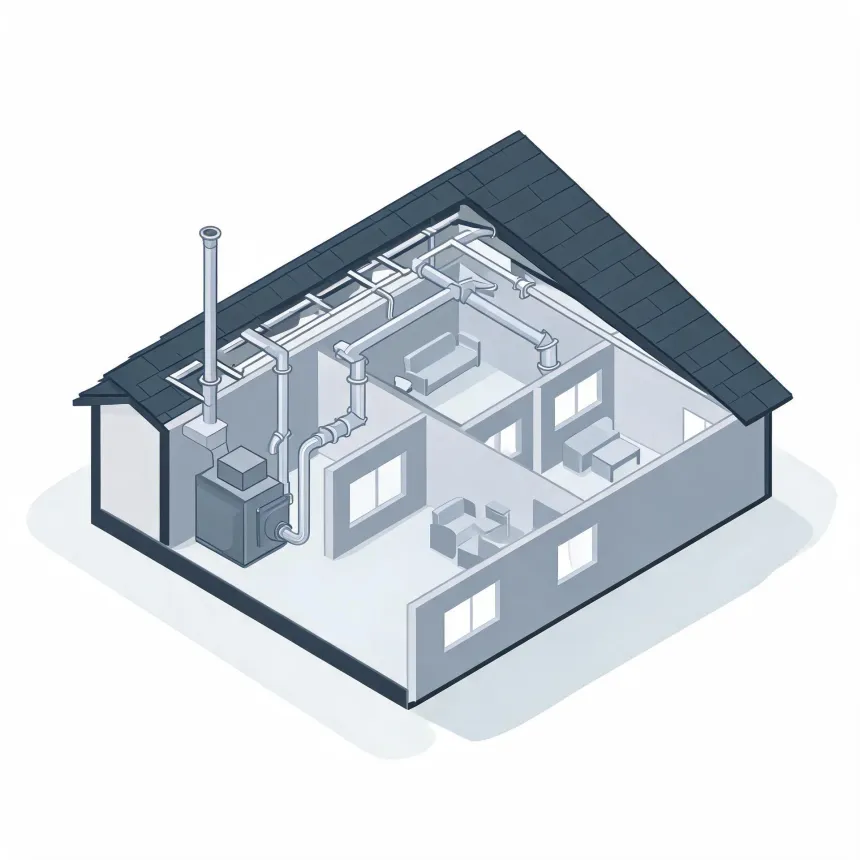
Isometric cutaway illustration of a single-story house showing interior rooms, a furnace unit with flue pipe, and branching ductwork running through the ceiling space under a dark shingled roof.
Your furnace works hardest from October through April.

NOAA nClimDiv, 1991–2020 normals

Electricity heats close to 6 in 10 homes in Thurston County.

A furnace here is more likely to mean electric heat, and Lacey matches that pattern.

Ten months of heat, down to 34°F, is nothing a standard furnace can't handle

Heat runs September through June
Winter nights average 34°F
Climate zone 4C
Get it done before SeptemberHeat runs September through June here. August is the last easy month to replace it.

A furnace that's too big for the house cycles on, dumps a blast of heat, and shuts off again before it's pulled moisture out of the air or warmed things evenly. Rooms end up with hot and cold spots, and the burner takes more wear from all that starting and stopping. One that's too small runs constantly on the coldest days and still can't keep up, so it never really gets ahead of the chill. Getting the size right means a contractor works out how much heat the house actually loses through its walls, windows, and roof, not just how many square feet it has. Houses that look alike from the outside can need different furnaces depending on insulation, window count, and how the ductwork is laid out. That calculation, done properly, is what the installation should be built around.

The install decides what you pay to run it

Get the sizing and installation right and that efficiency rating holds for years, which matters more in a state where power costs what it does here. Get it wrong and you're paying Washington electric rates to run a furnace that can't hit its own numbers.

Find a contractor
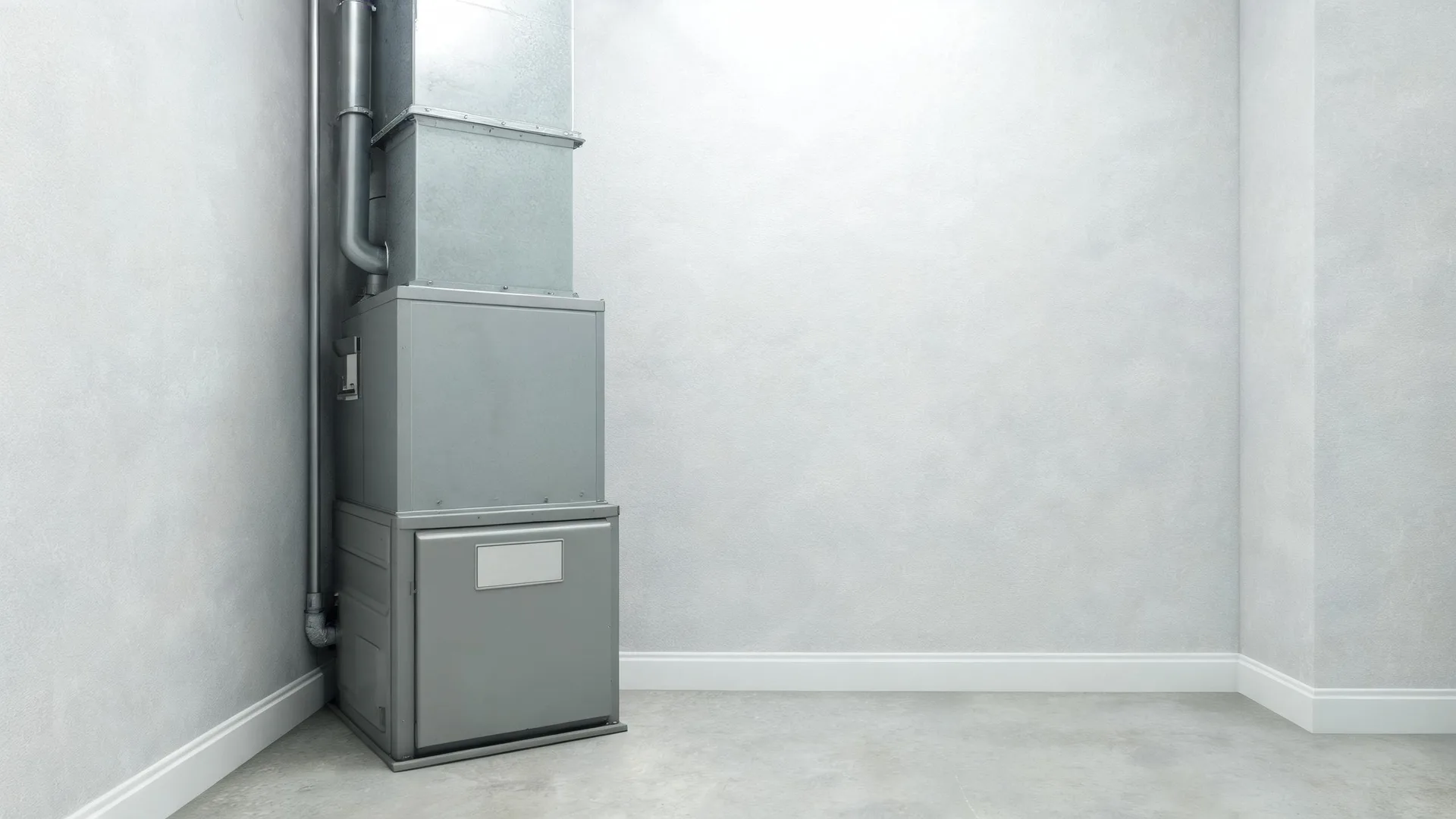
A gray residential gas furnace installed in an unfinished basement, connected to sheet-metal ductwork and PVC pipes.

What you install decides what you pay for as long as it runs

Furnaces with the same rating on the box can end up costing very different amounts to run, and the difference usually comes down to what happened during installation rather than what's inside the cabinet. The ductwork matters as much as the furnace itself. A duct run that's too narrow, has sharp turns, or leaks at the joints makes the blower work harder to push air where it needs to go, and that strain shows up on the electric bill every month the furnace runs. A cabinet set down without a tight seal against the plenum lets heated air escape before it reaches a single room. None of that shows up on the rating sticker. It shows up later, in how long the system keeps performing the way it did on the first day.

Ask what the blower is rated to move, not just its size

A blower motor has to push air through every foot of ductwork in the house. Furnaces with similar heat output can still move air very differently depending on how the blower is matched to the ducts. Ask what static pressure the blower is rated for and whether the ductwork was tested against it. A blower fighting too much resistance wears out faster and costs more to run than one sized to the ducts it's paired with.
Ask who stands behind the install itself

A furnace and its installation come from different places. The manufacturer backs the cabinet and the parts inside it. That warranty says nothing about whether the ducts were sealed right or the airflow was set up correctly once the unit was in place. Ask the contractor directly what they guarantee about how the system performs after installation, separate from whatever is printed on the equipment.

The old furnace doesn't just get hauled off. A technician shuts off the gas line and the electrical connection first, then disconnects the vent pipe or flue that carries exhaust outside. If it's a gas furnace, that gas line gets capped properly, not just closed off, so there's no leak risk down the road. The old ductwork connection at the plenum gets opened up to receive the new unit, and this is actually a good moment for a contractor to spot damage or gaps that have been hiding behind the old cabinet for years. Refrigerant lines, if the furnace shares a cabinet with an AC coil, need to be handled separately since that coil may get reused or replaced depending on its condition. Most of the metal in an old furnace gets recycled, since the cabinet and heat exchanger are both steel or aluminum.

Once the old unit is out, the new furnace gets set on the base and leveled before anything is connected. Level matters because the burner and heat exchanger are built to drain condensation and burn correctly at a specific pitch. The plenum connects next, and the seams there get sealed, not just screwed together, since that joint is where a lot of heated air quietly escapes if it's rushed. Gas line gets reconnected and pressure tested before the gas is ever turned on for real. The vent pipe or flue gets reattached and checked for the right slope so exhaust actually moves outside instead of backing up. Once power and gas are both live, the furnace gets fired and run through a full cycle while the technician checks the flame, the temperature rise across the heat exchanger, and the airflow at the registers.