





An unfinished basement featuring a forced-air furnace, exposed wooden ceiling joists, bare concrete walls, and miscellaneous items including cardboard boxes and coiled cables on the floor.

Furnace Installation in Omak, WA

Tell us about the job

Takes about a minute. No obligation.

New system or replacementFurnace or heatingOkanogan County, WA
Step 1 of 2

What ZIP code is the job in?

Washington electricity ran $34.87 per million Btu in 2024, and a furnace pulling that power every day adds up fast over a winter. The gap between an old furnace and a new one shows up directly on the bill, not just in how warm the house feels. A unit sized right for your home and running at a high efficiency rating burns less power for the same heat. That difference holds every month the furnace runs, not just the coldest ones.

10 months
September through June, your furnace is on duty
19°F
the average winter night it heats against
80% AFUE
the federal minimum any new unit must meet
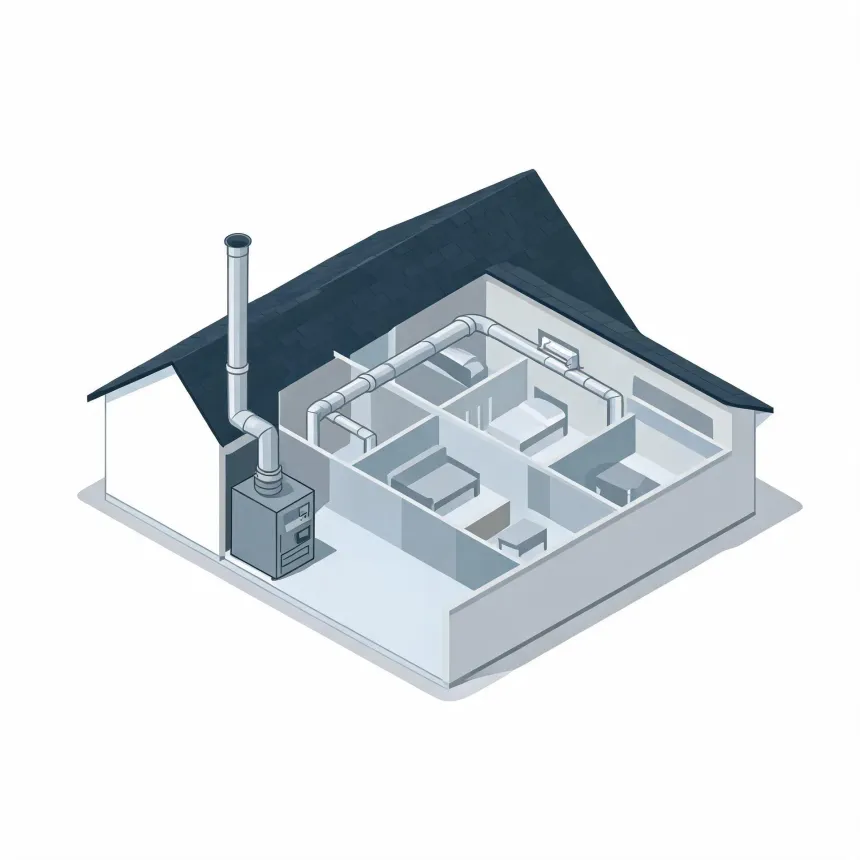
Isometric cutaway illustration of a single-story house with a dark shingled roof, showing interior rooms with beds and furniture, overhead ductwork, and a gray furnace with a tall flue pipe at the exterior wall.
Your furnace works hardest from October through April.

NOAA nClimDiv, 1991–2020 normals

Half the homes in Okanogan County were built in 1982 or earlier, half later.

Old or new, a standard furnace sized to the home is the right call here, nothing more.

Winter storms hit Okanogan County often, and heat shouldn't depend on the power staying on

286 severe weather events from 2015 to 2024
23% of homes statewide lost power a day or more in 2024
38 damaging wind events from 2015 to 2024

Ten months of heat a year is most of the calendar, and in Okanogan County that furnace is working against real cold, not just a chill. Overnight lows average 19°F through December, January and February. That's the kind of cold that keeps a furnace cycling on and off all night instead of running easy. A furnace sized too small for the house will run close to flat out on nights like that, and the one component built to handle it wears down faster than it should. Get the sizing right at installation and the furnace meets those nights without strain, winter after winter.

Efficiency pays here

Power costs more here, so an efficient system pays you back on every bill.

Find a contractor
A man in a cap, dark shirt and tan work pants carries a worn canvas tool bag up porch steps toward a dark blue front door, with a potted shrub beside the entry.
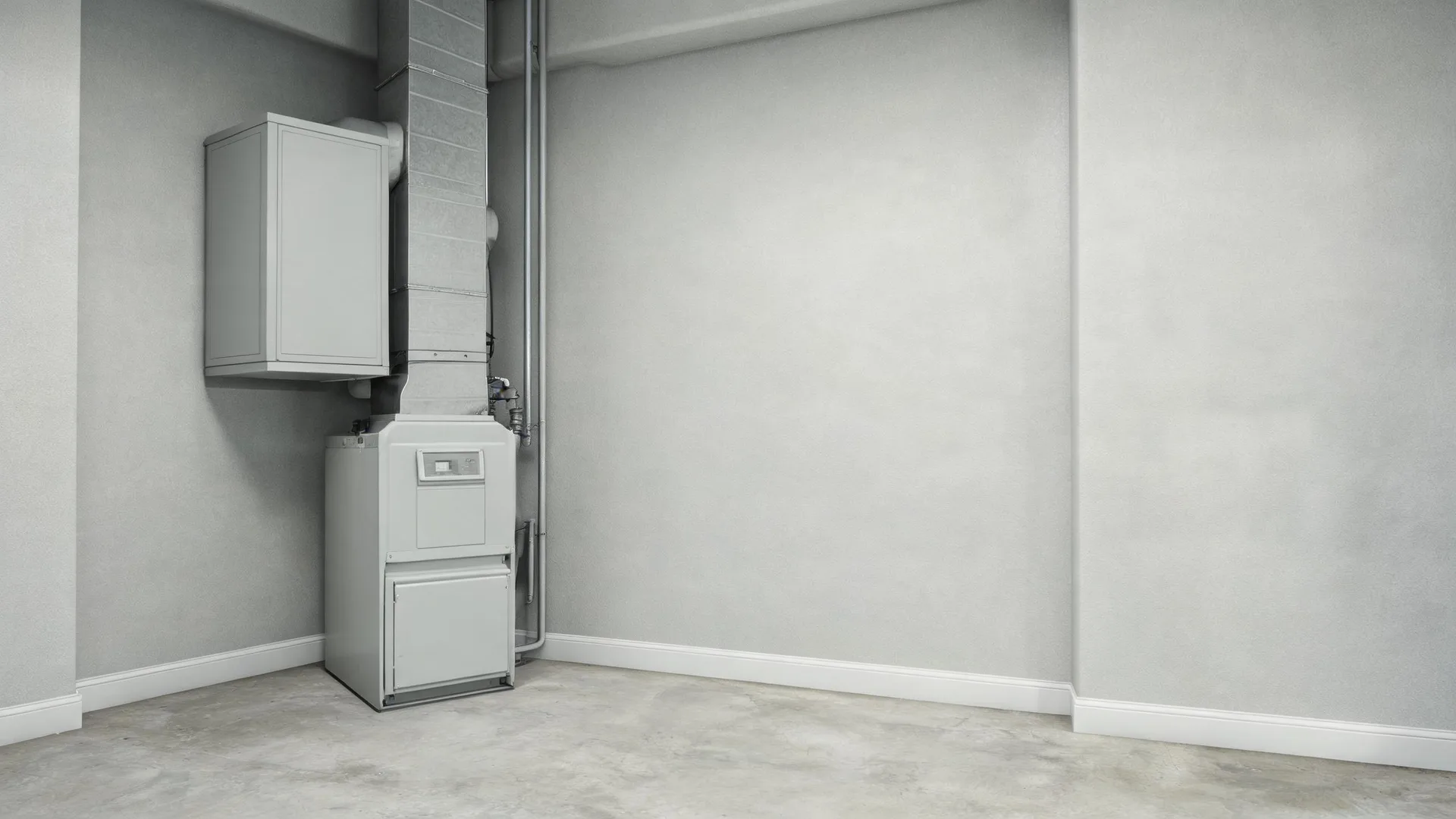
A gray gas furnace with attached ductwork and piping installed in an unfinished concrete basement.

August is the month to do this, not September

Heat runs here from September through June, ten months a year. That leaves August as the one month before the furnace has to work. A furnace put in during August gets tested on its own time, before anything depends on it. Wait until the first cold night and the job changes. Whoever installs it then is working around a house that needs heat now, and the furnace that goes in is whatever's on the truck, not necessarily the one sized right for the home.

Ask for the load calculation, not a guess

A furnace sized off square footage alone can end up wrong in either direction. A proper load calculation looks at window area, insulation, ceiling height and layout before anyone names a size. If a contractor quotes a size without asking about the house first, that's a sign they're guessing.
Ask what happens to the old ductwork

A new furnace moves a different volume of air than the one it replaces, and ducts sized for the old unit don't always suit the new one. Undersized or leaky ductwork will choke a correctly sized furnace and show up as uneven heat room to room. Any comparison should include whether the ducts get inspected, not just the furnace swapped.

The efficiency rating on a furnace tells you how much of the fuel or power it uses turns into heat in the house, and how much gets lost out the flue or in cycling. A furnace with a higher rating pulls less energy to produce the same heat as one with a lower rating, running the same winter. That gap doesn't show up once. It's there every time the furnace fires, for as long as you own it. Furnaces can look the same size and heat the house to the same temperature and still cost different amounts to run, because the rating is what tells you how hard each one works to get there. When you're comparing quotes, the rating matters as much as the price on the invoice, since it's the number still showing up on the bill long after installation day.

Installation starts with the old furnace coming out, and that's not a quick pull. The gas or power gets shut off and locked out before anything else happens. If ductwork is changing or getting sealed, that work usually happens before the new unit ever gets set in place. The new furnace gets leveled, connected to the ducts, wired in, and tied into the gas line or the electrical circuit depending on what it runs on. Once it's in, it gets fired up and run through a cycle so the technician can check the temperature rise, the airflow at the vents, and the way it starts and shuts off. That test run is where a sizing or duct problem shows up, not months later when the first real cold hits.