





A lit mountain lodge-style home at night with evergreen trees, stone accents, and snow-capped mountains in the background.

Furnace Installation in Pasco, WA

Tell us about the job

Takes about a minute. No obligation.

New system or replacementFurnace or heatingFranklin County, WA
Step 1 of 2

What ZIP code is the job in?

Electricity in Washington ran $34.87 per million Btu in 2024. That number matters when you're picking a furnace, because every therm this one uses out of a gas unit or every kilowatt it pulls out of an electric one shows up on your bill for as long as you own it. A furnace with a higher AFUE rating turns more of what it burns into heat for your house instead of losing it up the flue. Over a Pasco winter, that difference adds up far more than the sticker price does. Ask what AFUE rating you're being quoted before you ask about anything else.

8 months
October through May, your furnace is on duty
28°F
the average winter night it heats against
80% AFUE
the federal minimum any new unit must meet
Isometric cutaway illustration of a small house showing a furnace unit connected to ductwork running through the interior and attic, with a chimney on the shingled roof and simple furniture in the rooms.
Your furnace works hardest from November through March.

NOAA nClimDiv, 1991–2020 normals

Heat runs eight months a year here, October through May.

A standard-size, standard-efficiency furnace handles a Pasco winter fine. Nothing about this county calls for going bigger.

Put the AFUE difference toward the install, not just the furnace price

Heat runs October through May
Winter nights average 28°F
Climate zone 5B

Heat starts here in October. September is the month to get a new furnace in, before you need it. An install done ahead of time has room to go right. The sizing gets checked. The unit gets run and tested. Anything that needs fixing gets fixed while the house is still warm. Wait until the old one fails and you take whatever can be installed fastest, not whatever fits the house best. This one runs eight months straight once it starts, October through May. Better it goes in on a day when nobody's cold and waiting on it.

Efficiency pays here

Power costs more here, so an efficient system pays you back on every bill.

Find a contractor
A man in a dark cap, navy T-shirt and tan work pants, seen from behind, carries a canvas tool bag up porch steps toward a dark blue front door, with a potted shrub in a blue planter to the right.
A gray residential gas furnace installed in an unfinished basement, surrounded by ductwork, a metal flue pipe, and a gas supply line.

The right size runs long and even, not hard and short

A furnace that's too big for the house cycles on, blasts heat, and shuts off again before the rooms farthest from the ducts even even out. That short cycling is harder on the heat exchanger and the blower motor than a long, steady run would be. Too small, and it runs nearly nonstop trying to keep up, which wears on the same parts from the other direction and still leaves the house underheated on the coldest mornings. The size is worked out with a heat load calculation, not a guess off the square footage. A contractor accounts for the windows, the insulation, the ceiling height, and how much of the house is exposed to outside walls, then matches a furnace to that number. Get that number right and the furnace runs in long, even cycles all winter, which is exactly what keeps a heat exchanger lasting as long as it's built to.

The furnace itself is one line item

Cabinet size, stage count, and AFUE rating set the base price before anything else is considered. A single-stage furnace runs at one output, on or off. A modulating furnace adjusts its flame to match the moment, which costs more upfront in equipment but asks less of the parts over time. The blower motor matters too. A variable-speed motor costs more than a fixed-speed one and runs quieter and steadier.
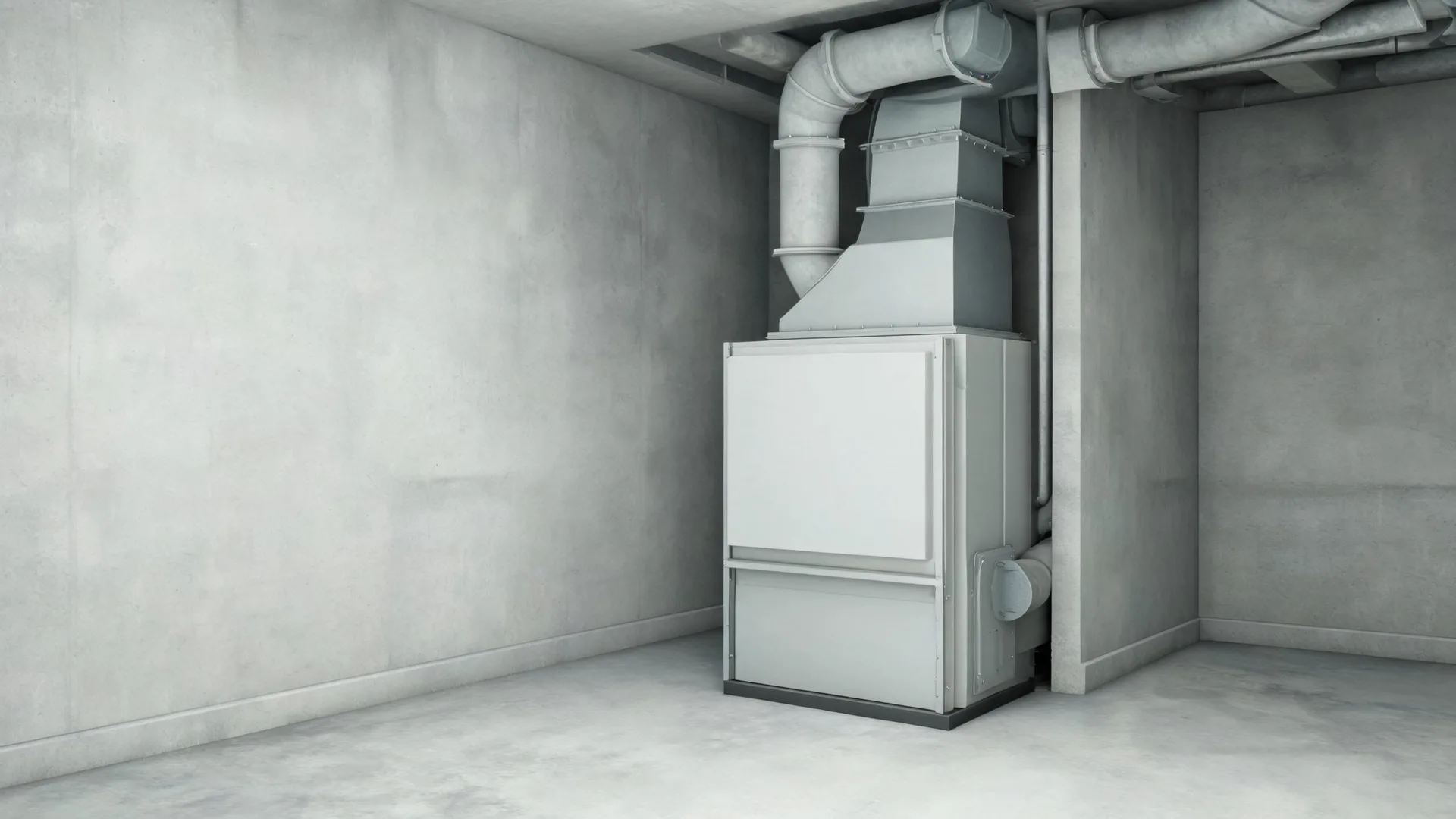
What's hidden behind the old furnace sets the labor

Swapping a furnace for one the same size in the same spot is the straightforward version of this job. Everything changes if the ductwork needs modifying, if the vent pipe has to be rerouted, if the gas line needs resizing, or if the electrical panel can't handle what the new unit draws. None of that shows up until a contractor is actually in the mechanical room looking at what's there.

AFUE is the share of fuel a furnace turns into heat for the house. The rest goes out the flue. A furnace rated higher wastes less, and that holds whether it's running on the coldest night of the year or a mild one. Gas and electric furnaces get compared differently on this. An electric furnace turns almost all its power into heat by nature. A gas furnace's efficiency comes down to how well it's built to pull heat out of the exhaust before letting it go outside. That's worth asking a contractor directly. Not just what the unit costs, but what it's rated to do with every therm or every kilowatt it uses.

Installation day starts with the old furnace coming out, not the new one going in. The contractor disconnects the gas line or electrical circuit, pulls the venting, and gets the unit out of the mechanical room so there's a clear look at what's actually there. That's when the ductwork connections, the vent pipe, and the condensate drain if there is one all get checked against what the new furnace needs. Setting the new unit, connecting the gas or electrical, and sealing the duct and vent connections takes up most of the day. Once it's in, the contractor fires it up and lets it run through a full cycle, checking the flame or the heat strips, the blower, and the airflow at the registers. A gas furnace gets tested for proper draft and checked for leaks at every connection before anyone calls it done. The furnace should be heating the house evenly by the time the contractor leaves, not just turning on.