




An unfinished basement featuring concrete block walls, exposed floor joists, and a metal forced-air furnace with ductwork near a central pillar.

Furnace Repair in Cathlamet, WA

Tell us about the job

Takes about a minute. No obligation.

RepairFurnace or heatingWahkiakum County, WA
Step 1 of 2

What ZIP code is the job in?

Furnaces in Cathlamet run close to ten months a year, September through June. That's longer than most places, but it doesn't mean yours is wearing out faster or failing for some local reason. Overnight lows average 35°F through December, January and February. That's nothing a working furnace should struggle with. Most calls out here turn out to be the same problems any furnace gets after enough cycles. A cracked igniter. A dirty flame sensor. A clogged filter choking airflow. The fix is finding which one it is, not guessing at what the weather did to it.

10 months
September through June, your furnace is on duty
35°F
the average winter night it heats against
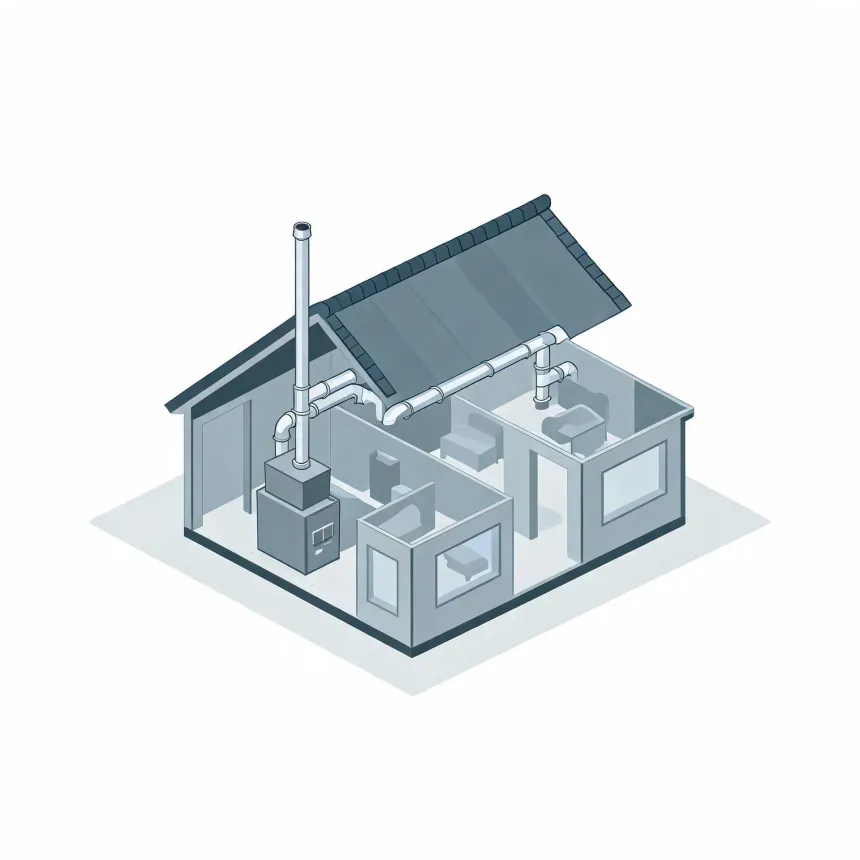
Isometric grayscale illustration of a cutaway house showing an interior furnace with a tall flue pipe and ductwork running to rooms under a partially lifted roof.
Your furnace works hardest from October through April.

NOAA nClimDiv, 1991–2020 normals

Most furnace problems are one worn part, not a dying furnace.

A repair makes sense far more often than a full replacement does.

Electricity here runs $34.87 per million Btu, and this furnace runs nearly year round. A furnace running wrong is not a small cost to ignore.

Heat runs September through June
Winter nights average 35°F
Climate zone 4C
Half the homes here are old, half aren'tHalf the homes in Wahkiakum County were built in 1978 or earlier, half later, and neither tells you why a furnace quits.

A furnace that's short cycling or running longer than it should is burning power the whole time it does it. At $34.87 per million Btu, that shows up on the bill before it shows up as a breakdown. Waiting doesn't make the diagnosis cheaper or the fix simpler, it just means more months of paying extra for a problem that's already there. If yours is making a strange noise, short cycling, or blowing cool air in spots, get a contractor out to find the part before winter asks more of it.

Get the usual fix

Nothing about this area is especially hard on it. It's most likely the usual problem with the usual fix.

Find a contractor
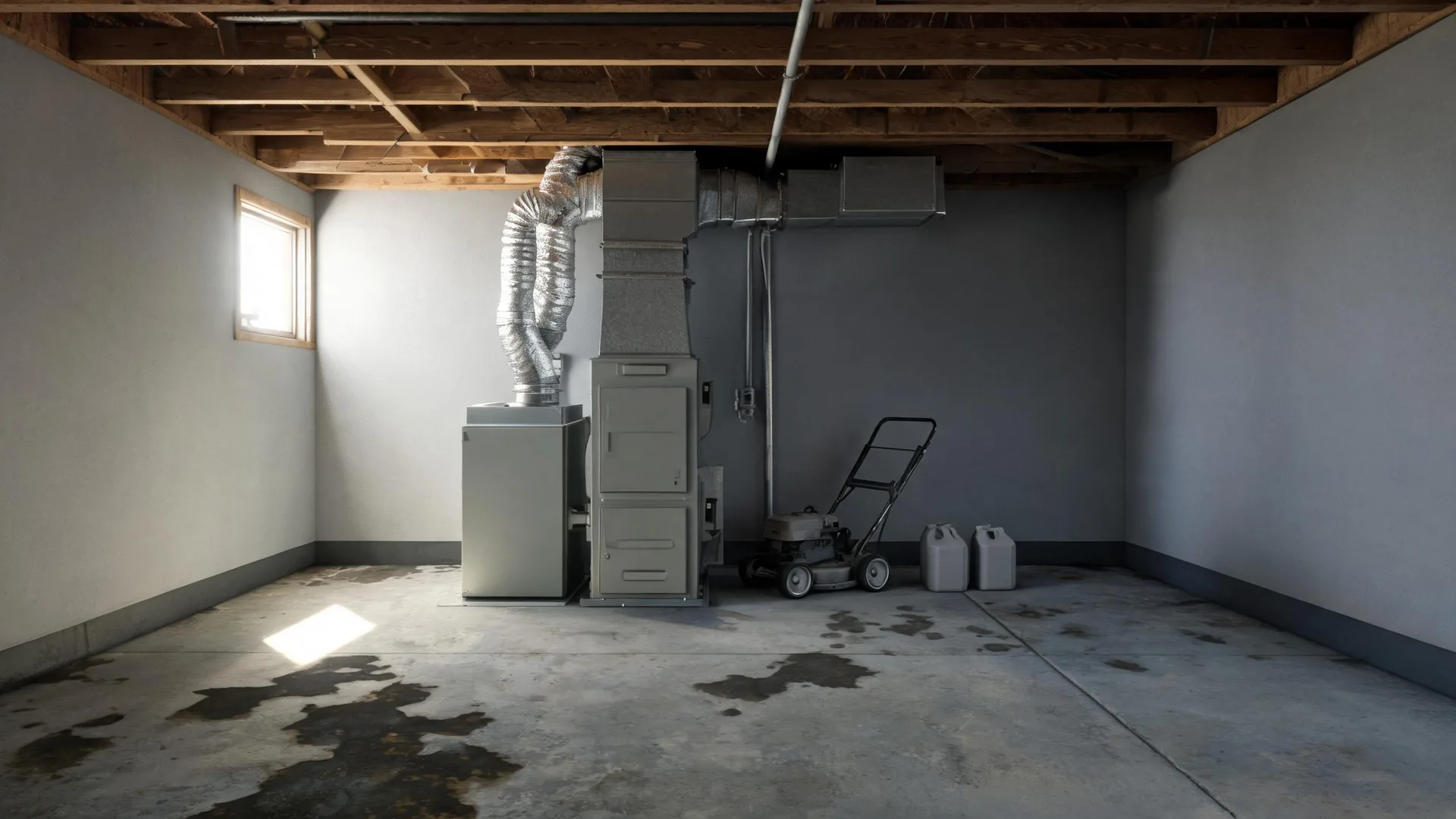
A gray gas furnace with attached ductwork and piping installed in an unfinished concrete basement.

What it sounds like before it quits

A furnace usually gives warning before it quits outright. It starts short cycling, running a few minutes then shutting off before the house warms. It blows air that feels lukewarm instead of hot, which usually means the burners are lighting late or not staying lit. It makes a noise it didn't make before. A screech from the blower. A bang when the burners fire. A rattle that wasn't there last winter. Some of these come from a part that's simply worn and needs swapping. Others matter more. A flame that flickers or burns yellow instead of steady blue means something isn't burning clean, and that shouldn't wait on anything.

What actually wears out

The igniter is the part most likely to fail first. It's a thin strip that heats up to light the gas, and that heating and cooling cycle eventually cracks it. The flame sensor fails a different way. It doesn't break, it just builds up a coating that stops it from sensing the flame, so the furnace shuts the gas off as a safety check even though it's burning fine. Both are wear parts. Neither failing means something else is wrong.
What causes the rest

A dirty filter is behind more service calls than any part failure. Blocked airflow makes the furnace run hotter than it should, which trips the limit switch and shuts the burners off mid-cycle. That can look like a dying furnace when the furnace itself is fine. A failing inducer motor or a blower losing strength shows up as weak airflow or a furnace that won't start at all. These wear down with use, not with any one season.

A cracked igniter does not heal itself. Every start-up asks it to heat up and cool down again, and once it has a hairline crack, each cycle flexes it a little more until it breaks clean through. A dirty flame sensor works the same way. The coating builds a little thicker each time the burners fire, and the furnace keeps shutting itself off sooner each time as a safety response, until it stops lighting at all. Airflow problems compound differently. A furnace starved for air runs hotter, and running hot stresses the heat exchanger, which is not a part anyone wants to replace. None of these get easier to fix by waiting. They get easier to fix now, while the part is still just worn and not yet broken.

A diagnostic visit starts before the panel comes off. A tech will ask what the furnace was doing, when it started, and whether it's constant or comes and goes, because that narrows things down more than a quick look at the unit does. Then the cover comes off and they watch it run through a full cycle, start to shutdown, since a lot of these problems only show themselves at one point in that cycle. The igniter gets checked for a visible crack. The flame sensor gets pulled and looked at for buildup, and often cleaning it is the whole fix. The filter gets checked too, because it rules out the most common cause fast. If the flame itself looks wrong, yellow instead of blue, or flickering, that gets attention before anything else does. Most of a diagnostic visit is narrowing down which part it is, not replacing things to see what helps.