Warmly lit timber-frame and stone houses line a street at dusk, with evergreen trees and a snow-capped mountain range in the background.

Furnace Repair in Dayton, WA

Tell us about the job

Takes about a minute. No obligation.

RepairFurnace or heatingColumbia County, WA
Step 1 of 2

What ZIP code is the job in?

Ten months of work a year

Furnaces in Dayton run from September through June, with overnight lows averaging 26°F in December and January. That long a season means the igniter and the blower motor see more cycles than they would in a milder place, and they wear sooner for it.

Get the real cause, not a patch

A furnace that short cycles or won't fire often has a specific part behind it, like a cracked igniter or a failing limit switch. Worth having a contractor check it properly rather than guessing, since a repair that misses the real problem won't hold through a Columbia County winter.

10 months
September through June, your furnace is on duty
26°F
the average winter night it heats against
53 winter storms
in ten years, the nights a failure hurts most
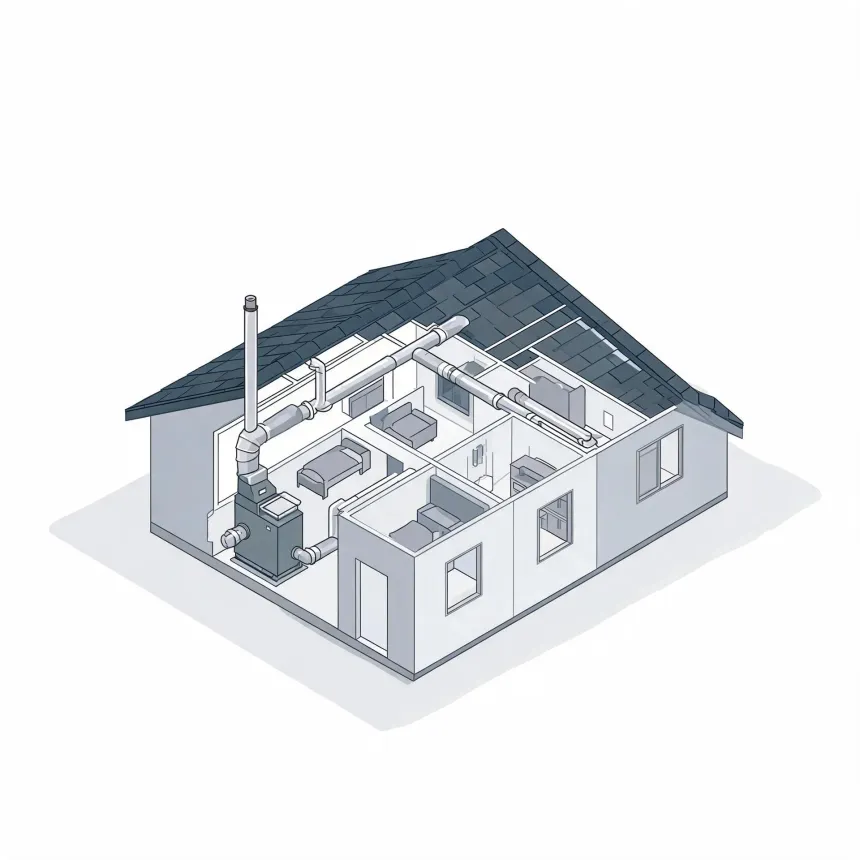
Isometric cutaway illustration of a single-story house showing interior rooms with furniture, ceiling ductwork, a furnace unit with a tall flue pipe, and a dark shingled roof.
Your furnace works hardest from October through April.

NOAA nClimDiv, 1991–2020 normals

Half the homes in Columbia County were built in 1953 or earlier.

A furnace in a house that old has likely been replaced before, maybe more than once, which matters when you're deciding whether this repair is worth it.

That long a season, at Washington's electric rates, makes a weak furnace expensive to ignore

Heat runs September through June
Winter nights average 26°F
53 winter storms from 2015 to 2024

August is worth paying attention to here. Heat starts running in September and doesn't let up until June, so whatever was marginal last winter has had all summer to sit without running. A weak igniter or a limit switch that was already acting up tends to fail in those first cold weeks, right when the furnace is asked to run longer and more often than it has in months. Getting it looked at before September means finding that part while it's still convenient, not after the cold sets in.

Get it diagnosed properly

Your furnace works hard here, and that's usually what's behind the problem. Have it diagnosed properly so the fix lasts.

Find a contractor
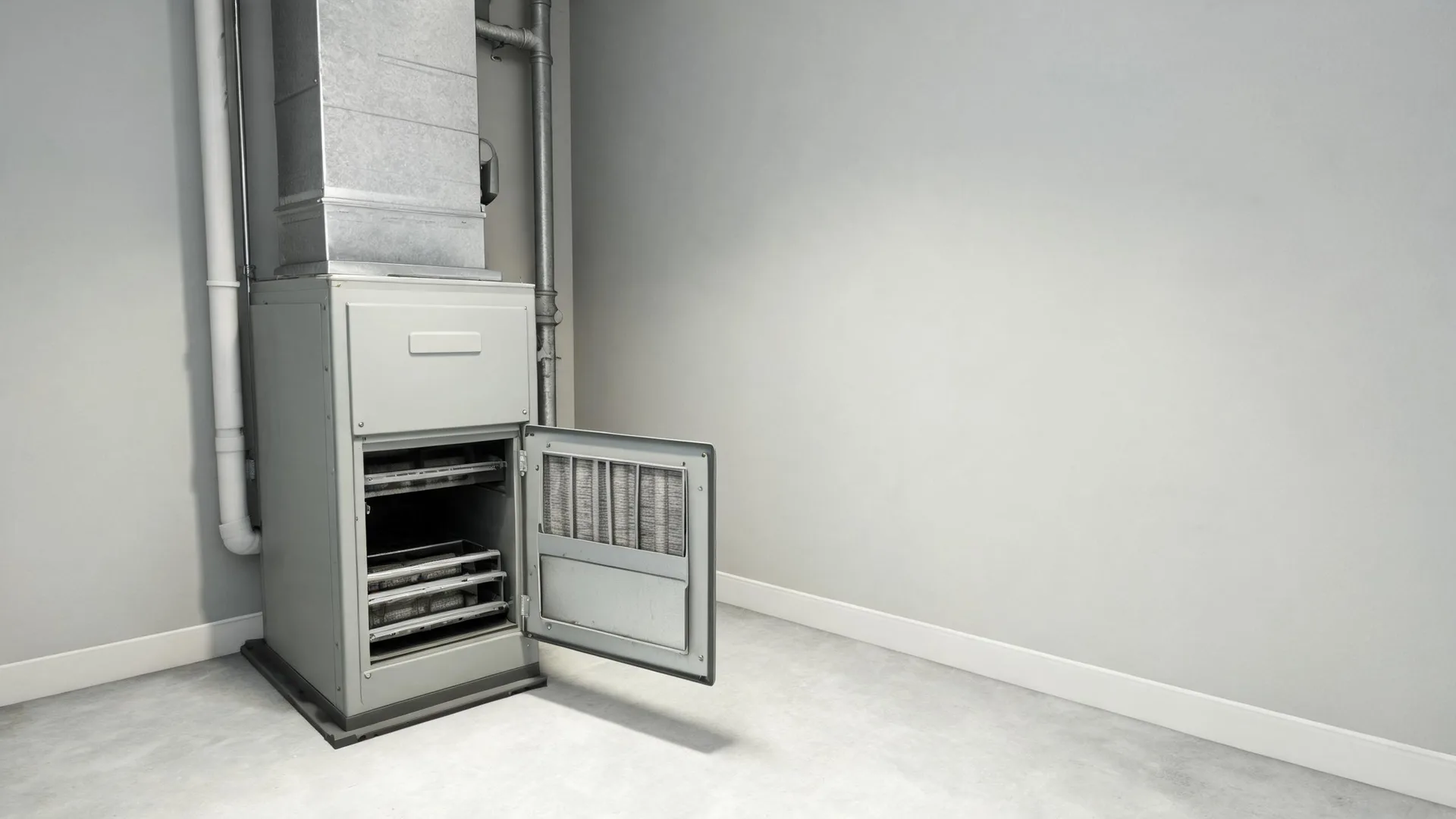
A gas furnace with attached ductwork, gas piping, and condensate lines installed in a concrete-block basement.

What to check before you call

Before calling anyone, check the thermostat first. Make sure it's set to heat, not cool, and that the set temperature is actually above room temperature. Dead batteries in the thermostat cause more no-heat calls than people expect. Next, go look at the filter. Pull it out and hold it up to a light. If you can't see light through it, that's likely choking the airflow, and a furnace that can't breathe will often shut itself off as a safety measure. Check the breaker box too. A furnace that won't start at all sometimes just tripped a breaker, and it's worth resetting once before assuming the worst. If your furnace has a standing pilot, look for the small flame through the viewing window. No flame there usually means it needs relighting, and the furnace will have instructions printed right on it for how to do that. Last, check any vents and registers around the house to make sure none are closed or blocked by furniture or rugs. None of this fixes a cracked heat exchanger or a failed control board, but it rules out the simple stuff before you pay someone to find it for you.

Listen for what changed

A furnace that used to run quiet and now bangs, rattles, or squeals at startup is telling you a part is wearing out, often the blower wheel or the inducer motor. A burner that used to light with a soft whoosh and now booms is delayed ignition, usually gas building up before it catches. Neither gets better on its own.

Watch the cycle, not just the heat

A furnace that turns on and off every few minutes instead of running a full cycle is short cycling, and it's often a flame sensor coated with residue or a clogged filter choking airflow. One that runs but blows air that never feels quite warm enough points to a different problem, often a failing gas valve or ductwork losing heat before it reaches the room.

A furnace that's struggling doesn't fail cleanly. It fails worse. A cracked heat exchanger starts small, and running the furnace keeps flexing that crack with every heat cycle until it opens further. A flame sensor coated with residue makes the burner shut off early, and each time it does, the ignition system takes another hit it wasn't built to take that often. Airflow problems compound the same way. A clogged filter starves the burners of air, which can scorch the heat exchanger and crack it from heat stress that was never supposed to happen. None of this means every repair is urgent, but a furnace making a new noise or shutting off mid-cycle is usually asking to be looked at before it's asked to do it again.

A tech starts by asking questions before any panel comes off. What the furnace is doing, when it started, whether it happens every cycle or only sometimes. That narrows things down before a tool comes out. Next comes a visual check of the burners, the flame color, the wiring. Then come the actual tests, checking the igniter's resistance, the flame sensor's signal, the limit switch, the gas valve. Airflow gets checked too, since a weak duct or a dirty filter can mimic a furnace problem that isn't really there. The point is to find the part actually causing the symptom, not just the first thing that looks worn, since different failures can produce the same complaint.