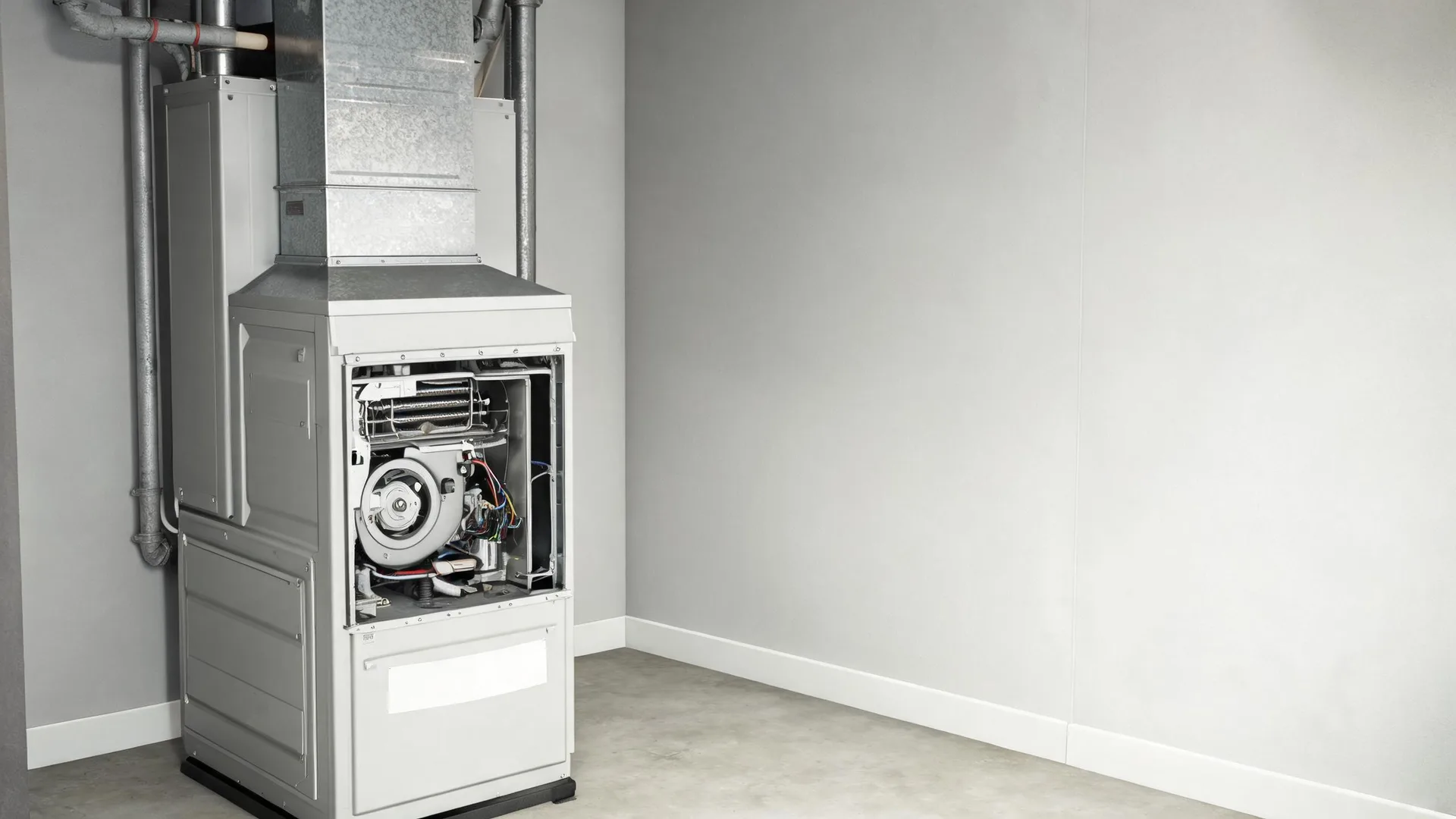
Ten months of heat a year
Furnaces in Kittitas County run from September through June. That's most of the year asking the igniter, the blower motor and the burners to cycle on and off without much of a break.
Takes about a minute. No obligation.
Furnaces in Kittitas County run from September through June. That's most of the year asking the igniter, the blower motor and the burners to cycle on and off without much of a break.
Overnight lows average 23°F through December, January and February. On those nights your furnace is running close to flat out, and that's exactly when a weak part finally gives up.
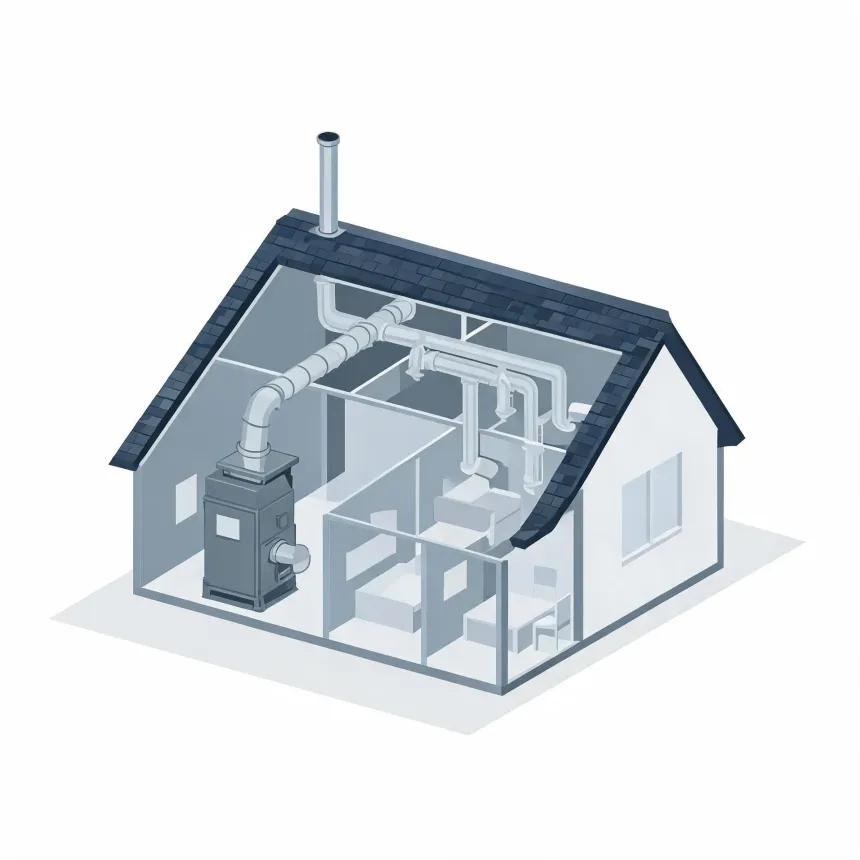
NOAA nClimDiv, 1991–2020 normals
Electricity in Washington ran $34.87 per million Btu in 2024.
A furnace that's struggling to heat your house burns through that at a worse rate every month it runs.




A furnace that's worked hard for ten months straight doesn't fail for no reason. When a part gives out after a long stretch of cold nights, it's usually because something was already weak and the workload found it. Guessing at the fix wastes a visit and leaves the real problem in place. A contractor who checks the igniter, the blower motor and the burners together can tell you which one is actually failing, and why, before anything gets replaced.
A furnace that's not heating right doesn't get cheaper to run while it waits. At $34.87 per million Btu, every month it struggles is a month you pay more for less heat. Have it looked at.
Find a contractor
If your furnace came with the house, that works in your favor. A newer system still has its original parts, and most problems at that stage are one weak part, not the unit giving out. That's a repair, not a replacement, and it's worth having someone look before assuming otherwise.
A repair done right addresses the part that actually failed, not just the symptom it caused. If the igniter is cracked, replacing it should end the problem. If the furnace still short cycles or won't hold a flame after that, something upstream of the igniter is pushing it too hard, and that's worth finding before you call it done.
A single part failing after a long cold stretch is normal wear. The same part failing again within a year, or a second part going not long after the first, is different. That pattern means the furnace is still struggling even after the fix, and it's worth asking why before paying for another repair.
Most furnace failures trace back to one of a few parts. The igniter takes a hit every single cycle, heating up and cooling down, and that repeated stress is what eventually cracks it. The flame sensor coats over with a thin layer of residue until it can't tell the burner is lit anymore, so the system shuts itself down as a safety measure. Blower motor bearings wear down after years of spinning, and you'll usually hear that before anything else fails. A dirty filter is behind more of this than people expect, since it starves the system of airflow and makes every other part work harder than it should. None of these failures happen overnight. They build quietly until the night the furnace needs everything it has, and that's when the weak part finally gives out.
Before anything else, check the filter. Pull it out and hold it up to a light. If you can't see light through it, that's likely your whole problem, or at least part of it. Next, make sure the thermostat is set to heat and the setting is above room temperature, and check that it has power if it runs on batteries. Walk around the house and look at the vents. If someone closed several of them for another season, open them back up. If you have a window unit furnace or one with a visible pilot or igniter window, look for a flame or a glow. No flame and no glow after it tries to start points to the gas supply or the igniter, not something you can fix yourself. Check the breaker panel too. A furnace that won't start at all sometimes just lost power to the blower or control board. If the furnace starts but blows cold air before shutting off, that's usually the flame sensor or ignition failing partway through the cycle, and that's a call for a contractor, not a fix you do with a flashlight and a screwdriver.