September is when to catch problems early
Furnaces in Benton County start running in October. The weeks before that, in September, are a good time to get a furnace looked at, before it has to carry a full load.
Takes about a minute. No obligation.
Furnaces in Benton County start running in October. The weeks before that, in September, are a good time to get a furnace looked at, before it has to carry a full load.
A furnace that sat idle since spring gets asked to run for eight months straight starting in October. Whatever was already marginal, a cracked igniter, a failing inducer motor, tends to give out in those first weeks.

NOAA nClimDiv, 1991–2020 normals



Electricity in Washington ran $34.87 per million Btu in 2024. That's cheap next to most of the country, but it doesn't mean a struggling furnace is free to ignore. A furnace that's short cycling or running long to cover for a bad part is burning more of that electricity and more gas than it should every single day it's left alone. The part that failed doesn't fix itself by waiting. It just keeps costing you until someone swaps it.
Half the homes in Benton County were built in 1988 or later. If that's your house, your furnace likely isn't old enough to be the problem on its own. Have a contractor find the part that failed and fix that.
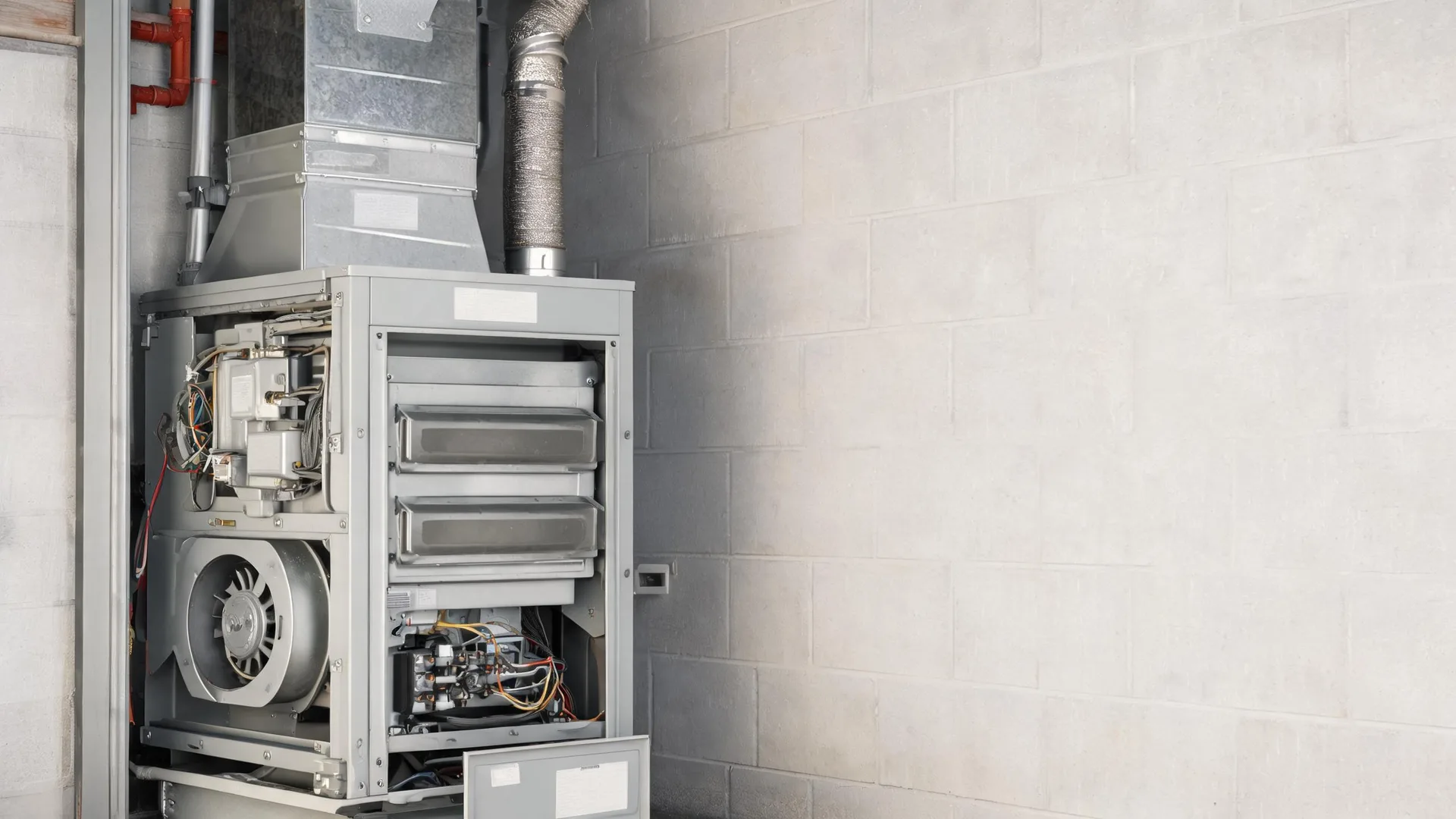
Find a contractorA furnace that's starting to fail doesn't usually just quit. It gives warning first. It runs longer than it used to before the house feels warm. It kicks on and off in short bursts instead of holding a steady cycle. The air coming out of the vents feels cooler than it should. Sometimes there's a sound, a rattle from the cabinet or a screech from the blower or a clicking that goes on too long before the burners catch. Sometimes there's a smell, something faintly burnt when it first fires after sitting all day. None of these mean the whole unit is done. They mean one part is struggling, and the furnace is working around it until it can't anymore.
Make sure the thermostat is set to heat and the setting is above room temperature. Then look at the filter. A filter clogged with dust blocks airflow, and the furnace can overheat and shut itself off as a safety response. A clean filter rules out the simplest cause before anyone comes out.
Find the furnace switch, it looks like a regular light switch near the unit, and make sure it's on. Check the breaker it runs on. If the furnace has a standing pilot, see if it's lit. None of this tells you what's broken, but a flipped switch or a tripped breaker looks just like a failed part until someone checks.
A furnace that's struggling usually doesn't fail outright. It keeps firing, just working harder to do it, and that's what causes the damage. A cracked igniter might still light the burners most tries, but each misfire dumps unburned gas into the chamber for a few seconds before the flame sensor catches it. A dirty flame sensor reads a weak signal and shuts the burners down, then the furnace tries again, and again, and the repeated cycling stresses the heat exchanger more than steady running would. A failing inducer motor can still pull enough draft to pass the safety switch while running slower than it should, so the furnace keeps heating while the motor keeps wearing toward a full stop. Left alone, a problem that started as one worn part can end with a cracked heat exchanger or a burned-out blower motor. Catching it while the furnace is still limping along keeps the damage contained to the part that started it.
Most furnace calls end in a repair, not a replacement, because most failures are one part doing its job badly, not the furnace giving out. An igniter, a flame sensor, an inducer motor, a pressure switch, these fail on their own schedule, and swapping the failed one brings the furnace back to normal. Age changes that math some, but not by itself. A furnace with a cracked heat exchanger is done regardless of when it was installed, because that's the part that can't be patched. The same furnace with a bad flame sensor is an easy fix even if it's old. What matters more than age is whether the cabinet, the burners, and the heat exchanger are sound. If those are fine, a broken igniter or motor is just a part swap. If the heat exchanger is cracked or the cabinet is rusted through, no amount of part-swapping buys it back.