






A lit craftsman house with glowing windows on a rainy night, surrounded by tall evergreen trees and a wet reflective street.

Furnace Repair in Mount Vernon, WA

Tell us about the job

Takes about a minute. No obligation.

RepairFurnace or heatingSkagit County, WA
Step 1 of 2

What ZIP code is the job in?

Skagit County gets hard storms, the kind that knock out power for more than a day. Almost a quarter of Washington households lost power for 24 hours or longer in 2024. A furnace needs electricity to run even when the fuel is gas, for the igniter, the blower, the control board. When the power drops in the middle of winter, that system restarts cold. If a surge or a rough restart happened during one of those outages, a furnace can come back acting different, cycling oddly or not firing right away, even if it never fully quit. Worth having it looked at if that sounds familiar.

11 months
September through July, your furnace is on duty
30°F
the average winter night it heats against
Isometric cutaway illustration of a small house showing a furnace unit connected to ductwork running through the interior and attic, with a chimney on the shingled roof and simple furniture in the rooms.
Your furnace works hardest from October through April.

NOAA nClimDiv, 1991–2020 normals

Furnaces in Skagit County run from September through July.

Eleven months of work a year wears parts down faster, so a repair now needs to hold.

Eleven months of heat, barely a month off

Heat runs September through July
Winter nights average 30°F
Climate zone 4C
Built since 1986, half of themHalf the homes in Skagit County were built in 1986 or later, so a lot of furnaces still have plenty of working life left.

The outdoor venting and the cabinet can take a hit during a bad storm even when the furnace keeps running afterward. A technician checking it after an outage can look at the control board and the connections while it's apart, not just listen for a bad cycle. That's worth doing before the next cold stretch rather than after the furnace quits in it. If it's been acting different since a power cut this past winter, now is the time to get it looked at, not in the middle of the next one.

Your furnace is probably worth fixing

A furnace that came with a newer house still has years in it. Repair makes more sense than replacement for most of what goes wrong. Get it looked at and keep it running.

Find a contractor
A man in a dark cap, navy T-shirt and tan work pants, seen from behind, carries a canvas tool bag up porch steps toward a dark blue front door, with a potted shrub in a blue planter to the right.
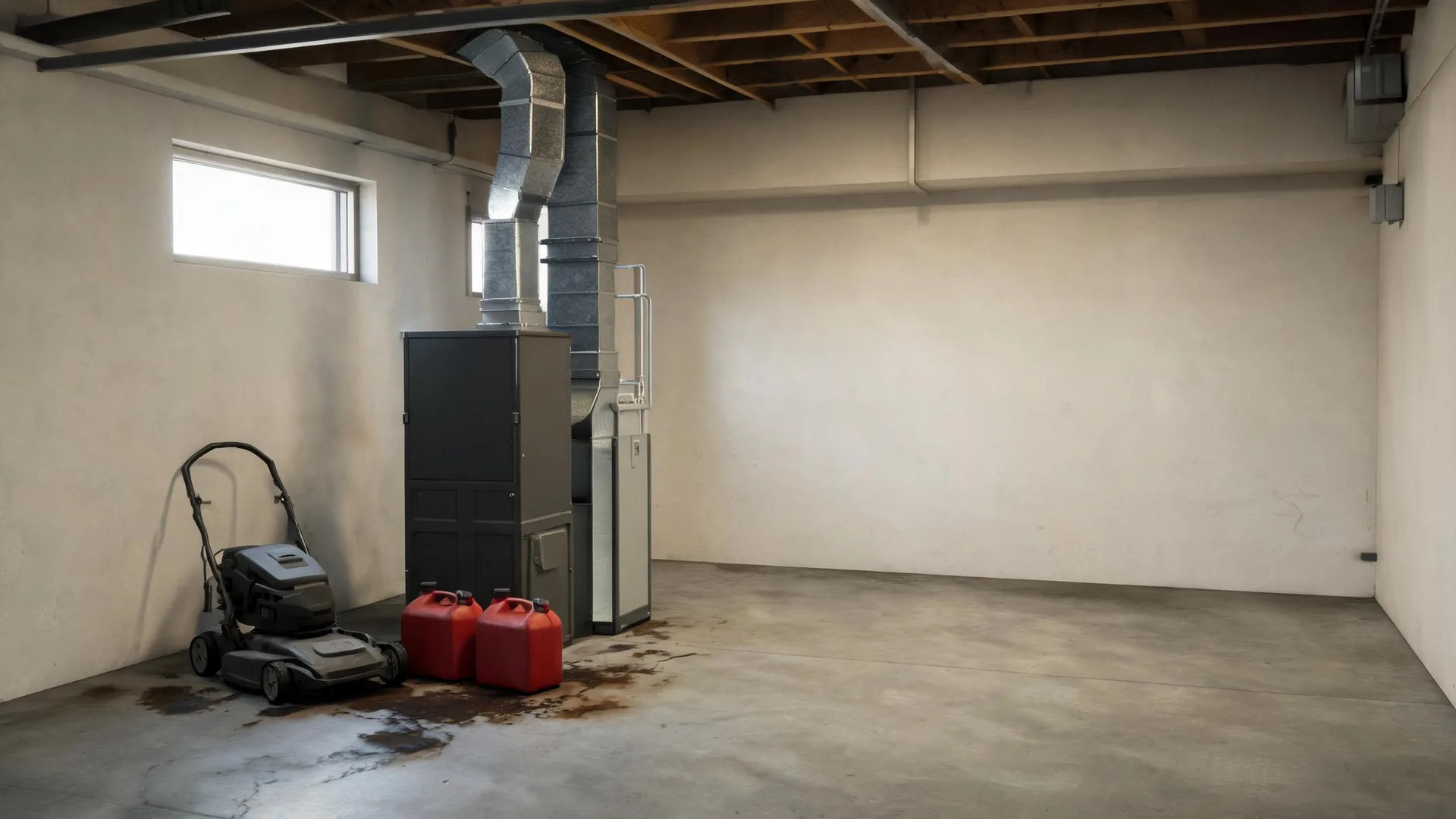
A gray residential gas furnace installed in an unfinished basement, surrounded by ductwork, a metal flue pipe, and a gas supply line.

Eleven months of work, not a lot of time off

With nights averaging 30 degrees through December, January and February, the furnace is doing real work, not just cycling on and off. Eleven months of that kind of run time means a diagnosis now should look at more than just whatever's acting up. A weak igniter or a part that's starting to stick tends to show itself during a stretch like this, so it's a good time to have the whole thing checked, not just the symptom.

Short cycling means something's telling it to stop

A furnace that fires up and shuts off again within a few minutes is usually protecting itself. A flame sensor coated in residue can't tell the burner is lit, so the control board kills it. A cracked heat exchanger can trip the same shutoff. Either way, the furnace isn't being stubborn. It's reacting to something real, and running it over and over in that state stresses the parts around it.
A cold room upstairs can start at the blower

If one part of the house won't come up to temperature while the rest is fine, don't assume it's the thermostat. A blower wheel caked with dust moves less air than it should, and a failing blower motor can run slow without quitting outright. Both show up first as weak airflow in the room farthest from the furnace, long before the whole system stops working.

Before anyone comes out, a few things are worth checking yourself. Look at the thermostat first. Make sure it's set to heat and the set point is actually above room temperature, and swap the batteries if it uses them. Next check the furnace switch, the one that looks like a light switch near the unit, and make sure it hasn't been bumped off. Check the air filter too. A filter packed with dust can choke airflow enough to trip a safety switch and shut the whole thing down. If the furnace has a status light blinking a pattern, don't guess at it, but don't ignore it either, since that pattern usually points straight at the problem. Last, check the breaker. A furnace that won't do anything at all, no fan, no light, no sound, has lost power somewhere, and that's worth ruling out before assuming the worst.

Most furnace problems come down to one part failing, not the whole system. A cracked heat exchanger, a bad control board, a dead blower motor. Any of these can be swapped into a furnace that still has years of service left in the cabinet around it. Age matters more than the symptom. A furnace near the end of its expected life that needs a second or third repair in a short stretch is different from one that's barely begun its run and trips a safety switch once. Ask what else has gone wrong recently, not just what's wrong today. A tech who's been inside the unit before knows whether this is normal wear catching up with it or one bad part in an otherwise sound machine. That's a better guide than guessing from the symptom alone.