Winter storms are the norm here
Okanogan County logged 243 winter storm events between 2015 and 2024. A furnace here works against snow and ice loads most winters, not just a cold snap now and then.
Takes about a minute. No obligation.
Okanogan County logged 243 winter storm events between 2015 and 2024. A furnace here works against snow and ice loads most winters, not just a cold snap now and then.
Almost a quarter of Washington households lost power for 24 hours or more in 2024. A furnace needs electricity to run its blower and controls even when the fuel is gas or propane, so an outage during a storm leaves the house without heat until power is back.

NOAA nClimDiv, 1991–2020 normals
Furnaces here start working in September and keep running through June.
An August checkup catches a weak part before the first cold week puts load on it.



Your furnace in Omak runs from September through June, about ten months of the year. Overnight lows average 19°F through December, January and February, so it's not just running often, it's working against real cold most of that stretch. A furnace cycling on that much, that hard, wears parts sooner than one that only has to fight a mild winter. If yours is short cycling, running longer than it used to, or not keeping up on the coldest nights, that's usually the wear talking. Get it looked at by someone who can tell you which part is failing, not just that one is.
Half the homes in Okanogan County were built in 1982 or earlier. If your furnace came with a house that age, the usual wear is what's likely going on, not something particular to this place. A technician can find the actual part and fix that.
Find a contractor
Ten months of heat a year, with ten winters of storms on top, adds up on a furnace faster than people expect. If yours is cycling more than it used to or losing ground on the cold nights, don't wait on it. A technician can open it up, find the part that's actually worn, and fix that one thing instead of guessing.
A furnace with a cracked heat exchanger can push exhaust into the air it's blowing through the house. Running it doesn't just waste fuel, it keeps that crack flexing hot and cold until it opens further. This is the one problem where shutting the furnace off until someone can look at it is the right call, not just the cautious one.
A failing igniter or a blower motor losing strength doesn't fail on its own. The furnace still has to hit the same temperature, so other parts pick up the slack, cycling more, running longer, straining to make up what the weak part isn't giving. Left alone, that usually ends with a second part failing alongside the first.
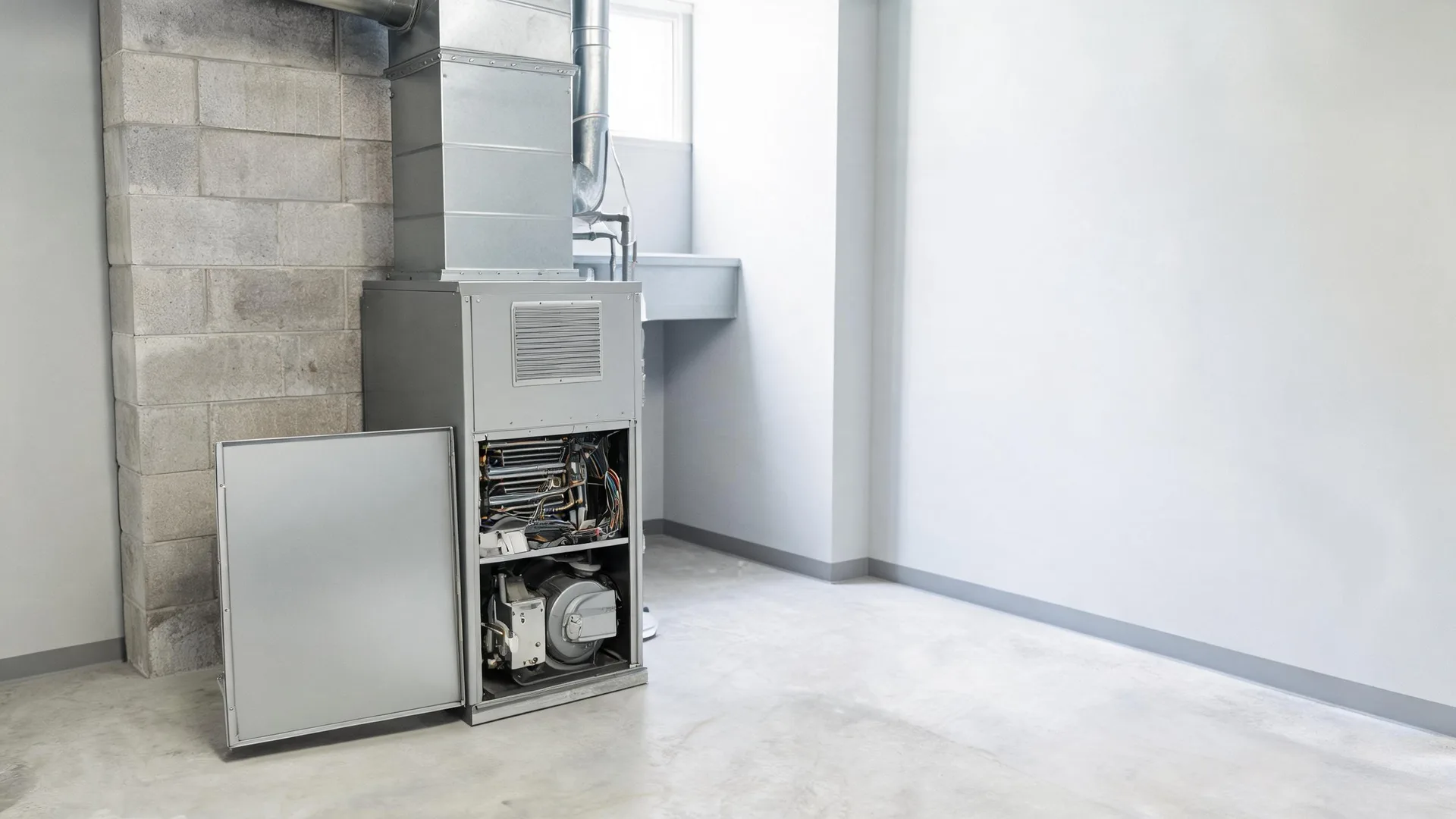
Most furnace failures start small, in one part, long before the whole system quits. An igniter weakens and takes a few extra tries to catch, then one day it doesn't. A flame sensor coated in residue reads no flame even when there is one, so the furnace shuts itself down as it's supposed to. A capacitor that's run down makes the blower motor strain to start, until the motor itself gives out from the extra load. Dirty filters choke airflow across the heat exchanger, and that heat has nowhere to go but back into the furnace itself. None of these start as emergencies. They start as a furnace working a little harder than it should, for weeks, before anyone notices.
A diagnostic visit starts with questions, not tools. The technician wants to know what the furnace is doing, or not doing, before a panel comes off. Short cycling, a smell when it kicks on, a noise that wasn't there last month, all of it narrows down where to look first. Then the panels come off and the furnace usually gets run while the technician watches it work. A weak igniter shows a dim glow instead of a steady one. A flame sensor coated in residue reads no flame even with the burners lit. The blower gets checked under load too, since a motor running on a failing capacitor can sound fine at idle and still be straining to start. If there's any question about the heat exchanger, that gets checked carefully before the furnace runs again at all. The technician should be able to point to the part and explain what it's doing wrong, not just say the furnace needs work.