



A gray forced-air furnace with ductwork stands in an unfinished concrete basement surrounded by storage items and clutter.

Furnace Repair in Othello, WA

Tell us about the job

Takes about a minute. No obligation.

RepairFurnace or heatingAdams County, WA
Step 1 of 2

What ZIP code is the job in?

Most furnace trouble traces back to the igniter or the flame sensor. The igniter has to heat up and light the gas every single cycle. That repeated heating and cooling wears it out over time until it cracks or stops glowing. The flame sensor has a different job. It confirms a flame is actually burning, and if it picks up a thin coating of residue it can't do that anymore. The furnace shuts itself down as a safety measure even though nothing else is wrong. A clogged filter causes its own chain of problems. It starves the system of airflow and makes the heat exchanger run hotter than it should, which can trip a limit switch or shorten the life of the exchanger itself. Draft and venting issues show up too, usually from a blocked inducer motor or a vent pipe that isn't clearing exhaust the way it needs to. Any of these will stop a furnace cold, but none of them mean the whole unit is done for.

9 months
September through May, your furnace is on duty
25°F
the average winter night it heats against
70 winter storms
in ten years, the nights a failure hurts most
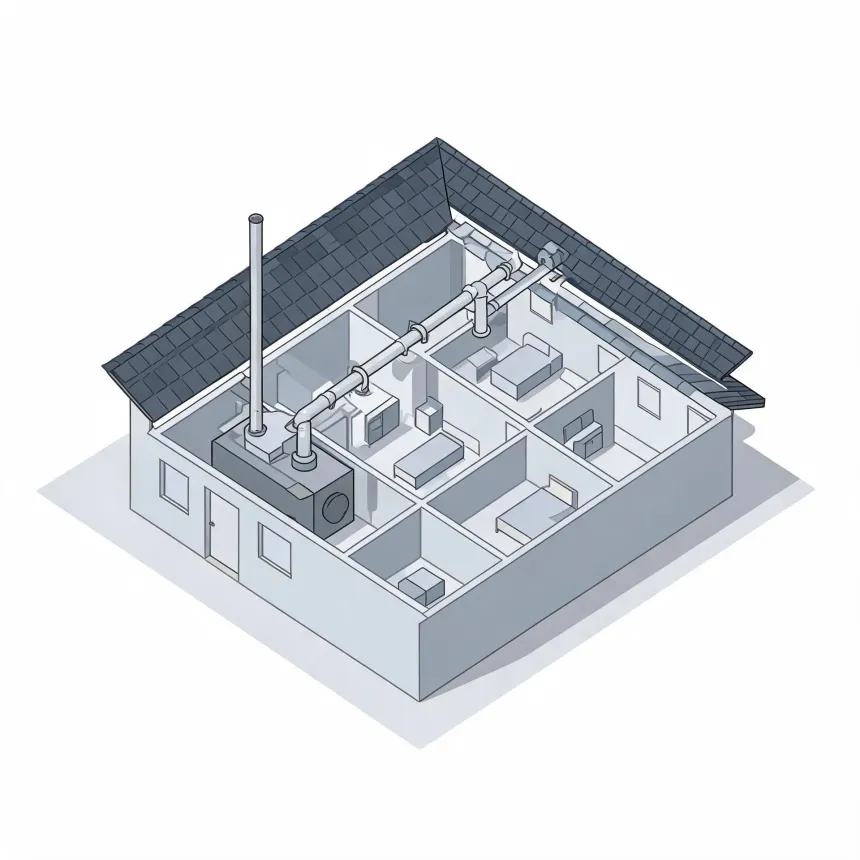
Isometric cutaway illustration of a single-story house showing interior rooms, furniture, a dark furnace unit with a tall vertical flue pipe, and ductwork running under the pitched shingle roof.
Your furnace works hardest from November through March.

NOAA nClimDiv, 1991–2020 normals

Half the homes in Adams County were built in 1977 or earlier.

A furnace that old is closer to the end of its life than the start, so a repair now may just delay a replacement.

Furnace running nonstop in a 25 degree night costs more here every month it stays broken

Heat runs September through May
Winter nights average 25°F
70 winter storms from 2015 to 2024
A broken furnace doesn't wait to cost youElectricity here runs $34.87 per million Btu, so a struggling furnace adds to every bill it touches.

Winter storms hit Adams County 70 times over the last ten years, heavy snow, ice, blizzards. That's not a rare event here, it's routine, and it tends to land in a season the furnace is already running flat out. A furnace that's been cycling since September doesn't have much left in reserve when a storm knocks the power out or buries the vent pipe in snow. If something starts acting up during or right after one, the storm found the weak part, it didn't cause it. Mention the timing to whoever comes out. It tells them where to look first.

Ask what the repair is really buying you

If your furnace came with the house, ask the contractor straight out how many years it has left before you pay for the repair. A furnace near the end of its life can still be fixed, but it helps to know whether you're buying it a few more winters or just getting through this one.

Find a contractor
A man in a cap, dark jacket and tan pants carries a worn duffel bag as he climbs porch steps toward a dark blue front door beside a potted shrub.
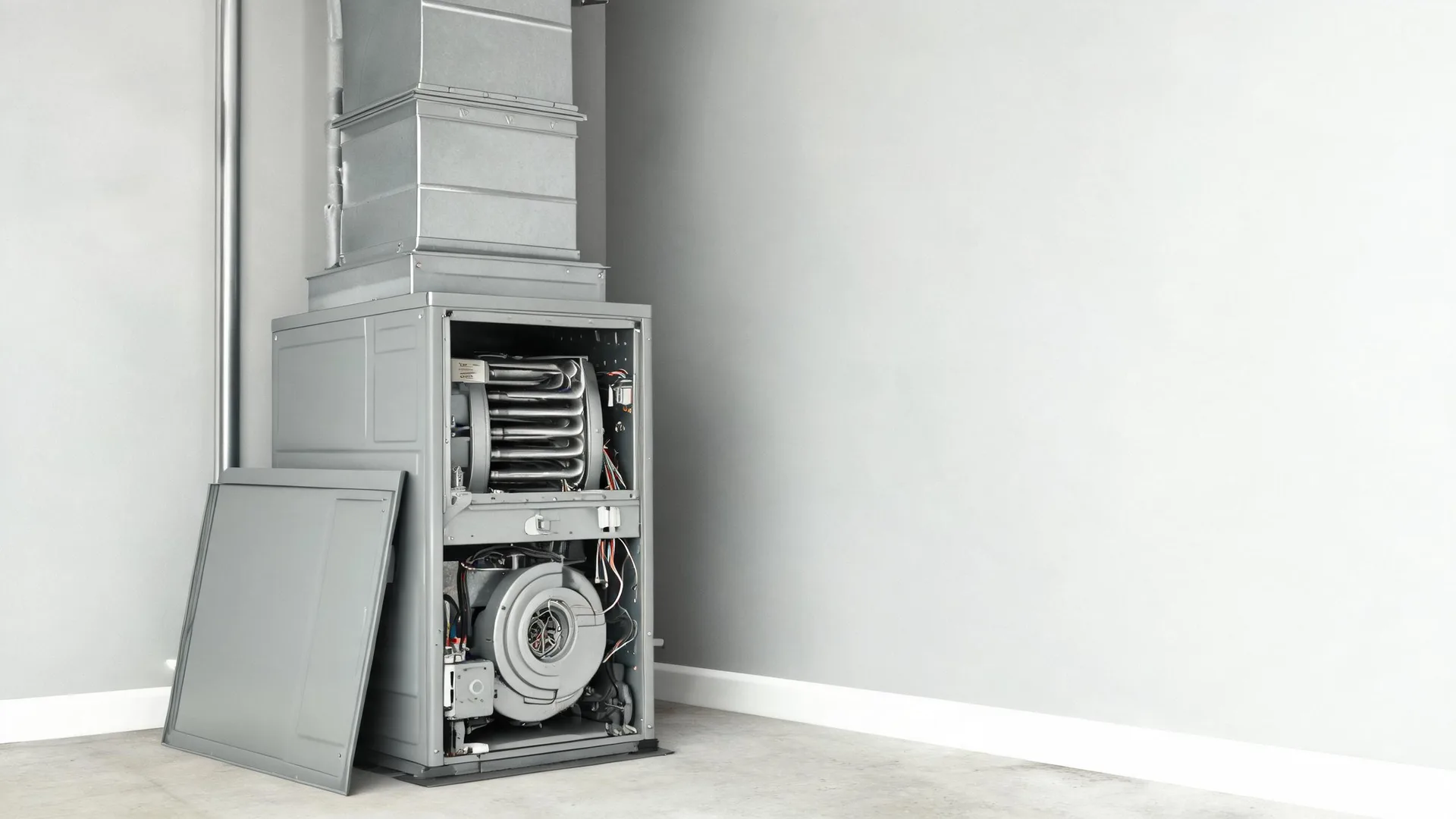
A gray residential gas furnace installed in an unfinished basement, surrounded by ductwork, a metal flue pipe, and a gas supply line.

Nine months a year wears a furnace down faster than people expect

Furnace here runs nine months a year, September through May. That's most of the calendar, not just a cold snap in January. Overnight lows average 25 in December, January and February, so the furnace isn't just running, it's working hard to keep up. Parts like the igniter and flame sensor cycle on and off every time the thermostat calls for heat, and with this little downtime between seasons, they don't get much chance to rest before the next cycle starts. If something's acting up now, the stretch it just put in is probably why.

Check the thermostat and the switch first

Make sure the thermostat is set to heat and the temperature is actually set above room temperature. Check the furnace switch, the one that looks like a light switch on or near the unit, and make sure it's on. Check the breaker too. All of this takes a minute and rules out the simplest explanation before anyone assumes the worst.
Look at the filter and the flame

Pull the filter and hold it up to a light. If you can't see light through it, the system isn't getting the airflow it needs. If the furnace lights and then shuts off after a few seconds, watch the flame through the viewing window. A flame that's mostly yellow instead of blue, or one that pulls away from the burner, is worth mentioning to whoever comes out.

Pay attention to what the furnace does right before it fails, not just after. Short cycling, where it fires up and shuts off almost right away, usually means it's overheating and tripping a limit switch, or the flame sensor is barely hanging on. A furnace that runs but never quite gets the house warm often has a different problem, like a blower that's lost strength or ductwork pulling air it can't deliver. Listen for the sounds too. A rhythmic bang at startup can mean gas is building up before it lights instead of catching right away. A grinding or screeching points to the blower motor's bearings giving out. None of these fix themselves. Waiting usually means the failure gets simpler and more total, from a furnace that struggles to one that doesn't run at all.

A diagnostic visit starts before any panel comes off. The contractor asks what the furnace was doing, when it started, and whether anything changed right before. Then the cover comes off and the testing starts in order. Power and gas supply get checked first, since a furnace that won't start at all usually traces back to one of those. From there it's the igniter, checked for a crack or a weak glow, then the flame sensor, checked for residue and tested for the signal it sends back to the control board. The filter and the blower get a look too, since weak airflow can mimic other problems or cause them. Only after all that does the contractor say what's actually wrong, and whether it's a part worth replacing or a sign the furnace is further along than the owner thought.