




A gray forced-air furnace with metal ductwork stands in an unfinished basement with exposed wooden joists, concrete walls, and a single hanging light bulb.

Furnace Repair in Raymond, WA

Tell us about the job

Takes about a minute. No obligation.

RepairFurnace or heatingPacific County, WA
Step 1 of 2

What ZIP code is the job in?

Furnaces in Raymond run from September through June, so there's not much of a break for the system to sit idle. Overnight lows average 35°F through December, January and February, which is steady demand but nothing extreme. Nothing about that workload points to a strange or unusual failure. It's more likely an igniter, a flame sensor, or a blower motor wearing out from regular use than anything particular to this area. A contractor can look at the actual fault and tell you whether it's a simple fix or something more.

10 months
September through June, your furnace is on duty
35°F
the average winter night it heats against
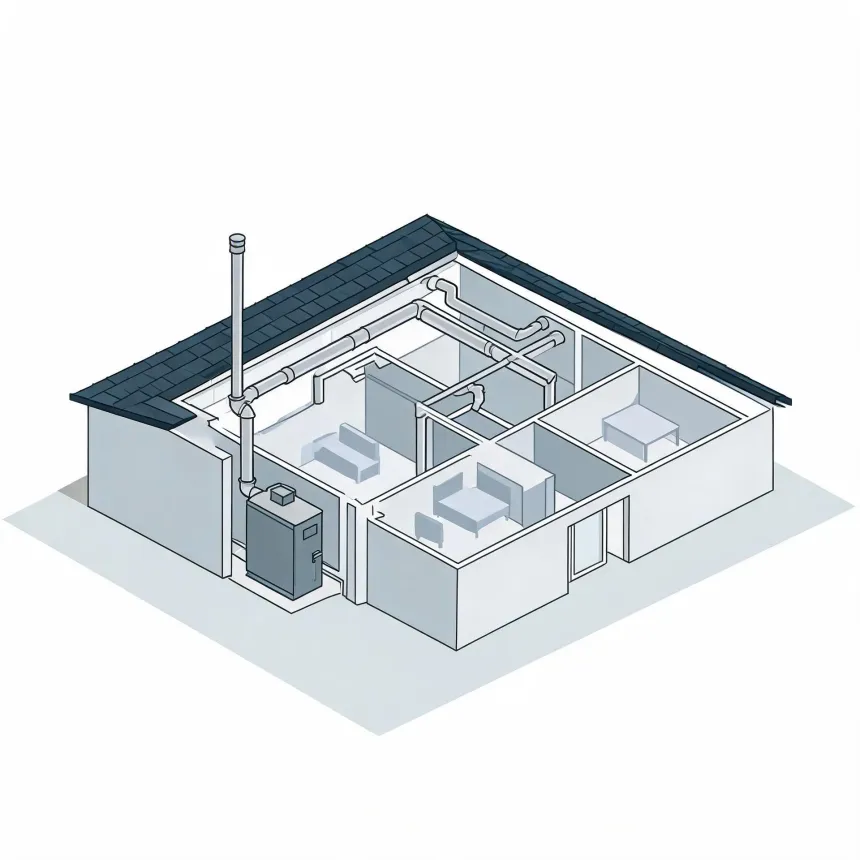
Isometric line illustration of a cutaway single-story house showing interior rooms with furniture, ceiling ductwork, and an exterior furnace unit with a tall flue pipe.
Your furnace works hardest from October through April.

NOAA nClimDiv, 1991–2020 normals

A clogged filter is the one thing worth checking yourself before any call.

Pull it out and hold it up to a light. If you can't see light through it, swap it, and see if that alone solves the problem.

Electricity here runs $34.87 per million Btu, and this furnace runs nearly all year

Heat runs September through June
Winter nights average 35°F
Climate zone 4C

Half the homes in Pacific County were built in 1979 or earlier, half in 1979 or later, so a furnace acting up could be in a house of either age. What's inside the walls or how the ductwork was run matters more than the build year itself, and that's something only a look at the actual system will tell you. Mobile homes make up about a sixth of the housing here. If yours is one, the furnace is likely a different setup, often a smaller unit tied closer to the ducting, and worth telling the contractor up front so they bring the right parts. None of this points to anything unusual going wrong. It just means the same igniter or blower problem can show up in a few different kinds of systems around here.

A furnace running on bad parts costs more here every month it waits

At $34.87 per million Btu, a furnace burning extra fuel to make up for a weak igniter or a failing blower motor adds up fast in a place where it runs nearly all year. Getting the actual cause diagnosed now stops that waste instead of paying it all winter.

Find a contractor
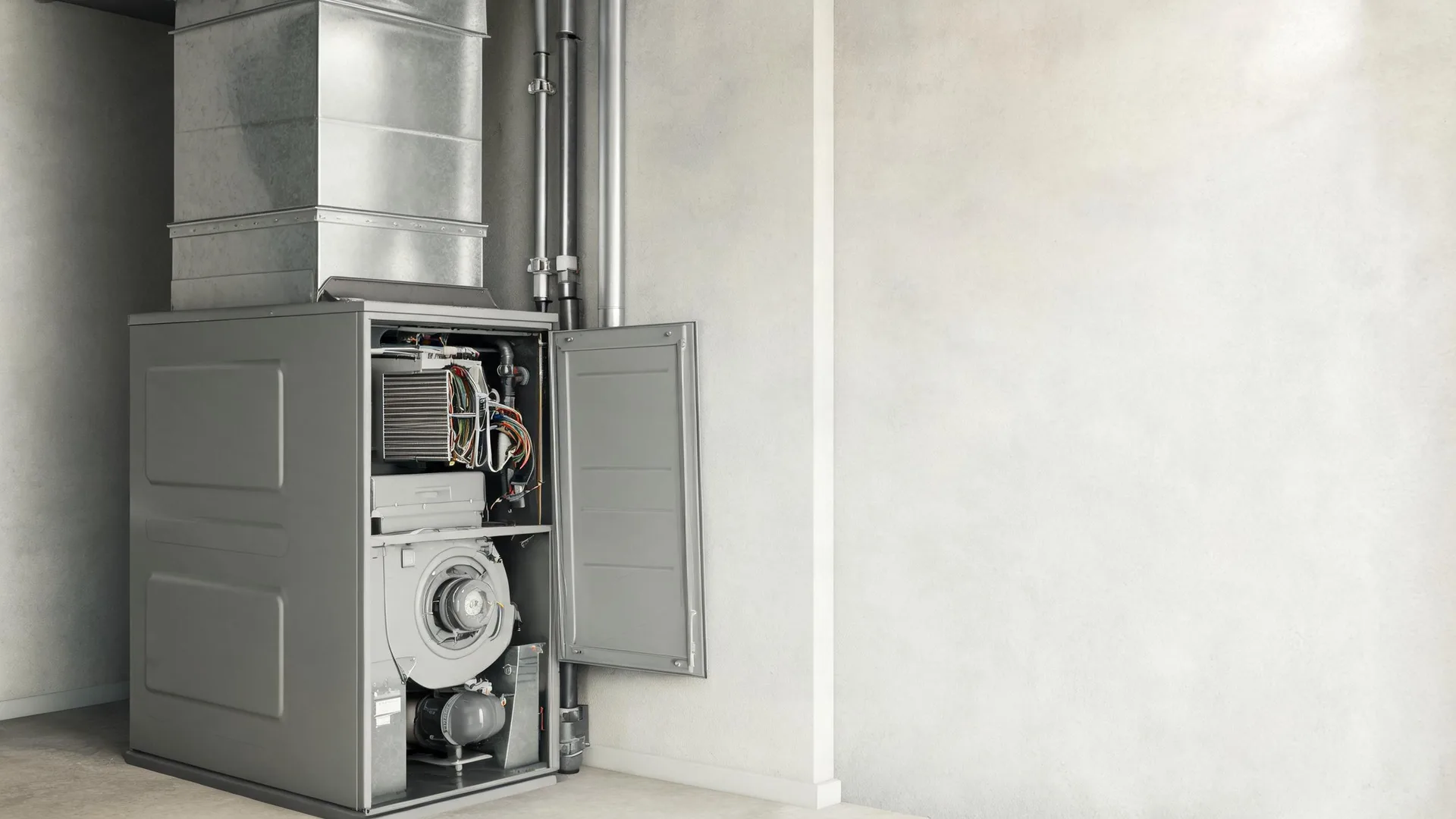
A gray residential gas furnace installed in an unfinished basement, surrounded by ductwork, a metal flue pipe, and a gas supply line.

A problem caught early is a part. Caught late, it's a system.

A cracked heat exchanger stays small if the furnace gets shut down. Keep running it and the metal keeps flexing with every heat cycle. A hairline crack opens wider. A flame sensor coated in a little oxidation might still catch most cycles. Left alone, the coating builds up until the sensor can't tell the controller the flame is lit at all. Now the furnace shuts itself off mid-cycle instead of just starting hard. A blower motor running on worn bearings will keep turning for a while, louder each week and hotter each week, until the motor seizes instead of just needing a part swapped. A part that's struggling can still do its job for a stretch. Every hour it runs in that state is an hour closer to the point where it stops doing the job at all.

Short cycling means something is telling it to stop

A furnace that fires up and shuts off again within a few minutes is usually reacting to a safety switch, not running a normal cycle. A cracked heat exchanger, a blocked flue, or a dirty flame sensor can all trip that shutdown. The furnace isn't being difficult. Something inside it is sensing a problem and cutting power before it gets worse.
Noise and smell tell you where to look

A grinding or squealing sound points to the blower motor or its bearings. A burning dust smell on first startup is normal and clears fast. A burning smell that lingers, or any smell of gas, means the furnace needs to be shut off and looked at before it runs again. The sound or the smell is usually coming from the part that's failing, not from the furnace as a whole.

Most furnace failures trace back to a handful of parts, and they fail for ordinary reasons. An igniter heats up and cools down every cycle it runs, and that repeated stress is what eventually cracks it. A flame sensor sits right in the burner flame, so it collects a thin coat of oxidation over time, and that coating is what causes the trouble, not the sensor going bad on its own. A blower motor has bearings that wear down after running for years, and a capacitor that weakens with age before it fails outright. A pressure switch or control board rarely fails from one bad event. They fail because a part near them has already started struggling and they're reacting to it. The age of the equipment matters less than how it was maintained, since a furnace that's had its filter changed and its burners cleaned on a regular basis stresses these parts far less than one that hasn't.

A diagnostic visit starts before any panel comes off. A tech asks what the furnace was doing. Short cycling, no heat at all, a smell, a sound, and when it started matter. Then the panels come off and the sequence gets watched in person, from thermostat call to ignition to burner flame to blower coming on. A multimeter checks the igniter's resistance and the flame sensor's microamp signal rather than just looking at them. A sensor can look clean and still read weak. Static pressure gets checked at the return and supply to see if the blower is fighting a restriction somewhere in the duct run. If the furnace is short cycling, the tech traces which safety switch is tripping and why, instead of just resetting it and hoping. The goal is to find the one part actually causing the symptom, not to replace parts until something works.