A rain-slicked suburban street at night lined with illuminated craftsman bungalows and tall evergreen trees.

Furnace Repair in Seattle, WA

Tell us about the job

Takes about a minute. No obligation.

RepairFurnace or heatingKing County, WA
Step 1 of 2

What ZIP code is the job in?

The furnace usually warns you first

A burner that clicks several times before it catches, air that comes out lukewarm instead of hot, a blower that keeps running after the house has warmed up, a burning smell when it first kicks on. These are not things to watch and wait on. Short cycling, where the furnace starts and stops over and over, usually points to a flame sensor or a limit switch already on its way out.

A small problem can take out a bigger part

An igniter that misfires repeatedly can damage the control board it's wired to. A blower motor straining against a clogged filter wears out faster than it should. A cracked heat exchanger will not seal itself back up, and it's a safety problem, not a comfort one. Getting a tech to look at the small symptom now is what keeps it from becoming a bigger repair.

10 months
September through June, your furnace is on duty
32°F
the average winter night it heats against
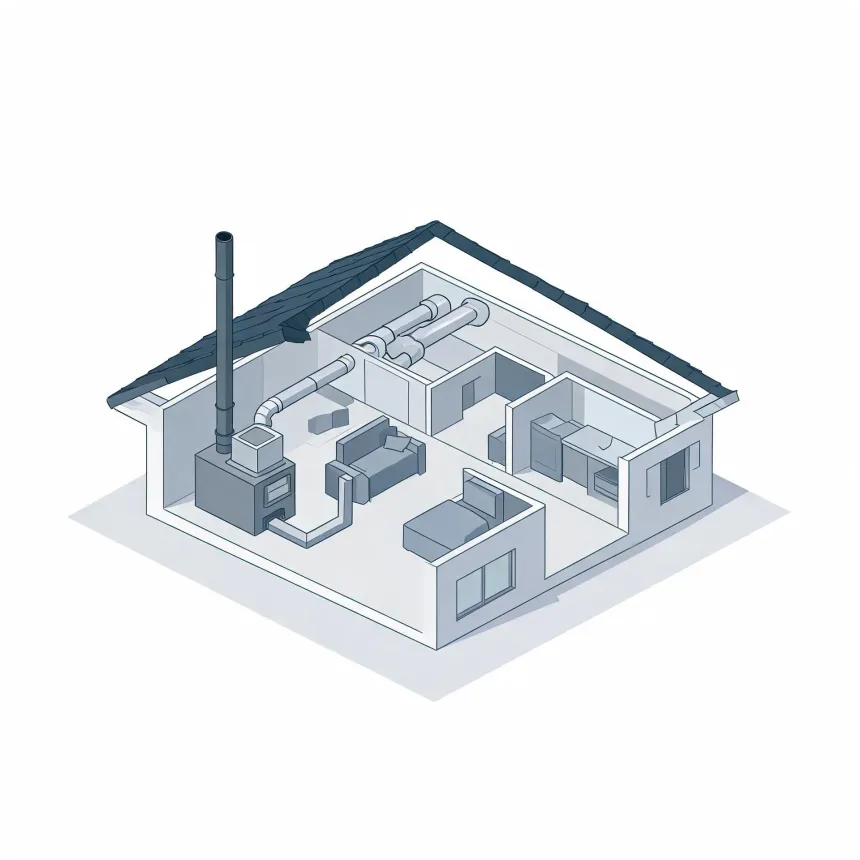
Isometric line illustration of a cutaway single-story house showing interior rooms with furniture, a furnace unit with a tall flue pipe, and connected ductwork running under the pitched roof.
Your furnace works hardest from October through April.

NOAA nClimDiv, 1991–2020 normals

An igniter or a flame sensor is a small, cheap part to replace.

A heat exchanger or a cracked control board is not, so the sooner a tech looks, the better the odds it's still the small part.

Heat runs September through June here, at Washington's electric rates, so a furnace running wrong adds up fast

Heat runs September through June
Winter nights average 32°F
Climate zone 4C

Half the homes in King County were built in 1983 or later. If your furnace came with a house that age or newer, it likely hasn't been running as long as you'd think, and it's probably nowhere near the end of its working life. That changes the math on a repair. A cracked heat exchanger is the one thing worth replacing a furnace over, but most furnace problems aren't that. A bad igniter, a failed flame sensor, a limit switch on its way out, these get fixed, not replaced, especially in a furnace with plenty of years left in it.

A furnace running wrong costs you every month it waits

Washington power runs $34.87 per million Btu, and this furnace runs most days all winter. A bad igniter or flame sensor does not fix itself, and the longer it limps along, the more every one of those months costs. Have a tech find the actual part before it takes a bigger one down with it.

Find a contractor
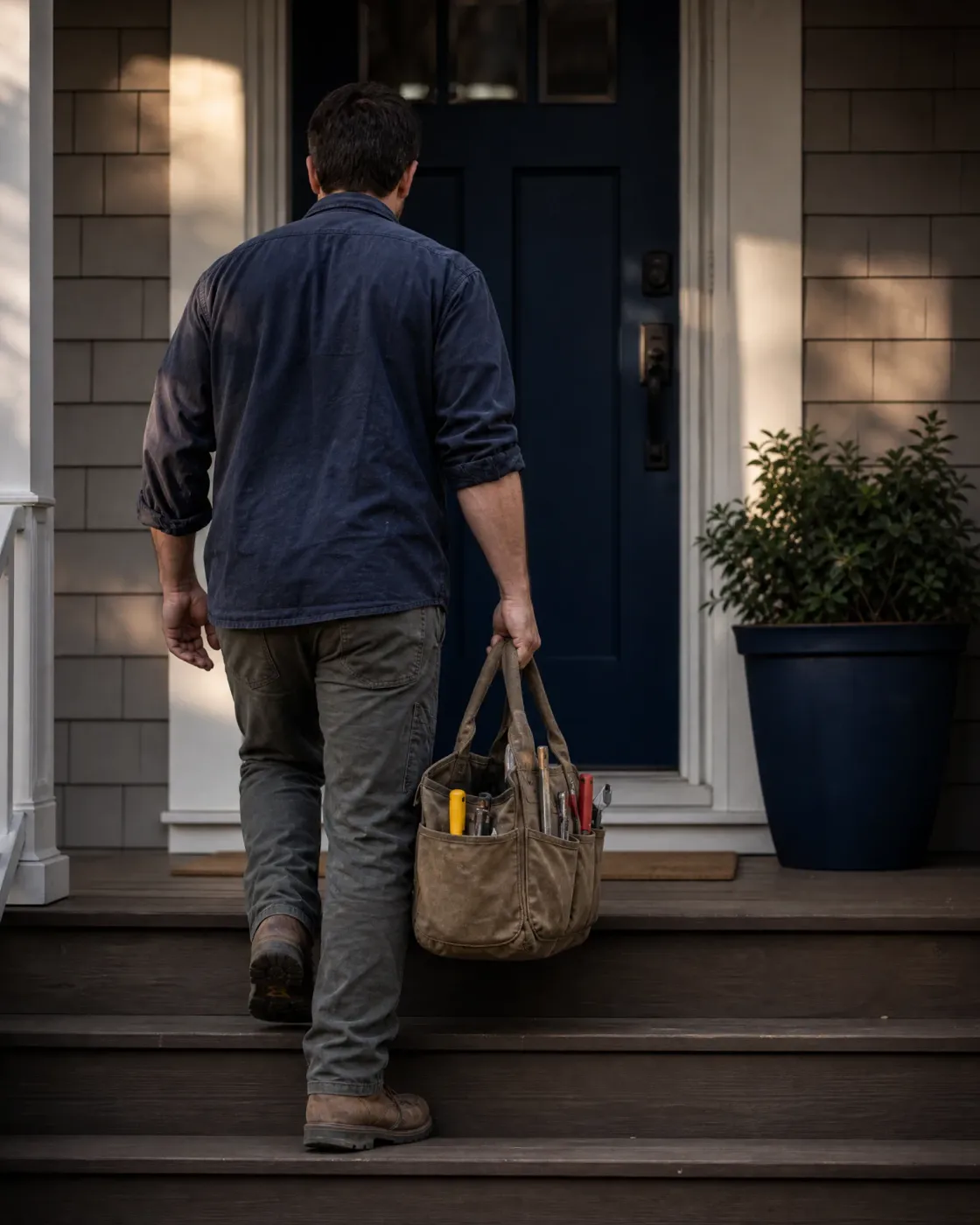
A man in a dark shirt and work boots carries a canvas tool bag filled with tools up wooden porch steps toward a navy blue front door of a shingled house, with a potted shrub to the right.
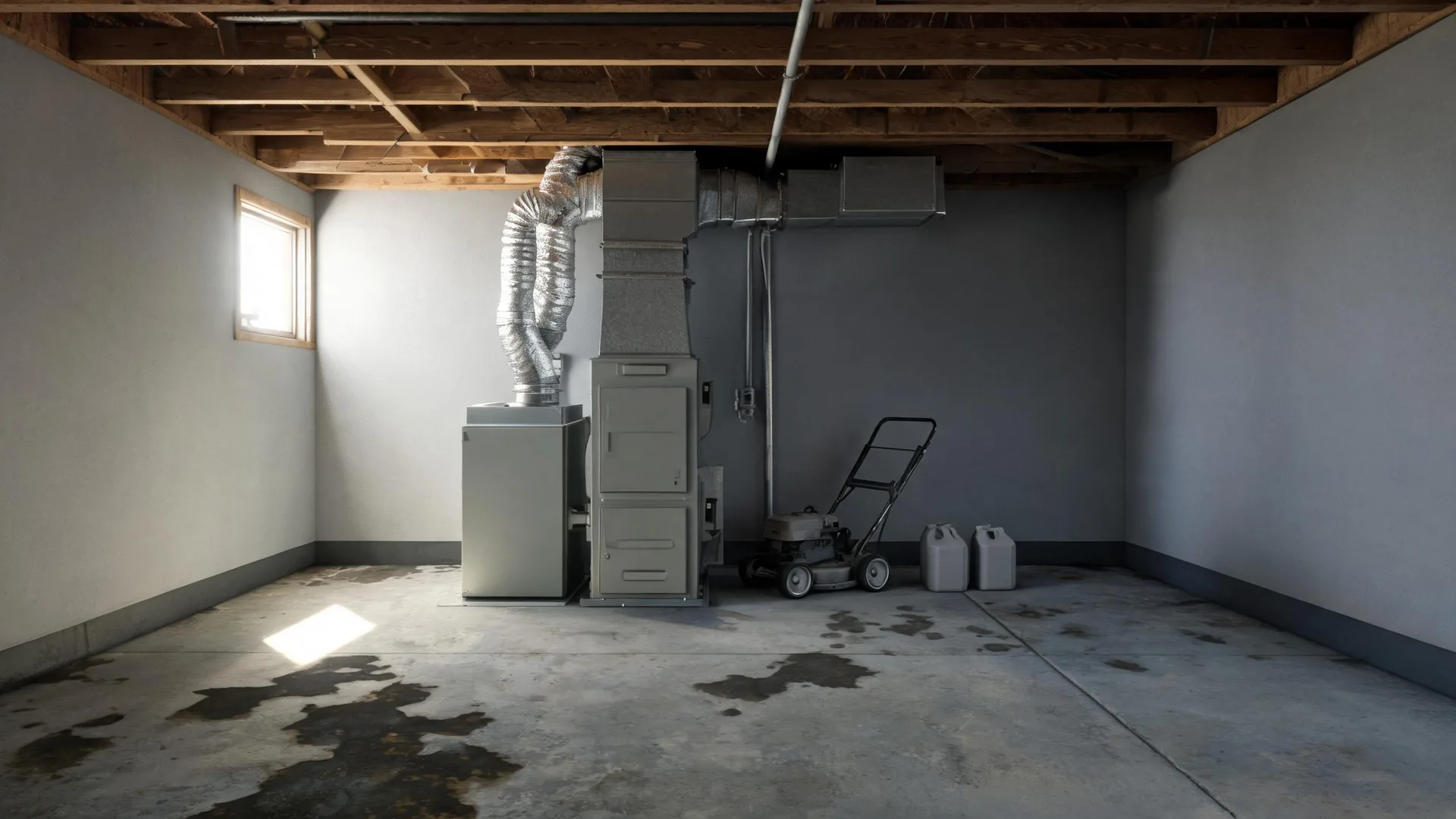
A gray gas furnace with attached ductwork and piping installed in an unfinished concrete basement.

This furnace has years left to run

A furnace built with a newer house hasn't logged as many hours as you'd guess. That's worth knowing before you agree to a replacement. If a tech finds a bad igniter or flame sensor, fixing that part is the right call on a furnace this age, not swapping the whole unit.

What you can check safely

Make sure the thermostat is actually set to heat and the setpoint is above room temperature. Find the furnace switch, it looks like a regular light switch on or near the unit, and check it hasn't been bumped off. Pull the filter and look at it, if it's gray or packed with dust, replace it, since a blocked filter starves the burner of air and can shut the whole system down. Check the breaker for the furnace hasn't tripped. If the furnace runs on a standing pilot, check whether the pilot light is lit.

What to leave for a tech

Don't open the burner compartment or reach near the flame sensor or igniter, both are easy to knock out of position or damage. If a limit switch keeps tripping, don't keep resetting it, that's the furnace telling you something downstream is actually wrong. If there's a smell of gas or scorch marks near the burners, turn the furnace off at the switch and leave it alone from there.

A furnace does not fail evenly. One part struggles while the rest of the system keeps calling for it to run, and that mismatch is what does the real damage. A blower forcing air past a clogged filter works harder than it was built to, and that strain shortens its life. An igniter that has to fire several times before the burner catches is putting more wear on itself and on the control board reading its signal, every single cycle. A limit switch that trips and gets reset without the underlying problem addressed will keep tripping, because the heat buildup causing it hasn't gone anywhere. None of these fix themselves by running longer. They get worse, and they tend to take a neighboring part down with them.

A diagnostic visit starts before the burner ever fires. A tech checks the thermostat call, the switch, the breaker, and the filter, the same things worth checking yourself, then moves on to what you can't see. Opening the burner compartment, they watch the flame itself. Is it steady, is it the right color, is the igniter sparking clean or struggling to catch. From there it's a round of testing on the parts that actually fail, the flame sensor, the limit switch, the control board, checking each one against what it should read rather than guessing from the symptom alone. Short cycling can come from more than one part, and testing is the only way to tell which one is actually bad. The last thing worth checking is the heat exchanger, because a crack there changes the whole conversation from repair to replacement.