August is the month to catch problems early
Furnaces in Pierce County sit idle most of the summer, then come back on in September. If a part was already weak, it tends to fail in those first weeks of real use, not in the middle of winter.
Takes about a minute. No obligation.
Furnaces in Pierce County sit idle most of the summer, then come back on in September. If a part was already weak, it tends to fail in those first weeks of real use, not in the middle of winter.
Heat stays on here from September through June. There's no long break to put off a repair, so a furnace acting up now is worth getting looked at before the next cold stretch asks more of it.

NOAA nClimDiv, 1991–2020 normals
A furnace that short cycles, running a few minutes then shutting off, is telling you the flame sensor or igniter is already struggling.
Caught now, that's one part. Ignored, it's the heat exchanger or blower motor going next.




If your furnace came with a house built in the last few years, there's not much reason to think the unit itself is old or worn out. That changes the question when something goes wrong. A new-enough furnace acting up is almost always one part failing, not the whole system reaching the end of its life. Replacing a furnace that still has years ahead of it doesn't make sense when a repair solves the actual problem. The honest first step is finding out which part is causing the trouble, not assuming the unit is done.
Every month it runs rough is a month of paying more than you should for heat. Get the part that's failing found and fixed before another winter month passes.
Find a contractor
Check the thermostat first. Make sure it's set to heat, not cool, and the temperature you want is actually above room temperature. If it runs on batteries, swap them before you assume anything else is wrong. Next, go to the furnace itself and look at the door panel. Most furnaces won't run at all if that panel isn't seated and latched correctly, it's a safety switch, not a suggestion. Check your air filter while you're there. A filter clogged with dust can choke airflow badly enough that the furnace overheats and shuts itself down before it's done the job. Walk around the house and check that supply vents and return grilles aren't blocked by furniture or rugs. Last, find your breaker panel and look for a tripped breaker, and if your furnace is gas, check that the gas valve leading to it is turned to on. None of this fixes a cracked heat exchanger or a dead control board. But it rules out the simple stuff, and it tells the contractor more than 'it's not working' when they pick up the phone.
A hairline crack in the heat exchanger doesn't heal. Every time the furnace fires, the metal heats and expands, and a crack that was tight gets a little wider. Left running, what started as a small crack can open enough to let exhaust mix into the air moving through the house.
A blower motor forced to push air through a clogged filter or blocked vents is working harder than it was built for. That strain shows up as heat in the motor windings. Run it like that long enough and the motor fails completely, instead of the simple fix of clearing what was blocking it.
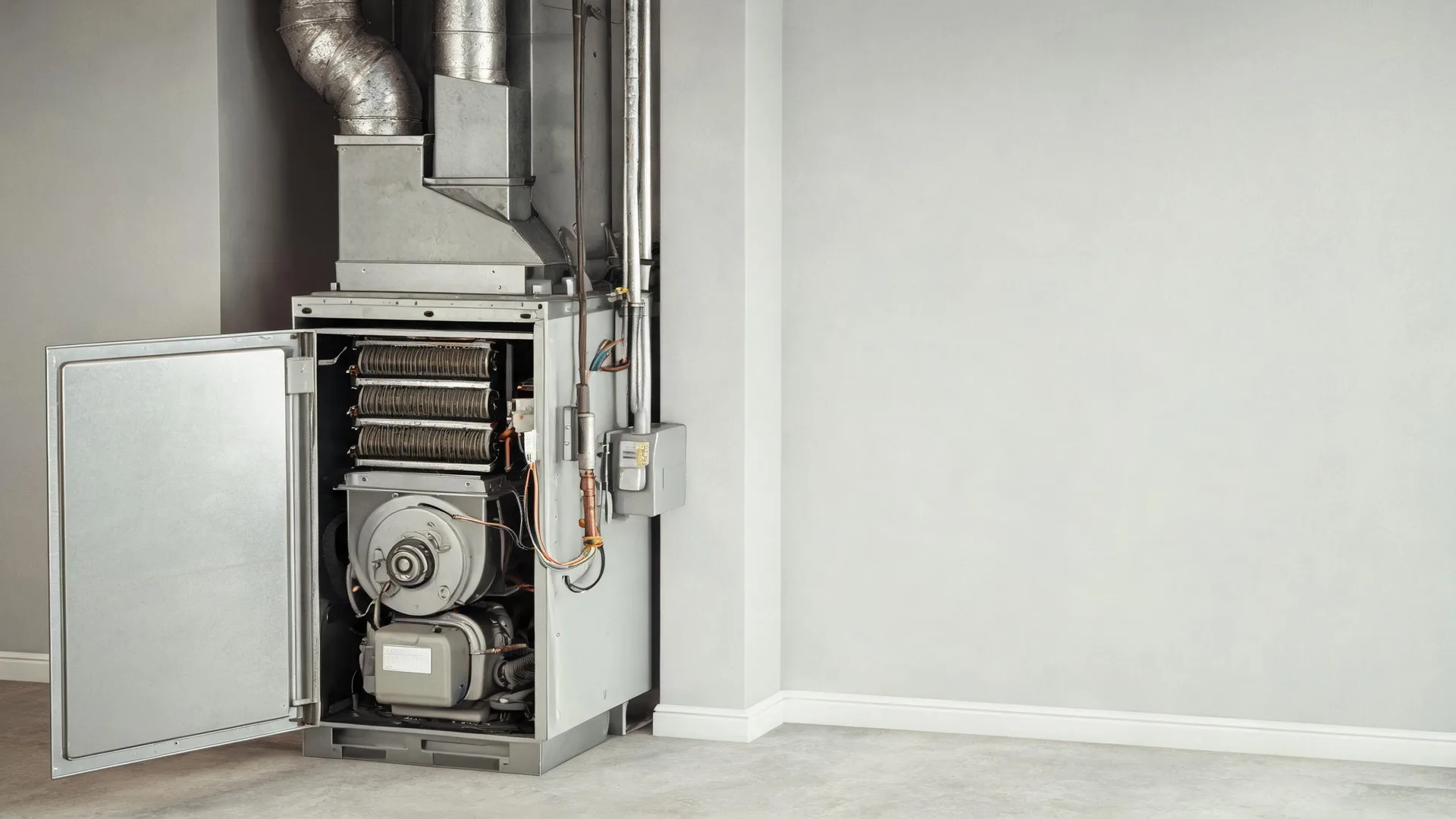
Most furnace failures trace back to a handful of parts, and they tend to go in the same order. The igniter or flame sensor goes first, since both sit right in the flame path and take that heat and wear cycle after cycle. A dirty flame sensor will make the furnace shut off a few seconds after starting, almost like it changed its mind. A failed igniter means it won't start at all. Further down the line, the inducer motor and blower motor carry the load mechanically, and either one can seize or burn out after enough years of running. The control board fails less often, but when it does, it can mimic almost any other problem, which is why a tech checks it last rather than first.
A tech starts by asking what the furnace was doing before it quit, since that narrows things down before any panel comes off. Then the door panel comes off and the burners get a look while the furnace runs through a cycle, because some failures only show up when the gas valve opens and the igniter has to prove itself. Watching the flame tells a lot. A weak or uneven flame points one direction, a furnace that ignites then drops out points at the flame sensor. If it won't start at all, the tech checks for power to the control board and voltage at the igniter before touching anything else. Airflow gets checked too, since a blower pulling against a clogged filter or blocked return can look like all sorts of other failures until someone clears the real cause. The goal is to find the one part actually causing the trouble, not to start swapping parts and see what helps.