A multi-story timber-frame and stone house glows with warm interior and exterior lighting on a dark residential street, with mountain peaks and pine trees visible in the background.

Heat Pump Installation in Colville, WA

Tell us about the job

Takes about a minute. No obligation.

New system or replacementHeat PumpStevens County, WA
Step 1 of 2

What ZIP code is the job in?

Winter storms are the norm here, not the exception

Stevens County logged 319 winter storm events between 2015 and 2024. A heat pump's outdoor unit sits outside through all of it, so where it goes and what shields it from snow load and falling ice matters as much as the unit itself.

Power loss means losing heat, not just lights

Close to a quarter of Washington households went at least a day without power in 2024. A heat pump runs on electricity for both heating and cooling, so an outage takes the whole system down until power comes back. Worth asking about backup heat or battery options before the install, not after the first outage.

10 months
September through June, your system heats
2 months
July through August, it cools
21°F
the average winter night it heats against
79°F
the average summer afternoon it cools against
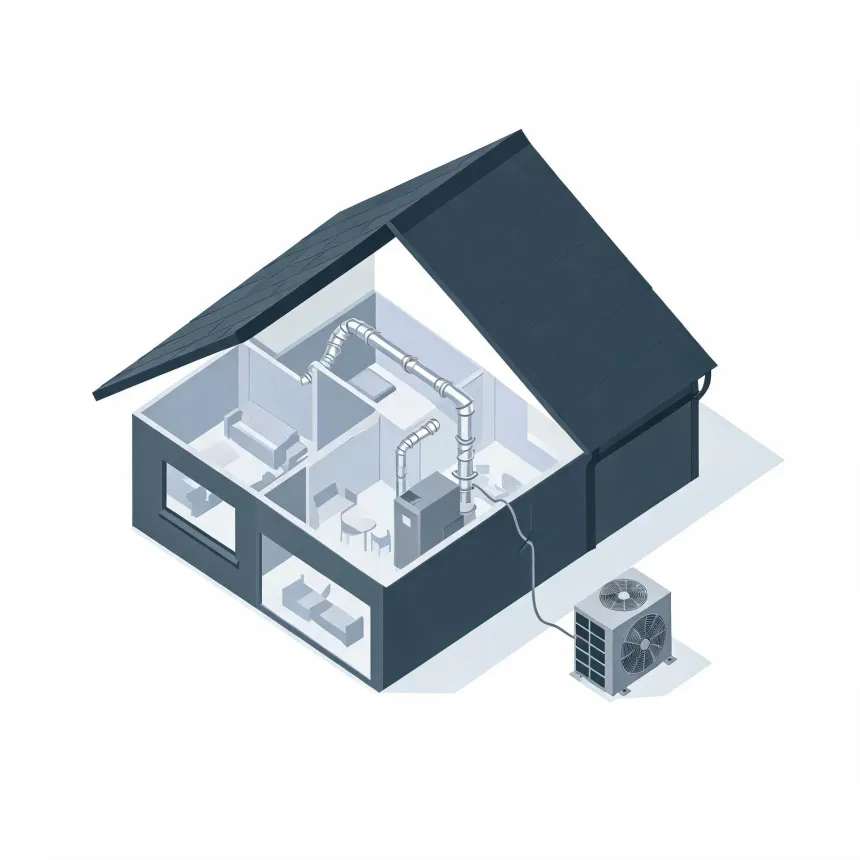
Isometric illustration of a cutaway house showing interior rooms with furniture, a furnace and ductwork, connected by a line to an outdoor condenser unit on the ground outside.
Your system heats September through June and cools July through August.

NOAA nClimDiv, 1991–2020 normals

Electricity heats 43.2% of homes in Stevens County, more than any other fuel.

A heat pump replacing an existing electric furnace or baseboard setup is working with wiring the house already has.

Heat runs here from September through June, so get it installed before then

Cooling runs July through August
Heat runs September through June
31 damaging wind events from 2015 to 2024

Colville sees cold nights, but the work a heat pump does here is steady, not extreme. Overnight lows average 21°F through December, January and February, well within what a normal heat pump handles without strain. The bigger wear on a system here doesn't come from the compressor running hard. It comes from what's parked outside through 319 winter storm events a decade brings, the snow load and ice that build up on the outdoor unit. A heat pump that's installed well and sited to shed snow doesn't need to be the highest-efficiency model on the lot. It needs to keep running through weather, year after year.

A standard heat pump, sized and installed right, is what this job calls for

Half the homes in Stevens County were built in 1985 or earlier, half in 1985 or later. Mobile homes make up 18.4% of the housing here. None of that calls for a bigger unit or a higher efficiency tier. A correctly sized heat pump, installed and sited well, is the right fit for this job.

Find a contractor
A man in a dark shirt, tan pants and cap walks up porch steps toward a navy blue front door, carrying a canvas tool bag filled with hand tools, beside a potted shrub in a blue planter.
A gray heat pump outdoor unit mounted on a concrete pad next to a residential house with lap siding and stone accents.

What happens to the old system

The old system doesn't get hauled off before the new one proves itself. Most installers leave the existing furnace or electric baseboards in place and wired, at least through the first winter. That backup stays ready in case the heat pump needs a hand on the coldest nights or something needs troubleshooting after the install. If the old equipment was a furnace paired with ductwork, that ductwork usually carries over, so the crew is tying into what's already there rather than starting from nothing. An old outdoor condenser or heat pump unit does get disconnected and removed, since there's no reason to leave it taking up space once the new one is running. Whatever gets removed, a licensed crew handles the refrigerant in it properly rather than venting it, since that's both the law and good practice.

Ask for the heat loss calculation, not a guess off square footage

The size of a heat pump should come from a room by room load calculation that accounts for insulation, window area and ceiling height, not a quick estimate based on the home's square footage. A unit sized too big will short cycle, turning on and off without running long enough to dehumidify or heat evenly. A unit sized too small will run constantly and still fall short on the coldest days.

Ask what happens below the unit's balance point

Every heat pump has a temperature where it can no longer pull enough heat from the outside air to keep up with the house, called the balance point. Below that, something else has to carry the load, whether that's electric resistance strips built into the air handler or a separate furnace working alongside the heat pump. Find out what kicks in, when it kicks in, and whether that backup heat is already included in the quote or priced separately.

The rating on the label, usually called HSPF for heating and SEER for cooling, tells you how much heat a unit moves for the electricity it uses. A higher number means lower running cost, all else equal, but it's not the only thing that decides what you pay. A top-tier unit sized wrong for the house will still cost more to run than a mid-tier unit sized right. The rating also gets tested in mild conditions, so it tells you less about how the unit performs on the coldest nights of the year, which is where backup heat and balance point matter more than the number on the sticker. Chasing the highest rating on the lot is usually money spent in the wrong place.

Installation day starts outside, before anyone touches the indoor unit. The crew sets the pad or bracket for the outdoor unit first, since where it sits and how it's anchored matters as much as anything else they'll do that day. Inside, swapping the air handler or coil usually goes quicker. Running new line sets and electrical whips takes longer, especially if the system wasn't a straight swap for what was there before. Once everything's connected, the lines get pressure tested and pulled down to vacuum before any refrigerant goes in. Trapped air or moisture left in the lines causes problems later, so this step doesn't get skipped. The last part is commissioning. That means checking airflow, checking the charge, and setting up the thermostat so backup heat only kicks in when the heat pump actually needs help.