



A rustic log rail fence beside a gravel verge and paved road, with dark-sided cabins with metal roofs among tall pine trees under an overcast sky.

Heat Pump Installation in Davenport, WA

Tell us about the job

Takes about a minute. No obligation.

New system or replacementHeat PumpLincoln County, WA
Step 1 of 2

What ZIP code is the job in?

Electricity heats 49.4 percent of homes in Lincoln County, more than any other fuel. Utility gas comes in second at a quarter of homes, with propane and oil making up smaller shares. Since most homes here already run on electricity, a heat pump fits without adding a gas line or a propane tank. It also covers both heating and cooling from one outdoor unit instead of running separate systems for each. Given how often power here goes out for stretches, it's worth asking what backup heat the system uses when the grid does too.

10 months
September through June, your system heats
2 months
July through August, it cools
23°F
the average winter night it heats against
82°F
the average summer afternoon it cools against
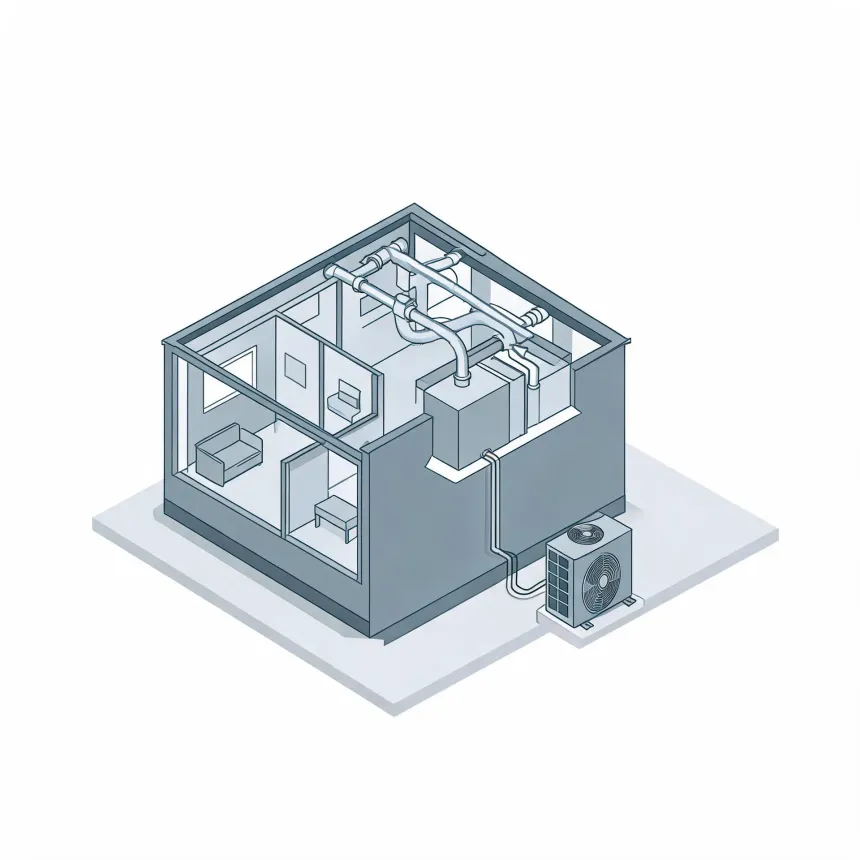
Isometric line illustration of a cutaway house showing interior rooms with furniture, ceiling ductwork connected to an indoor air handler, and refrigerant lines running to an outdoor condenser unit on a pad.
Your system heats September through June and cools July through August.

NOAA nClimDiv, 1991–2020 normals

A heat pump here doesn't need a special size or a higher-end model to handle Davenport.

Standard equipment, sized to your house, does the job and keeps the electric bill in line with Washington's 11.90 cents per kilowatthour rate.

Heat runs ten months here. Get the heat pump in before September.

Cooling runs July through August
Heat runs September through June
Climate zone 5B

A standard heat pump handles Davenport

A standard heat pump, sized to your house, heats and cools Davenport fine. There's no reason to size up or pay for a higher-end unit here. The thing worth planning for isn't the size of the unit, it's what happens when the power goes out, since storms here do that more than most places.

Find a contractor
A gray heat pump outdoor unit mounted on a concrete pad next to the stone-accented exterior wall of a house.

Half these homes were built in 1972 or earlier

Half the homes in Lincoln County were built in 1972 or earlier. A house that age was likely heated by something other than a heat pump originally, so the ductwork and electrical panel were sized for that system, not this one. Before the new unit goes in, it's worth having both checked so the installer sizes the heat pump to what's actually there instead of a guess.

The load calculation, not the square footage

A heat pump is sized by a room by room load calculation, which weighs window area, insulation, ceiling height and air leakage against the local climate. Square footage alone leaves out too much. Houses the same size can need different sized units depending on how much glass faces the weather and how tight the walls and attic are.
Oversized runs worse, not better

A heat pump that's too big cools or heats the space fast, then shuts off, then kicks on again soon after. Short cycling like that keeps the system from running long enough to pull moisture out of the air or settle into steady operation. The right size unit runs longer, steadier cycles, and that's what keeps the house comfortable instead of swinging hot and cold.

When you're comparing quotes, ask what happens below freezing, not just how the unit performs on a mild day. Every heat pump loses capacity as the outdoor temperature drops, and manufacturers publish that falloff. A unit that looks identical to another on paper can hold its heating output much better in the cold. Ask too where the balance point sits, the temperature where the heat pump can no longer keep up on its own and backup heat has to take over. That number tells you more about how the system will actually run than the brand on the box. Ask about the compressor type as well. A variable speed compressor ramps up and down to match the load, instead of just switching on and off at one speed, and that difference shows up in both comfort and how long the equipment lasts.

The old furnace or AC doesn't need to come out before the heat pump goes in, but it usually does, since most installs swap the whole system rather than stack a new one on top of an old one. If backup heat strips are going into the air handler, the installer may keep the existing ductwork and electrical runs and just change out what sits in the cabinet. A gas furnace that's getting replaced outright has to be disconnected from the gas line properly, capped, and the flue handled so there's no open vent left behind. Whatever gets pulled out, a licensed contractor hauls it off as part of the job. Refrigerant in the old system also has to be recovered rather than vented, so ask how that part is handled before the old unit comes off the pad.