Most homes here already run on electric heat
Electricity heats 77.8% of occupied homes in Columbia County. A heat pump fits right into that setup, running on the same electric service most houses already have.
Takes about a minute. No obligation.
Electricity heats 77.8% of occupied homes in Columbia County. A heat pump fits right into that setup, running on the same electric service most houses already have.
Switching from gas or oil to a heat pump means new wiring or a new circuit, sometimes more. Here, that step is already done for most houses, so the job is about sizing the right system and installing it.
NOAA nClimDiv, 1991–2020 normals
Winter storms hit Columbia County 53 times between 2015 and 2024.
A heat pump installed here needs to hold up through weather like that, which is exactly what a standard cold-climate system is built for.



Washington electricity ran 11.90 cents per kilowatt-hour in 2024, well under what most of the country pays. That changes the math on which heat pump to install. The most efficient model on the lot earns back its extra cost through lower bills, and that payback stretches out when power is already cheap. Here, it makes more sense to weigh how well a system holds up through winter and how well it's sized to the house than to chase the highest efficiency number on the sticker. A contractor can size the unit to the house and walk through which features are worth paying for at these rates.
Winter nights here average 26 degrees, and winter storms have hit the county 53 times over the past ten years. That's what the system has to handle, nothing harsher. A cold-climate heat pump sized right for the house will hold up fine, no need to pay for a higher-end unit than the house calls for.
Find a contractor
Half the homes in Columbia County were built in 1953 or earlier. A house that old usually wasn't set up with a heat pump in mind, so the ductwork, the electrical panel, or both may need a look before the new system goes in. That's not a mark against the house. It just means sizing the unit right matters more than it would in new construction, and a contractor should check what the house already has before settling on equipment.
Too big and it short cycles, blasting the house to temperature and shutting off before it pulls the moisture out of the air, so the house feels clammy even when it's warm enough. Too small and it runs flat out on the coldest days and still can't keep up, leaning hard on backup heat strips to close the gap. Either way the compressor takes the hit, starting and stopping more than it should or running longer than it should.
A contractor measures the square footage, checks the insulation, counts the windows and their orientation, and figures out how fast each room loses heat in the cold and gains it in the summer. That number, not the size of the old furnace or what the neighbor has, is what the new equipment gets matched to. Skipping this step and swapping in a unit the same size as whatever was there before is how a lot of oversized systems end up installed.
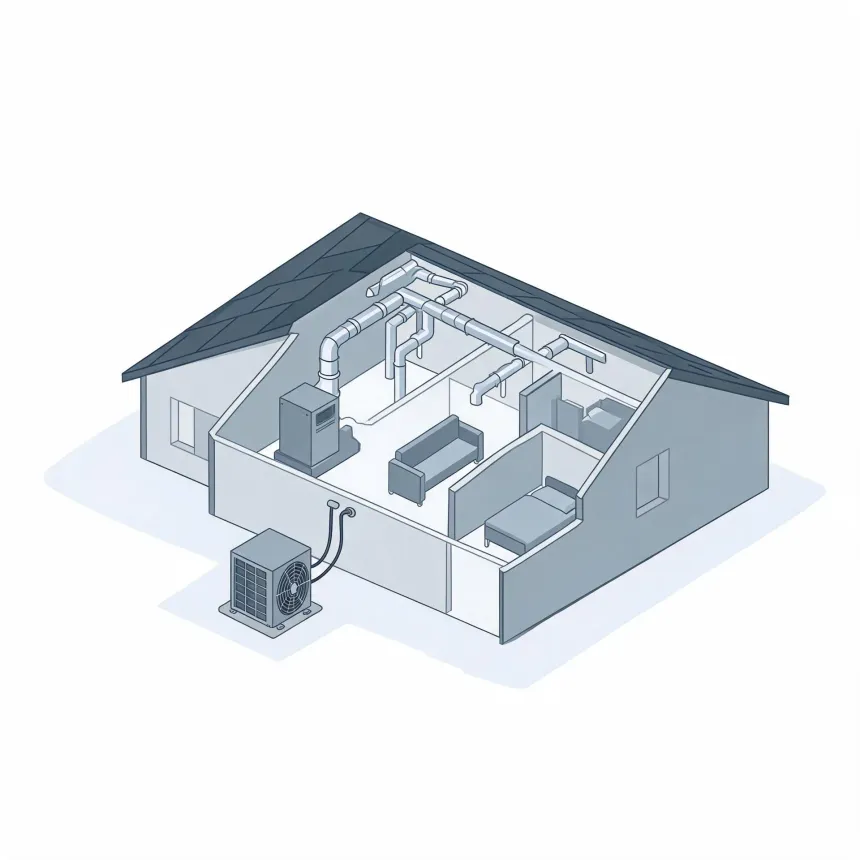
The outdoor unit and the indoor air handler are only part of what gets priced. Running new line sets, adding a dedicated electrical circuit, or upgrading the panel to handle the load can matter more than which brand ends up on the pad. Ductwork plays into it too. If the existing ducts are undersized or leaky, sealing or resizing them adds to the job, but skipping that step just means the new system fights the same bottlenecks the old one did. Backup heat strips, a thermostat built to run the system properly, and the labor to remove the old equipment all factor in as well. The unit itself is rarely the whole bill.
The efficiency rating on a heat pump's label, the one with the SEER2 and HSPF2 numbers, tells you how much heat or cooling the system produces for the electricity it uses. It has nothing to do with how big the system is or how much space it can handle. A high rating on an undersized unit still leaves the house cold on a hard night. The rating also assumes lab conditions, steady power, a clean filter, ductwork that isn't leaking air out before it reaches the room. A system can carry a strong number on the sticker and still run worse than it should if the ducts around it are in bad shape or the charge isn't right. None of that shows up on the label. It shows up in how the house actually feels.