






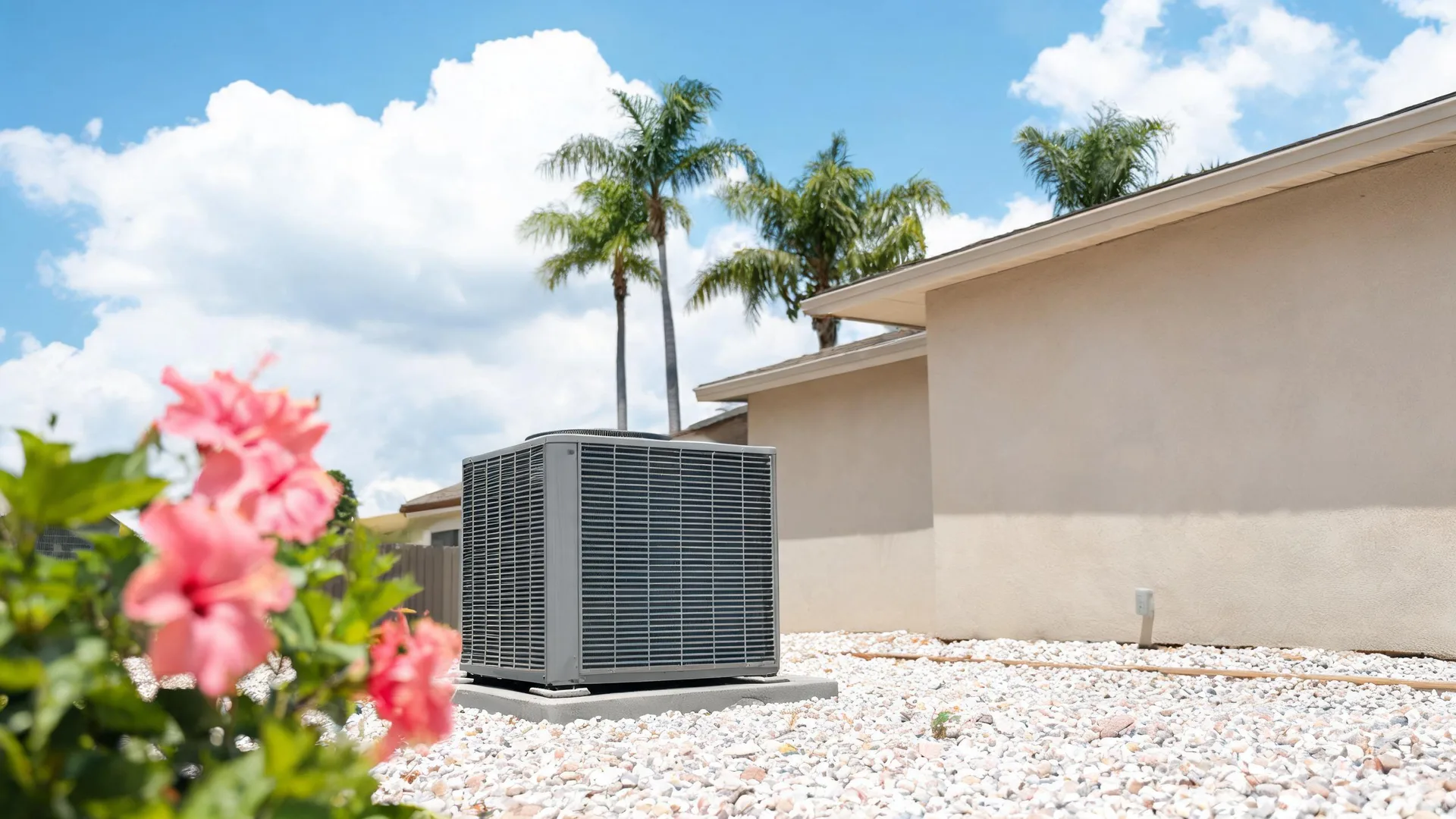
An outdoor HVAC condensing unit on a concrete pad next to a beige single-story house with a dark shingle roof.

Heat Pump Installation in Kennewick, WA

Tell us about the job

Takes about a minute. No obligation.

New system or replacementHeat PumpBenton County, WA
Step 1 of 2

What ZIP code is the job in?

Most homes in Benton County heat with electricity, 78.3 percent of them. Gas heat is uncommon here, just 18.6 percent, and bottled or LP gas barely registers at 1 percent. A heat pump fits right into that picture, since it runs on electricity like the system it's likely replacing. There's no gas line to deal with and no new fuel source to plan around. What matters more is the wiring and panel capacity already in the house, and that's worth having a contractor check before installation.

8 months
October through May, your system heats
3 months
June through August, it cools
28°F
the average winter night it heats against
86°F
the average summer afternoon it cools against
Isometric line illustration of a cutaway single-story house showing interior rooms, ceiling ductwork and an indoor air handler, connected by a line to an outdoor condenser unit on a pad beside the building.
Your system heats October through May and cools June through August.

NOAA nClimDiv, 1991–2020 normals

May is the last quiet month before cooling starts in June.

Get the heat pump in during May, and it's already broken in by the time you need it.

Electricity here runs 11.9 cents a kWh, so a heat pump earns its keep on comfort more than on the bill

Power costs 11.9 cents a kWh statewide
25 damaging wind events from 2015 to 2024
3 hail events from 2015 to 2024
Your heat pump won't work hard hereWinter lows average 28°F, and Benton County sees wind or hail far more often than snow and ice.

Kennewick falls under zone 5B, a cool, dry climate where heating carries more of the load than cooling does. Any split-system heat pump installed here, if manufactured from 2023 on, has to meet the federal minimum of 14.3 SEER2 for cooling and 7.5 HSPF2 for heating. That floor is set nationally, not locally, so it's the same number whether the contractor quotes a base model or something higher. A system rated right at that minimum will still heat and cool the house. Going above it is a matter of choice, not requirement, and it's worth asking what the federal tax credit covers if you're looking at a higher-efficiency unit.

A higher rating costs more up front. Make sure it buys you something.

At 11.9 cents a kWh, the payback on a higher SEER2 model stretches out. Ask the contractor what you get for the difference in price, whether that's a better warranty, quieter operation, or just a higher number on paper, and decide from there.

Find a contractor
A dark gray heat pump unit mounted on a concrete pad next to a house with gray siding and a stone veneer wall.

What drives the price isn't the unit, it's what has to change to fit it

The equipment price on a quote is only part of what sets the final number. Ductwork is often the bigger factor. If the existing ducts are the wrong size for the new system, leaky, or routed in a way that doesn't match how a heat pump moves air, bringing them up to spec costs more than the unit itself in some jobs. Where the air handler and outdoor unit go matters too. A straightforward swap in the same spot with the same line set length is a different job than one that needs new refrigerant lines run, a new pad poured, or electrical work to support a bigger breaker. Capacity also plays into it. A system sized correctly for the house costs less to run and wears less than one that's oversized or undersized, and sizing takes a proper load calculation, not a guess based on the old equipment. The more of that work a house already has in place, the less a contractor has to add, and the more a house needs changed to fit the new system, the more it costs to put in.

Ask for the load calculation, not just a size

A heat pump sized off the old furnace or a square footage guess can end up wrong for the house. Ask whether the contractor ran a room by room load calculation, and ask to see it. That number, not the brand or the rating on the box, is what decides whether the system keeps up on the coldest morning without running nonstop.
Ask what happens when it's coldest outside

Every heat pump loses some capacity as the temperature drops, and at some point it needs backup heat to keep the house comfortable. Ask what kind of backup is built in, how it switches on, and whether that switchover is set up to run efficiently or just as a fallback. That answer tells you more about winter comfort than any efficiency rating does.

The SEER2 and HSPF2 numbers on the label describe efficiency, not how big a system is or how well it will heat the house. A unit with a higher rating moves the same amount of heat using less electricity, so a more efficient system can condition the same space for less over time than a less efficient one. That rating comes from a lab test under set conditions, though, not the weather or ductwork in any particular house. A higher rating also tends to come with a more complex unit under the hood, often a variable speed compressor or a larger coil, and more parts that can eventually need service. Efficiency is worth knowing, but it answers a different question than whether the system is sized right for the house or built to last.

Installation day starts with the old equipment coming out, not the new unit going in. The crew disconnects the refrigerant lines, recovers the old refrigerant, and clears the existing outdoor unit and indoor coil out of the way before anything new gets set. If the line set is being reused, it gets flushed first, since old oil and debris left behind will contaminate a new system fast. Electrical work usually follows, tying in the disconnect and breaker the new unit needs. Once the outdoor unit is set on its pad and the indoor unit is in place, the lines get connected, the system gets evacuated to pull out moisture and air, then charged with refrigerant to the manufacturer's spec. Last comes startup, checking airflow, confirming the thermostat talks to the system correctly, and running it in both heating and cooling before anyone leaves.