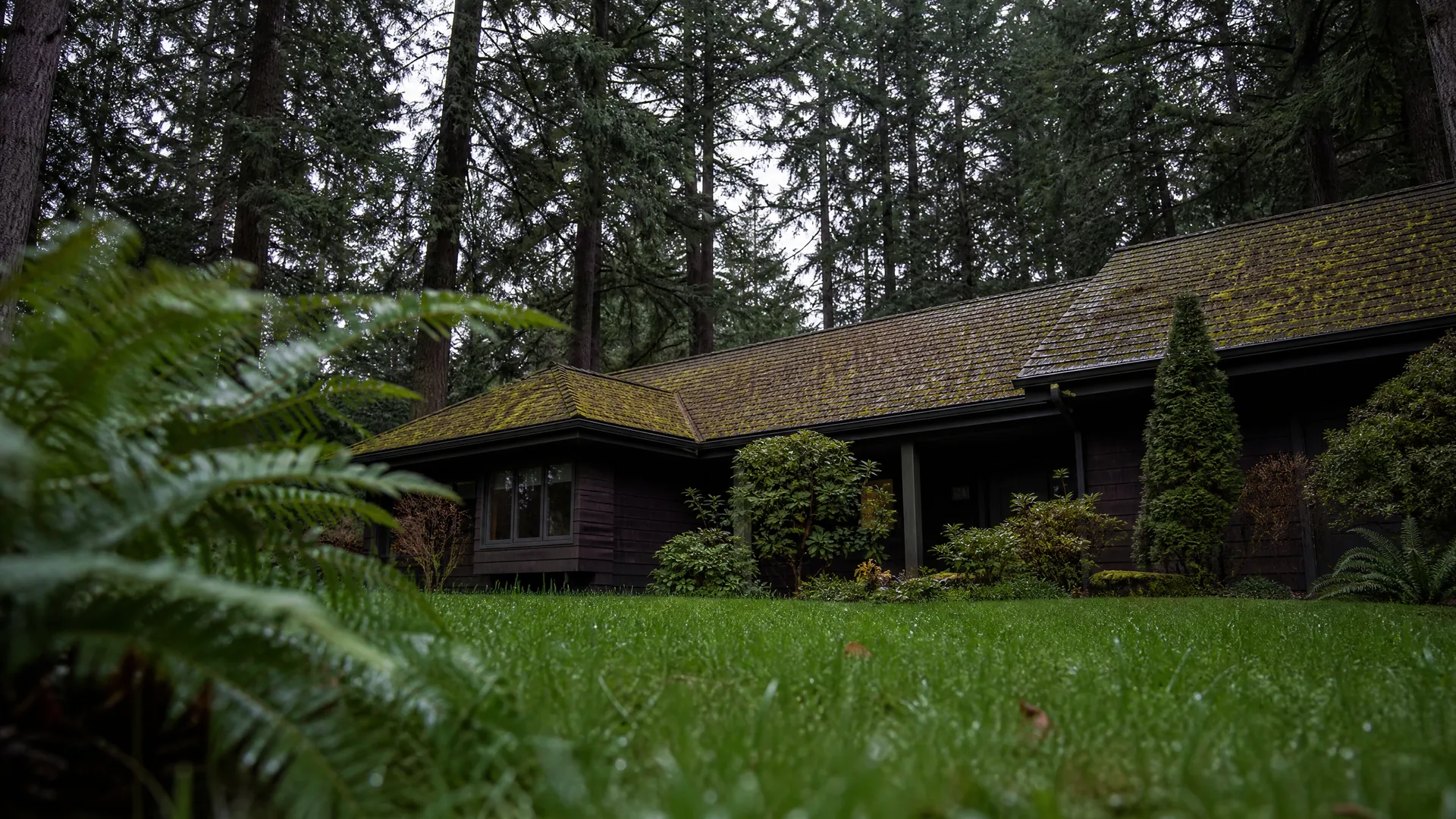






A single-story dark wood house with a moss-covered shingled roof sits behind a green lawn and shrubs, surrounded by tall conifer trees, with fern fronds in the left foreground.

Heat Pump Installation in Seattle, WA

Tell us about the job

Takes about a minute. No obligation.

New system or replacementHeat PumpKing County, WA
Step 1 of 2

What ZIP code is the job in?

More than half the homes in King County heat with electricity, and gas accounts for most of what's left. A heat pump fits an electric home without adding a fuel line or venting a combustion appliance. If your home already has electric baseboard or an electric furnace, you're swapping one electric system for another, not changing how the house is set up. That's the simpler job, and it's the common one here.

10 months
September through June, your system heats
32°F
the average winter night it heats against
70°F
the average summer afternoon it cools against
Isometric line illustration of a cutaway house showing interior rooms with furniture, ceiling ductwork connected to an indoor air handler, and a line running outside to an outdoor condenser unit.

Seattle runs on some of the cheaper electricity in the country.

A high-efficiency heat pump still costs more up front, and here it takes longer to earn that back.

A 32-degree average low means your heat pump won't be straining most nights

Winter nights average 32°F
Climate zone 4C
Power costs 11.9 cents a kWh statewide

King County falls under zone 4C in the 2021 energy code, a marine climate that asks real work of both heating and cooling. Any split-system heat pump installed here has to meet a federal minimum. That's the floor, not a target, so a contractor quoting a new system should already be working from it. A unit that just clears the minimum will cost less up front than one built well past it. Beyond the minimum, a federal tax credit is available on qualifying equipment, worth checking against whatever unit you're considering before you decide.

Heat runs here from September to June, so install before August is out

Heat comes on in September and stays on into summer. Putting in a heat pump in August means it's broken in and set up before the first cold night, not during one.

Find a contractor
A man in a dark shirt, tan pants and cap walks up porch steps toward a navy blue front door, carrying a canvas tool bag filled with hand tools, beside a potted shrub in a blue planter.
A gray heat pump outdoor unit mounted on a concrete pad next to a residential house with lap siding and stone accents.

Size it for a 32-degree night, not for the one Seattle rarely has

At 32 degrees, your heat pump isn't working near the bottom of its range. That's the night it runs steady, not flat out. A mid-range unit handles those nights fine for years, so you don't need to pay for the top of the lineup to get through a Seattle winter. Put that money toward the install being done right, the refrigerant charge set correctly and the airflow matched to your ducts, instead of a higher-tier compressor you won't lean on.

Your old furnace or baseboard doesn't need to run again

Once the heat pump is in and working, the old heating system can be disconnected. An electric furnace can be left in place as backup and tied into the new thermostat, or pulled out if you want the space back. Baseboard units get shut off at the breaker and can come off the wall whenever you get to it.
A gas furnace being replaced is a different job

If a gas furnace is coming out instead, the gas line to it has to be capped by someone licensed for gas work, not just disconnected. The furnace itself gets hauled off, and if it shared a flue with a water heater, that flue needs a second look, since removing one appliance changes how the shared vent draws.

Sizing a heat pump means matching its output to the heat your house actually loses on a cold day, not picking the biggest unit on the lot. A contractor works that out room by room, adding up how much heat escapes through your walls, windows, attic and floor, then sizes equipment to replace it. Too big and the unit short cycles, blasting warm air fast and shutting off before it pulls moisture out of the air or warms things evenly, then kicking back on a few minutes later. That cycling wears on the compressor and leaves rooms feeling clammy even when the thermostat says it's satisfied. Too small and it runs constantly on the coldest days, struggling to keep up and leaning hard on backup heat strips to make up the difference. The right size runs long, steady cycles that hold a room at temperature without strain in either direction.

What drives the price is mostly what's hidden from view. The equipment itself is only one line on the quote. Running new line sets between the outdoor unit and the indoor coil, upgrading the electrical panel or circuit to handle the new load, modifying ductwork so it can move enough air at heat pump temperatures, these add work hours before the unit ever turns on. A straight swap where the old equipment matches up well with the new costs less than a setup where the ducts are undersized or the panel can't take another circuit without an upgrade. Where the outdoor unit goes matters too. A long line set run, a tricky mounting spot, or special equipment needed to get the unit onto a roof or over a fence all add labor. None of this shows up on the spec sheet, only on the quote, which is why homes that look alike from the street can get very different numbers for what looks like the same job.