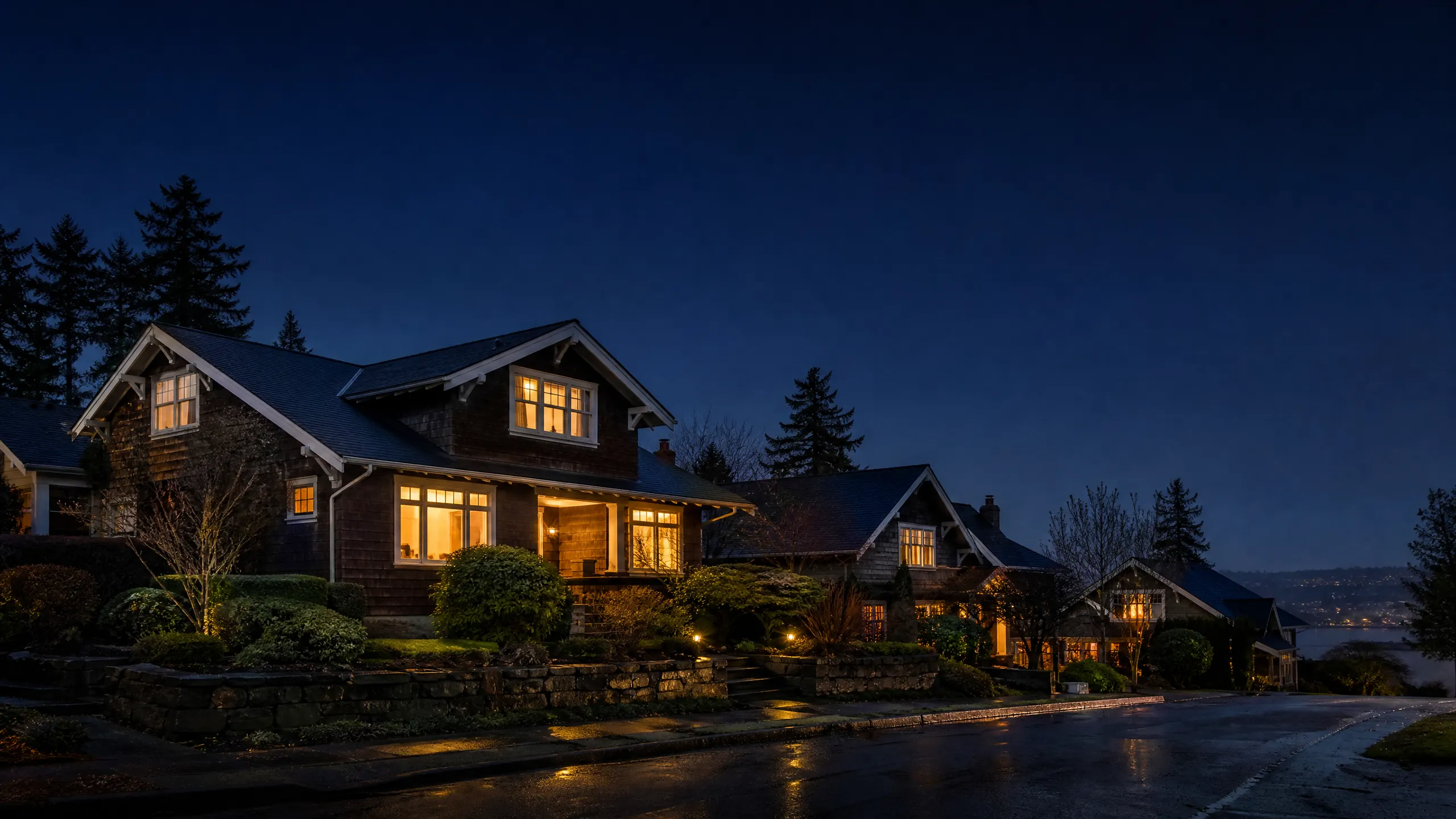





Three illuminated Craftsman-style houses with stone and wood-shingle facades line a wet residential street at night, surrounded by trees and landscaped gardens.

Heat Pump Installation in Tacoma, WA

Tell us about the job

Takes about a minute. No obligation.

New system or replacementHeat PumpPierce County, WA
Step 1 of 2

What ZIP code is the job in?

Electricity heats 59.9% of homes in Pierce County, more than any other fuel. Utility gas covers 33.8%, with bottled gas and fuel oil making up a small remainder. That electric majority is why heat pumps fit so well here. A heat pump replacing electric baseboard or an electric furnace is a straight swap of one electric system for another, using the wiring already in place. Homes on gas can still switch over, but that job means adding the electrical capacity a heat pump needs, which is a different scope of work.

10 months
September through June, your system heats
31°F
the average winter night it heats against
70°F
the average summer afternoon it cools against
Isometric line illustration of a cutaway house showing interior rooms with furniture, ceiling ductwork under a dark shingled roof, and an outdoor condenser unit connected by lines on the right.

Winter nights in Pierce County average 31°F.

A heat pump here doesn't have to fight hard against the cold to keep a house warm.

Cheap power means the payoff is in reliability, not the electric bill

Power costs 11.9 cents a kWh statewide
Climate zone 4C
Heat runs September through June

Pierce County sits in zone 4C, a marine climate that asks real work of a system in both directions. Any new split-system heat pump has to clear 14.3 SEER2 for cooling and 7.5 HSPF2 for heating. That floor is a federal minimum, not a local one, but it still narrows what a contractor can offer you. A system bought here today starts from a higher baseline than one bought a few years back. There's also a federal tax credit available for qualifying heat pump installations, worth checking against whatever system you're considering.

Get it in before September, not after

Heat here runs from September through June, about ten months of the year. August is the one month before that starts, and it's the window to get a new system in before you need it. Get it installed then and the first cold night in September is just a night your heat pump is already running, not the night you find out something's wrong.

Find a contractor
A gray air-source heat pump mounted on a concrete pad next to a house with gray vinyl siding, surrounded by gravel and flanked by green shrubs and white hydrangea flowers.

It won't be straining, so buy for reliability

At 31°F, a heat pump isn't working near its limit. That's room to choose a system on reliability rather than reaching for the highest-output model on the lot. A contractor can size for this climate instead of padding the spec for colder nights that don't happen here.

Sizing is a room by room calculation

A contractor works out heat pump size with a load calculation, not a rule of thumb based on the old system or the square footage alone. That calculation accounts for window area, insulation, ceiling height and how the rooms are laid out. Houses that look alike from the street can need different sized systems depending on what the walls and windows are doing.
Oversized runs worse than undersized

A heat pump that's too big for the house cycles on, satisfies the thermostat fast, and shuts off again before it's run long enough to pull moisture out of the air. That short cycling also puts more wear on the compressor over time. The fix isn't the biggest unit on the lot, it's the one matched to the load.

What a heat pump installation costs comes down to how much has to change before the new unit can go in, not the unit itself. A straight swap, same fuel, same spot, same ductwork, is the simple version of this job. Everything beyond that adds scope. If the electrical panel doesn't have capacity for a new circuit, that's an upgrade before installation even starts. If the ductwork was sized for a furnace that pushed air differently than a heat pump does, a contractor may need to modify it rather than just connect to what's there. Line set length and how many walls it has to pass through also factor in, since that's labor and material either way. The load calculation drives the size of the system you need, and size moves price too, but it's the site conditions, the panel, the ducts, the layout, that usually separate a quote that looks simple from one that doesn't.

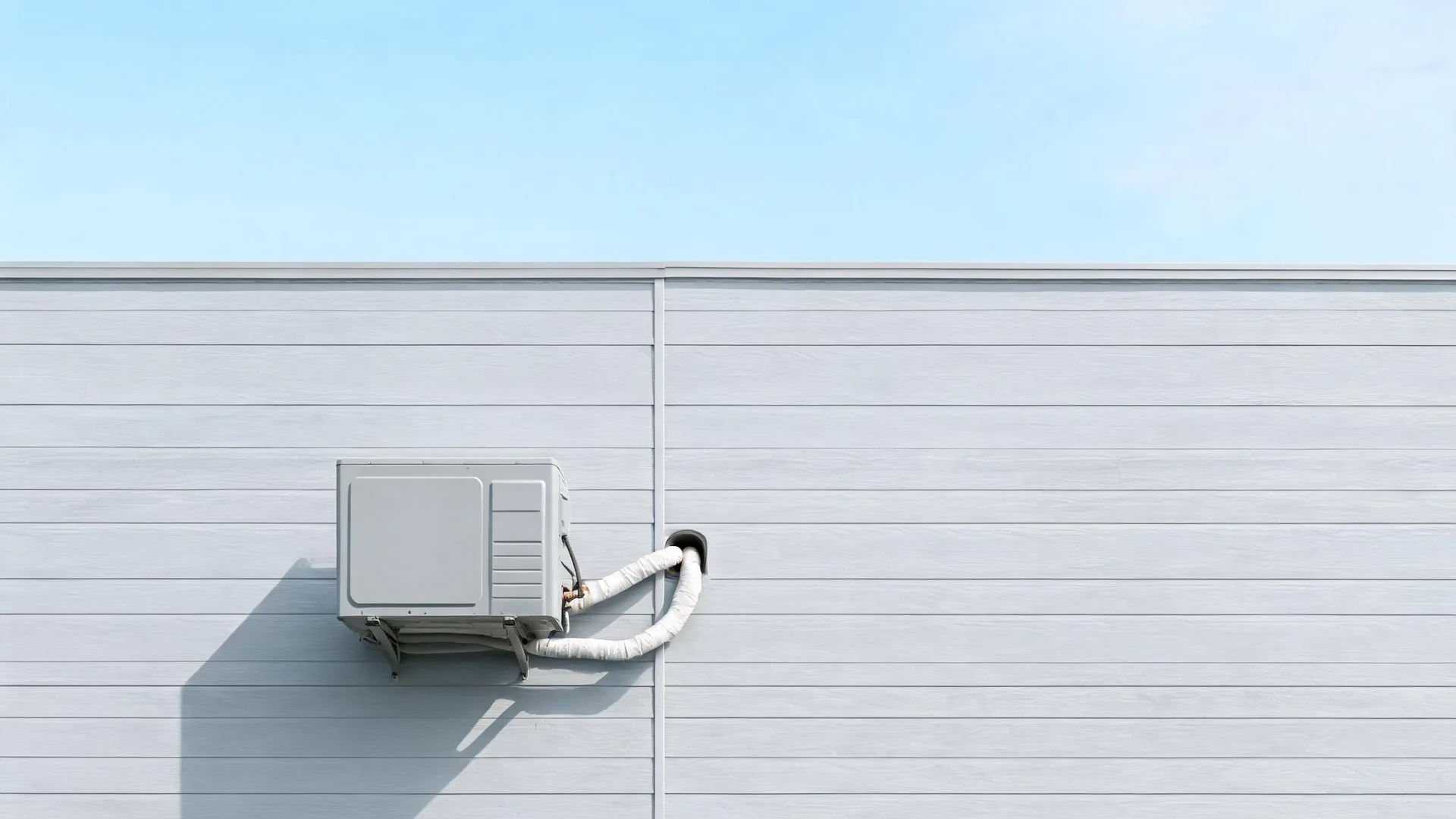
Installation starts with deciding where the outdoor unit goes, and that choice matters more than people expect. It needs open air on every side, so a contractor keeps it clear of fences, bushes and dryer vents, and sets it on a level pad above where water pools after rain. Running the line set between the outdoor unit and the indoor air handler means drilling through an exterior wall, so expect a conversation about where that hole goes before anyone starts cutting. Once the line set is connected, a contractor pressure tests it for leaks, then pulls a vacuum to clear out air and moisture before any refrigerant goes in. Skipping that step is one of the more common reasons a new heat pump underperforms or fails early. After startup, the refrigerant charge gets checked against the manufacturer's spec and airflow gets verified at the vents, because both have to be right for the system to run the way it was sized to.