




Why your furnace is leaking water in Washington

RepairFurnace or heatingWashington
Step 1 of 2

What ZIP code is the job in?

Most homes in Washington heat with electric furnaces, and the water you're seeing usually comes from the condensate line. If your furnace is a high-efficiency model, it cools exhaust gas enough to pull moisture out of it, and that water has to drain somewhere. A cracked line, a clogged drain, or a failed condensate pump will send it onto your floor instead. Sometimes the leak isn't water from combustion at all but condensation forming on ductwork or a coil when warm air meets a cold surface, which can happen with an air handler tied into your system. Either way, water pooling near your furnace means a part has failed or a line is blocked, not that the furnace itself is broken beyond repair. Left alone, it can damage the unit's electrical components or the flooring around it. Shutting the furnace off and having someone look at the drain system and the coil is the next step.

A woman with dark hair in a bun wearing a cream knit sweater sits on a gray sofa in a bright living room, looking off to the side.
A woman wrapped in a knit blanket sits on a gray sofa in a living room, looking toward a bright window with houseplants and an armchair in the background.
A woman in a gray cowl-neck sweater sits on a light sofa with cushions, smiling and looking to the side, with a kitchen and window visible behind her.
A woman with dark hair in a bun, wearing a light linen shirt, sits on a sofa and looks to the side, with a window, houseplants and a kitchen with pendant lights blurred behind her.

Clogged Line or Failed Pump

Condensate Line Problem

  • The line is small, and algae or sediment inside it can close it off over months without any warning sign first.
  • A clogged line backs water up into the furnace cabinet, and that's usually where you see it pooling.
  • A contractor can clear the line and check the trap and the drain slope in one visit.
  • If the line keeps clogging after it's cleared, the slope or the trap itself may need to be corrected.
  • This is the more common reason for water if your furnace is a high-efficiency model.

Condensate Pump Problem

  • Furnaces installed below where the drain line runs need a pump to push that water out, and the pump can fail.
  • A stuck float switch or a worn motor stops the pump from clearing water as fast as the furnace produces it.
  • Water collecting around the pump housing or inside the furnace cabinet points to the pump rather than the line.
  • A contractor can test the float switch and the motor to tell you which one failed.
  • Replacing a failed pump is usually a quicker fix than tracing a clog through a long drain line.
A gray high-efficiency furnace in a basement with PVC vent pipes, sheet-metal ductwork, copper and insulated pipes, a water heater at left, and an unfinished wood-stud wall at right.

The Condensate System, Clear and Draining

This is what a high-efficiency furnace looks like when the PVC flue pipes and drain line are doing their job. Condensate moves out through the line and never touches the cabinet floor. No pooling, no rust starting on the burner compartment.


An older beige furnace with louvered front panels stands on a concrete basement floor beside galvanized ductwork, metal and plastic pipes, exposed wood framing, and a cylindrical water heater at right.

Water Where It Shouldn't Be

Here the water has found its way into the cabinet itself, sitting against the sheet metal near the flue connections. Left alone, it works on the metal and the electrical parts nearby, and the furnace keeps running while it happens.

Why is water pooling under my furnace right now?

Water pooling right now usually means something is actively overflowing or dripping, not just a slow leak you noticed by chance. You want to know what's happening at this exact moment, before you decide whether to shut the furnace off or just mop it up and wait.

The drain line is backed up and water has nowhere else to go

When the condensate line clogs, the furnace keeps producing water faster than it can drain. It backs up into the trap, then into the cabinet, and from there it finds the lowest point on the floor. Some furnaces have a float switch that shuts the unit off once water rises too high in the drain pan, so if yours has stopped running at the same time you noticed the puddle, that switch is likely doing its job. If the furnace is still running while water pools, nothing is stopping it, and the puddle will keep growing until the line is cleared or the power is cut.

  1. Exhaust gas cools inside the heat exchanger as it passes through.

  2. Cooling the gas turns part of it back into water.

  3. That water drips down into the condensate trap below.

  4. The trap carries water out through the drain line.

What are you noticing around your furnace right now

You probably found a puddle on the floor near the cabinet, or a damp patch on the carpet nearby. There might be a musty smell if the water has been sitting a few days before you noticed it. Some homes show a rust-colored ring on the floor where the water keeps collecting in the same spot. If the furnace sits near drywall or framing, standing water that goes unaddressed can start to soften the material underneath it or invite mold in the carpet pad. The furnace itself may still run fine, which is part of why this gets missed until the puddle is hard to ignore.

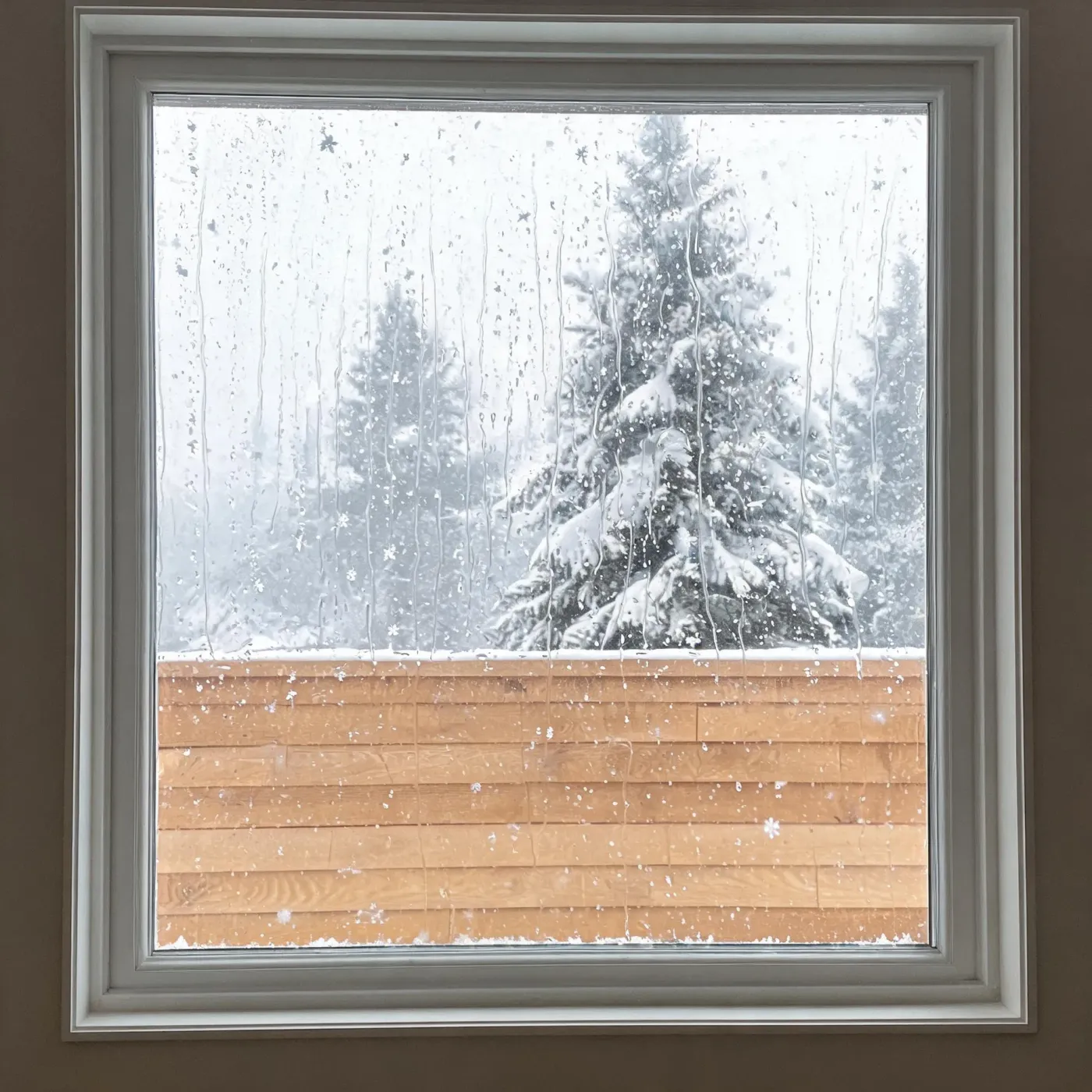
View through a wet, condensation-streaked window with white trim, showing snow-covered evergreen trees behind a light wooden fence.

Winter nights in Washington average 30°F statewide, according to NOAA climate data. That's cold enough for a high-efficiency furnace to run long stretches most nights, and the longer it runs, the more exhaust gas it cools, and the more condensate it produces. A drain line that handles a light load in October can back up once the furnace is running harder through the winter. If the puddle under your furnace showed up or got worse once the cold set in, that timing matters. A contractor looking at the system can tell you whether it's the line, the trap, or something else, and get you matched with someone who knows what to check first.

NOAA nClimDiv 1991-2020 county normals weighted by homes

A local pro for your furnace repair

A furnace that's leaking water doesn't stop and wait while you decide what to do about it. Every night it runs, more condensate forms, and a clog or crack that's letting a little water through now can let more through tomorrow. Left alone, that water finds wood subfloor, drywall, or the furnace's own electrical connections, and none of those dry out on their own. A contractor can trace the water to its actual source, whether that's the drain line, the trap, or the heat exchanger itself, and tell you which one it is instead of leaving you to guess from a puddle. Washington homes run these furnaces most nights once it turns cold, so the leak you're seeing tonight is one of many it'll produce before spring if nothing changes. Getting a contractor out to look at it is the only way to know whether you're dealing with a clogged line or something that's actually damaging the furnace underneath.

How the Drain System Is Built

  • The condensate trap sits below the heat exchanger and holds a small amount of water to seal out exhaust fumes.
  • A dry or cracked trap lets water bypass its normal path and run straight down into the cabinet.
  • Most drain lines use PVC and tilt slightly downward so gravity alone moves water to the drain.
  • A sagging or improperly pitched line lets water sit instead of draining, which is how algae gets started.
  • Some furnaces use a condensate pump to push water uphill to a drain, and that pump can fail or jam.
  • A secondary drain pan under the furnace is meant to catch overflow, and water there means the primary system already failed.

A high-efficiency furnace doesn't just dump condensate out the bottom. There's a path it follows, and every part of that path has a job. Water first collects in the trap, which stays partly full on purpose. That standing water blocks exhaust fumes from venting back into the cabinet instead of out through the flue. If the trap dries out, cracks, or gets knocked loose during a repair, that seal is gone and water goes where it shouldn't. From the trap, water moves into PVC line that's supposed to run downhill the whole way to the drain. Gravity does the work, which means the pitch of that line matters more than people think. If the line sags even a little, water pools in the low spot instead of continuing on, and standing water is exactly where algae and sediment start building up. Some installations can't rely on gravity alone, usually because the drain is higher than the furnace. Those use a condensate pump to push water up and out. Pumps have a float switch and a motor, and both can seize up or fail, especially if the pump sits unused for long stretches between repairs. Underneath all of this, most furnaces have a secondary drain pan as a backstop. It's meant to catch whatever the primary system misses. Water sitting in that pan isn't a minor issue. It means the trap, the line, or the pump upstream already failed.

An older gas furnace with two white PVC vent pipes stands on a concrete basement floor beside galvanized sheet-metal ductwork, flexible conduit, and piping along a wall.
Before you get your furnace repair
A gray high-efficiency furnace with white PVC venting pipes stands on blocks in a basement next to sheet-metal ductwork, with exposed wood framing on the left and a concrete wall and floor.
After you get your furnace repair

Rust tells you this has been going on a while

Water sitting on the cabinet floor or dripping down the burner compartment rusts metal within weeks, not months. If you see orange or brown flaking near the base of the furnace, this isn't the first time it's leaked. A fresh leak looks like plain water. One with rust streaks or a corroded panel has been happening on and off for a while, even if you only just noticed the puddle.

The trap holds back more than water

That small reservoir in the condensate trap is also sealing exhaust gas away from the cabinet and the air you breathe. When it runs dry or cracks, water isn't the only thing that stops staying where it belongs. A contractor checking a leak is also checking that seal, because a trap that's failing one job is usually failing the other too.

Winter nights average 30°F statewide

At 30°F, your furnace is doing more than taking the chill off. It's running long enough, most nights, to keep cooling that exhaust gas the whole time, and every bit of condensate has to clear the trap and line before it can pool.

NOAA nClimDiv 1991-2020 county normals weighted by homes

A beige high-efficiency furnace stands on a concrete basement floor beside sheet-metal ductwork, with white PVC vent pipes, flexible conduit and copper and steel piping running up a concrete wall to an electrical box.
The drain line is clear and the trap stays full, so condensate leaves the cabinet instead of sitting in it.
An older gas furnace with a louvered front panel stands on a concrete basement floor beside large sheet-metal ductwork, a metal flue pipe, copper piping and wood framing.
Dust built up around the base and the flue pipe shows its age, signs the drain line or trap may already be failing.
An older woman with short gray hair in a cream cable-knit turtleneck sweater smiles while looking to the side in a wooden kitchen, with a round loaf of bread on a board in the foreground and a lit candle by a dark window.
A woman and a child wrapped together in a thick knitted blanket on a sofa, both with eyes closed, with a lit table lamp and houseplant in the dim background.
A woman in a long cream cardigan and jeans stands at an open wooden front door of a gray shingled house with stone-based porch columns, with a second person visible inside, and potted flowers and shrubs beside the entry.

Water under the furnace has one of a few causes, and all of them are fixable

A cracked trap, a clogged line, a loose fitting. Whatever it is, it's sitting inside a system that was built to carry that water away from the cabinet, not into it. Once a contractor sees where the water is actually coming from, the fix is usually straightforward.

You don't have to figure out which part failed before you ask for help. A contractor who works on furnaces in Washington homes sees this same problem through the winter and knows what to check first. Once you send the form, someone who handles this takes it from there and reaches out to you. You can stop watching the floor under the furnace and let someone who does this for a living sort out what's wrong.

A gray upholstered sofa with a beige cushion and knit blanket beside a curtained window, with a white mug and a book on a dark wooden table in the foreground and a lit lamp in the background.
Sunlight falls across a beige upholstered sofa with a textured woven cushion and a chunky knit throw, beside a dark wood cabinet holding a ceramic vase with green leafy branches, near a white-framed window.
A sunlit corner of a room with a wooden side table holding a ceramic vase of green foliage and a wooden bowl, beside a light upholstered sofa with a knit throw and rust-colored pillow, with window shadows cast on a beige wall.
A sunlit room corner with beige walls, a white-framed window with sheer cream curtain, wood floor with a light rug, and a woven basket holding a knit blanket.
A beige ceramic vase holding a leafy green branch sits on a wooden cabinet in a corner, with sunlight through a sheer curtain casting leaf shadows on the wall.
A grey upholstered sofa with a rust-orange velvet cushion and a textured throw sits beside a window with linen curtains, next to a wooden side table holding a pale ceramic vase of olive branches.

Get the right pro for your furnace

Get the furnace repair search off your mind today.

Request a pro

You're not committing to anything by asking.