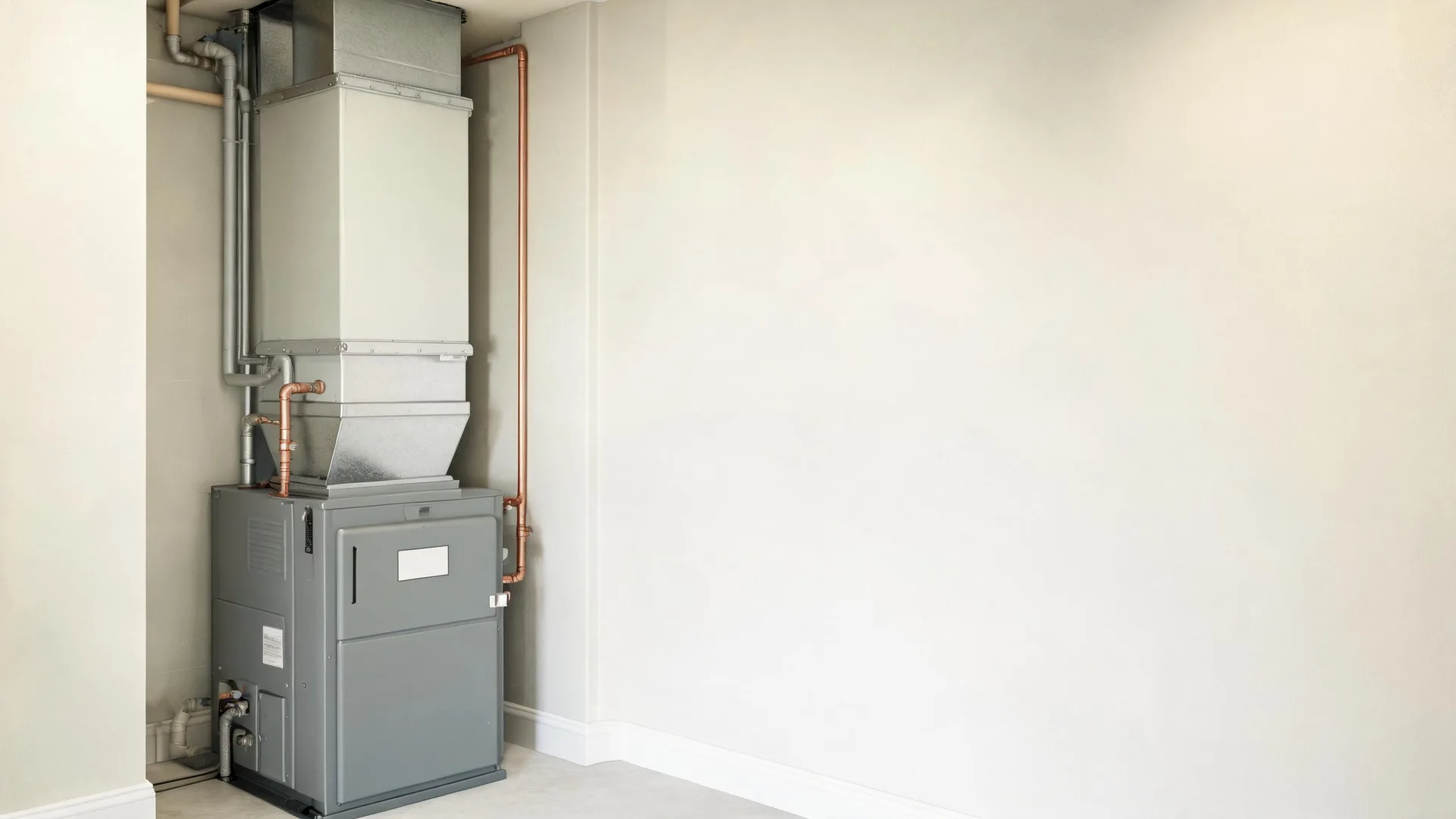
Most of Bremerton heats with electricity
Electricity heats 60.1% of homes in Kitsap County, against 25.9% for utility gas. If your house doesn't already have a gas line run to it, that's worth knowing before you start pricing a gas furnace.
Takes about a minute. No obligation.
Electricity heats 60.1% of homes in Kitsap County, against 25.9% for utility gas. If your house doesn't already have a gas line run to it, that's worth knowing before you start pricing a gas furnace.
Swapping an electric furnace for another electric furnace means the wiring and ductwork already fit. Switching fuels means a contractor has to figure out gas supply, venting and permits on top of the install itself.
NOAA nClimDiv, 1991–2020 normals
Electricity in Washington ran $34.87 per million Btu in 2024.
A furnace sized to the house, not oversized for it, is what keeps that cost in check.




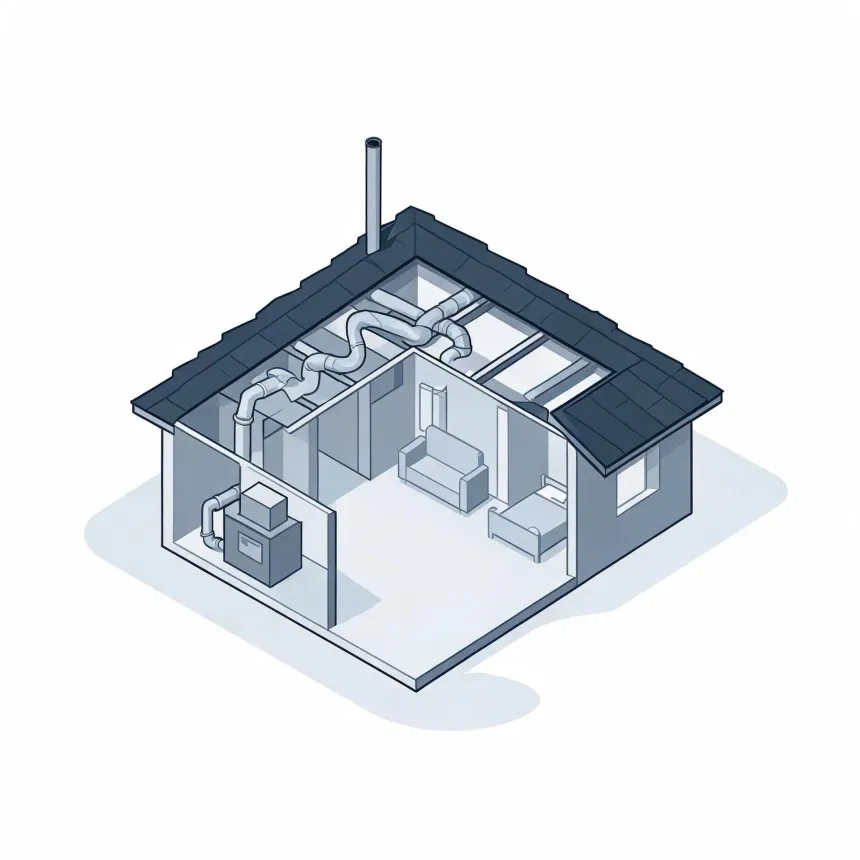
The size of the furnace matters more than most people expect going in. A contractor has to work out the heat loss for the house itself, how much warmth it loses on the coldest day, before they can tell you what size unit it needs. Too big and it short-cycles, heating the place fast then shutting off, which wears out parts sooner and leaves rooms uneven. Too small and it runs constantly trying to keep up. Ductwork plays into this too. If the existing ducts are undersized or leaky, a new furnace has to either work around that or the ducts need work alongside it, and that changes the job. The venting matters as well, since a high-efficiency furnace vents differently than an older one and that can mean new pipe run through the house. None of this shows up until someone actually looks at what's there.
A standard size and efficiency fit fine here. There's no local reason to go bigger or pricier.
Find a contractorA furnace that's sized right runs long, steady cycles. Warm air moves at a pace the ducts can actually carry, the house heats evenly, and the burner isn't kicking on and off all day. Oversize it and the opposite happens. It blasts the thermostat's sensor with heat, shuts off before the rest of the house catches up, then fires again a few minutes later. That short-cycling is hard on the igniter and the blower motor, both of which see the most wear at startup. Getting the size right starts with a heat loss calculation on the house itself, room by room, accounting for windows, insulation and square footage, not just a swap based on the old unit's rating plate. The old furnace might have been wrong too.
A contractor disconnects the gas line or power, pulls the old unit, and caps or removes the old venting before the new furnace goes in. If the flue or vent pipe doesn't match what the new furnace needs, that gets swapped too. None of this is optional work tacked on, it's part of clearing the way for the replacement.
Ductwork and thermostat wiring often carry over fine, as long as they're sized right for the new furnace. The cabinet, the heat exchanger and the old controls don't come back, they go out with the rest of the unit. A contractor hauls the old furnace away as part of the job, so there's no reason for a homeowner to deal with disposal on their own.
When you're comparing quotes, ask each contractor what heat loss number they calculated for the house and how they got it. A real calculation looks at square footage, window area and insulation, room by room. If the contractors give you furnaces that are sized very differently from each other, one of them skipped that step. Ask what efficiency rating the unit carries and what that means for venting, since a higher efficiency furnace vents through pipe rather than the old flue, and that's a different installation than a straight swap. Ask about the warranty too, on the furnace and on the labor, because those often run on separate terms. And ask what happens to the ductwork, whether it gets tested or adjusted for the new unit or just hooked back up as is.
Install day starts with the house cold, since the old furnace has to come out before the new one goes in. A contractor shuts off the gas or power, disconnects the ducts and flue, and pulls the unit out, usually in one piece if it will fit through the doorways. Setting the new furnace means leveling it, connecting the ducts, running gas or electric to it, and hooking up the venting. That last part takes longer if the new unit vents differently than the old one did. Once it is in, a contractor checks gas pressure, measures the temperature rise across the heat exchanger, and checks airflow at the registers. It gets run through a full cycle before anyone calls it done, shutting off clean and firing back up the same way. Most of the day goes to the venting and the testing, not the furnace itself going in.