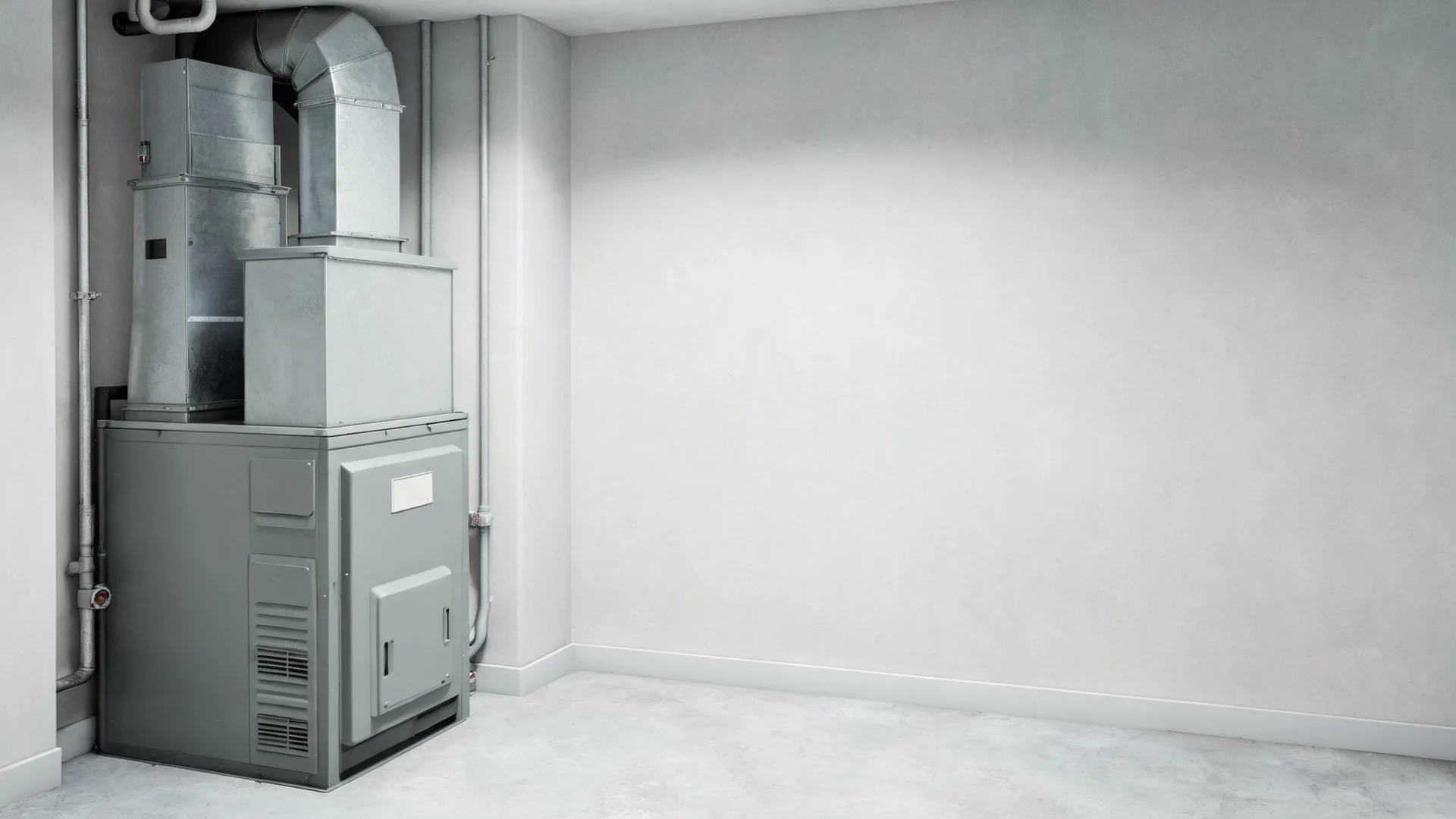
Most homes here run on electric heat
Electricity heats 75.8% of homes in Lewis County. Gas furnaces are the exception, not the rule, with utility gas at 8.4% and propane at 2.9%.
Takes about a minute. No obligation.
Electricity heats 75.8% of homes in Lewis County. Gas furnaces are the exception, not the rule, with utility gas at 8.4% and propane at 2.9%.
If your home already heats with electricity, replacing it with another electric furnace means no new gas line or propane tank to think about. The wiring and ductwork it needs are already a known quantity for a contractor.
NOAA nClimDiv, 1991–2020 normals
23% of Washington households lost power for at least a day in 2024.
A furnace install is a good time to ask what keeps the house warm when the grid doesn't.



Half the homes in Lewis County were built in 1980 or earlier, half in 1980 or later. A furnace sized for your square footage works the same in either one. Mobile homes are a real share of the housing here, and those need a furnace rated for manufactured housing rather than a standard model, so it's worth knowing which one you have before a contractor quotes the job. Outside of that, there's nothing about the age or type of house here that calls for sizing up or stepping up to a higher-efficiency unit. A standard install fits what this county actually has.
Furnaces in Lewis County run from September through June, about ten months a year. August is the last clear month before that starts. Replacing the furnace before September means a contractor can do the job on a normal schedule instead of fitting it in after the cold hits.
Find a contractorWhat drives the cost of an installation is mostly what has to change to make the new furnace work. Swapping one furnace for the same type, in the same spot, with the same ductwork, is the simplest version of the job. Once you change fuel type, move the unit, or need new ductwork or venting, the labor and materials go up with it. Size matters too, but not in the way people expect. Bigger isn't better and it isn't pricier for a good reason, it's just wrong for the house. A furnace sized to the space runs longer, gentler cycles and holds up better over the years than an oversized one that kicks on hard and shuts off fast. The other real cost driver is what the old equipment leaves behind. If the ductwork is in rough shape, sealing or replacing sections adds to the job. If the vent pipe or gas line doesn't meet current code, that gets brought up to code as part of the install, not left as is. None of that shows up until a contractor is actually in the attic or crawlspace looking at what's there.
An efficiency rating says how much of the fuel a furnace burns actually turns into heat for the house versus what goes out the vent. It has nothing to do with how big a space the furnace can heat. A high-efficiency gas furnace and a standard one can be sized the same for the same house. Size comes from a load calculation. The rating is a separate number on top of that.
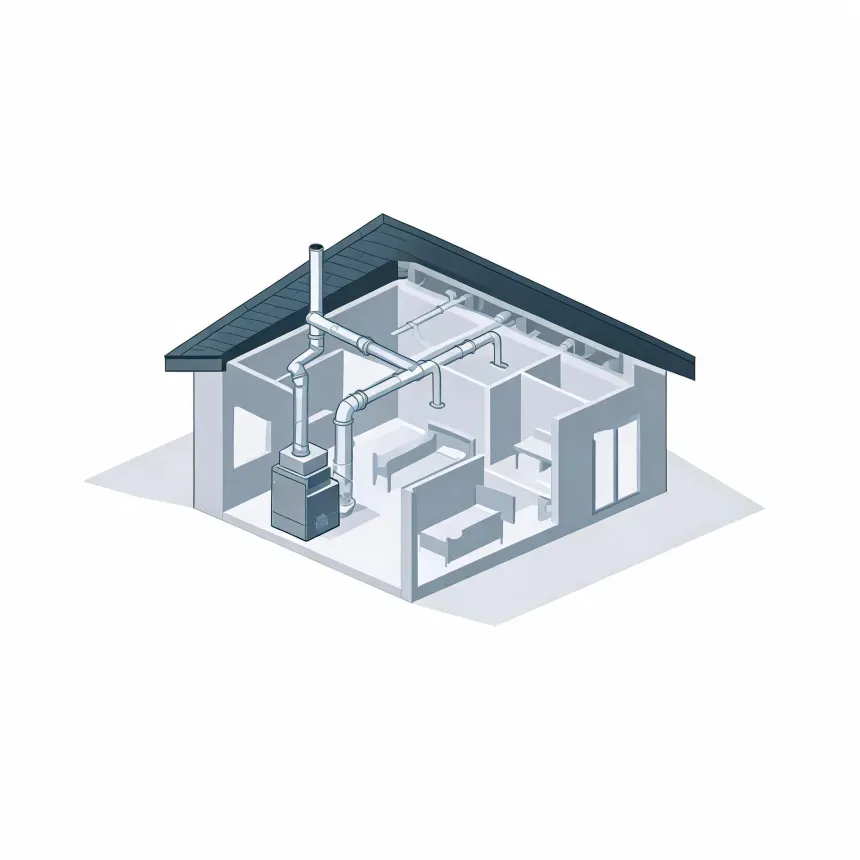
Gas furnaces with a high efficiency rating cool the exhaust enough that it has to leave through PVC pipe instead of a metal flue, and that pipe often runs out a sidewall instead of up through the roof. That means the install isn't just swapping the unit. It can mean new venting, a new termination point outside, and a condensate line to drain the moisture that comes with it. Electric furnaces don't have this at all, since there's no combustion exhaust to vent in the first place.
A furnace gets sized by a load calculation, not by matching the square footage of the old unit or guessing based on the last one. That calculation looks at how much heat the house actually loses, through the walls, the windows, the ceiling, and works backward from there to the output the furnace needs to replace. Bigger than that number doesn't mean warmer. An oversized furnace heats the air fast, hits the thermostat setting, and shuts off before it's run long enough to warm the house evenly or pull the moisture out of the air. That short cycling is harder on the burner and the blower than a longer, steady run, and it shows up later as more repairs. Sized right, a furnace runs longer stretches at a gentler pace and keeps the house at a more even temperature while it does it.
Installation day starts with the old furnace coming out, and what that uncovers matters as much as what goes in. A contractor pulls the unit, checks the ductwork it was feeding, and looks at the vent or gas line behind it before setting the new furnace in place. Getting the new unit connected is usually the fast part. The slower part is bringing the connections up to code and testing everything once it's hooked up, checking gas pressure or electrical draw, confirming the vent draws properly, running the system through a full cycle to see that it heats evenly and shuts off the way it should. A contractor won't leave until it's actually heating the house, not just turned on.