

Can a heat pump keep up in Lewis County winters
Your winters here are mild but long. Heat runs ten months a year, September through June, and the overnight low averages 31°F through December, January and February. That number matters because a standard heat pump starts losing ground right around there. Below 40°F it puts out less heat than its rating. Below about 35°F it often needs backup heat to make up the difference. Lewis County's average winter night sits below both marks.
That sounds worse than it is. About 55 nights a year here drop to freezing or below, under a quarter of the nights the heat is running. Of those 55, almost none reach 0°F. You are not dealing with the deep cold that breaks a heat pump's back, just a lot of nights in the range where it has to work harder and lean on backup heat more often. Field testing on newer cold-climate heat pumps backs this up: even in occupied homes, backup heat only covered a small share of total heat between 0°F and 35°F, and the units rarely ran on backup alone unless it was near 0°F. Lewis County almost never sees that.
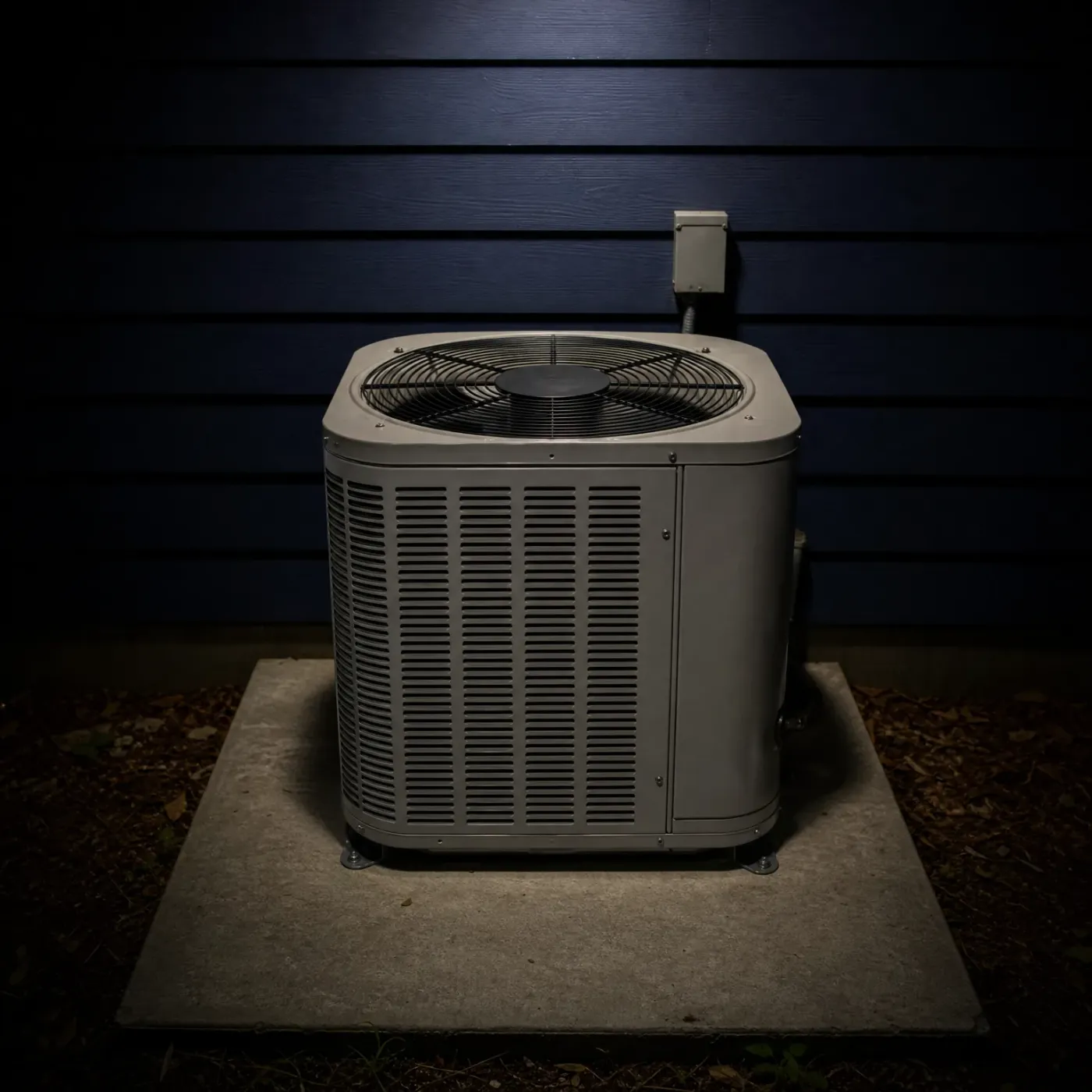
If you go with a heat pump here, look for one rated ENERGY STAR Cold Climate. That rating requires the unit to still produce at least 1.75 units of heat per unit of electricity at 5°F, and to hold onto at least 70 percent of its 47°F capacity at that temperature. A furnace does not have this problem at all. It burns gas, makes heat on demand, and the outdoor temperature does not change how it runs.