





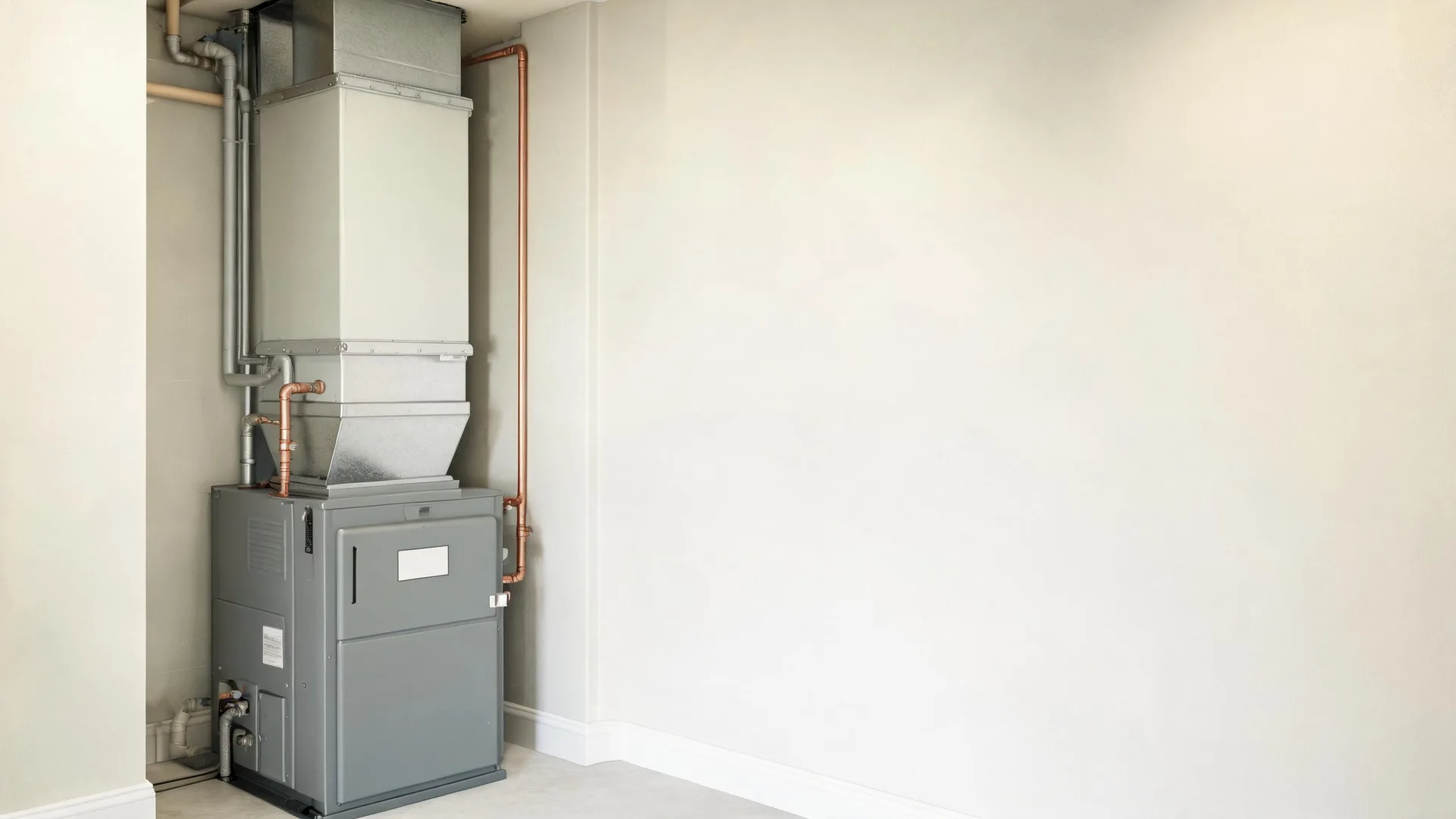
An unfinished basement featuring concrete block walls, exposed floor joists, a bare concrete floor, and a forced-air furnace with a large metal exhaust duct in the corner.

Furnace Installation in Goldendale, WA

Tell us about the job

Takes about a minute. No obligation.

New system or replacementFurnace or heatingKlickitat County, WA
Step 1 of 2

What ZIP code is the job in?

Electricity in Washington ran $34.87 per million Btu in 2024. That number matters if you're deciding between furnace options, because a gas furnace and an electric furnace don't draw on the same fuel, and a high-efficiency unit burns less of whatever it uses to make the same heat. Goldendale sees real winter, so this furnace will run for months at a stretch, not just on the coldest nights. Every percentage point of efficiency you buy now is a percentage point you're not paying for later, on every bill, for as long as you own the house.

10 months
September through June, your furnace is on duty
27°F
the average winter night it heats against
80% AFUE
the federal minimum any new unit must meet
Isometric cutaway illustration of a small gabled house showing a furnace with flue pipe and ductwork connecting to interior rooms containing a sofa, bed, and cabinets.
Your furnace works hardest from November through April.

NOAA nClimDiv, 1991–2020 normals

Furnaces in Goldendale run from September into June, with overnight lows averaging 27°F through December, January and February.

A furnace sized right for this county carries the house for ten months straight, so undersizing or oversizing it shows up fast.

Most homes here heat with electricity, and gas isn't an option for most of them

57% of homes heat with electricity
Heat runs September through June
Winter nights average 27°F

Klickitat County falls under zone 5B in the 2021 energy code, a cool zone where heating carries the bigger share of the work. Any gas furnace installed here has to clear 80 percent AFUE, the floor set for non-weatherized units. That floor is set to rise to 95 percent a few years out, so what counts as code minimum is going up, not staying put. A furnace installed today at 80 percent still meets code. One bought at the higher efficiency now already meets where the rule is headed.

A standard furnace, installed well, is what this county asks for

Klickitat County has its share of winter storms and damaging wind, and power can go out for a day or more when weather like that moves through. None of that changes what furnace this house needs. A standard size and efficiency unit, matched to the house, handles this county fine. The part worth getting right is the install.

Find a contractor
A gray high-efficiency gas furnace installed in an unfinished basement, surrounded by gas lines, a condensate drain, and sheet-metal ductwork.

September starts the season. August is when you still have a choice.

Furnaces here run from September through June, about ten months a year. August is what's left. It's the one month where swapping out a furnace doesn't mean doing it while you need the heat on. Wait past it and a failing furnace becomes a cold house and a rushed call instead of one made on your own schedule.

The furnace is the smaller cost

The unit itself is one line on the invoice. Running new gas line, resizing ductwork that's too small for the new furnace's airflow, adding a vent pipe that meets code, these are what separate installs. Houses that look alike from the curb can price out differently depending on what's already in the walls.
Sizing takes a load calculation, not a guess

A contractor should measure the house, not just match the old furnace's size. One sized too big short cycles, wearing out its parts faster and leaving rooms uneven. One sized too small runs constantly and still can't keep up on the coldest nights. Getting the size right costs no more than getting it wrong, so there's no reason to let it be a guess.

AFUE is the share of fuel that turns into heat in your house instead of going up the flue. A furnace built to waste less of it does that with a second heat exchanger, pulling more warmth out of the exhaust before it leaves. That second exchanger needs a different kind of venting than a standard furnace uses, so the number on the sticker isn't just something to compare at the store. It changes what the install looks like. Higher efficiency costs more going in and less every month after. Lower efficiency works the other way. Neither one is a mistake, but the venting and the invoice should match whichever one you picked.

Installation day starts before the old furnace comes out. The contractor should walk the house first, checking where the new vent pipe will run and whether the gas line and ductwork already in place work with the unit going in. Once work starts, the old furnace gets disconnected and removed, then the new one gets set in place, connected to the gas line or electrical circuit, tied into the ductwork, and vented. Each joint in the vent pipe and duct run gets sealed. A loose joint leaks air or exhaust that should be going somewhere else. After everything's connected, the furnace gets fired up and checked. Gas pressure, airflow across the heat exchanger, temperature rise through the system all get measured. A combustion analyzer reads the exhaust to confirm the furnace is burning clean. A contractor rushing through those checks at the end is skipping the part that decides whether the furnace runs right for years or just runs.