

What winter here does to a heat pump
Heat runs about ten months a year in Klickitat County, from September through June, so this is mostly a heating decision, not a cooling one. The overnight low averages 27°F across December, January and February, and that number matters more than it looks like it should. A standard heat pump's output starts falling short of its rating below 40°F, and below about 35°F it often leans on backup heat to keep up. 27°F is under both marks. So is every one of the roughly 115 nights a year here that hit freezing or below.
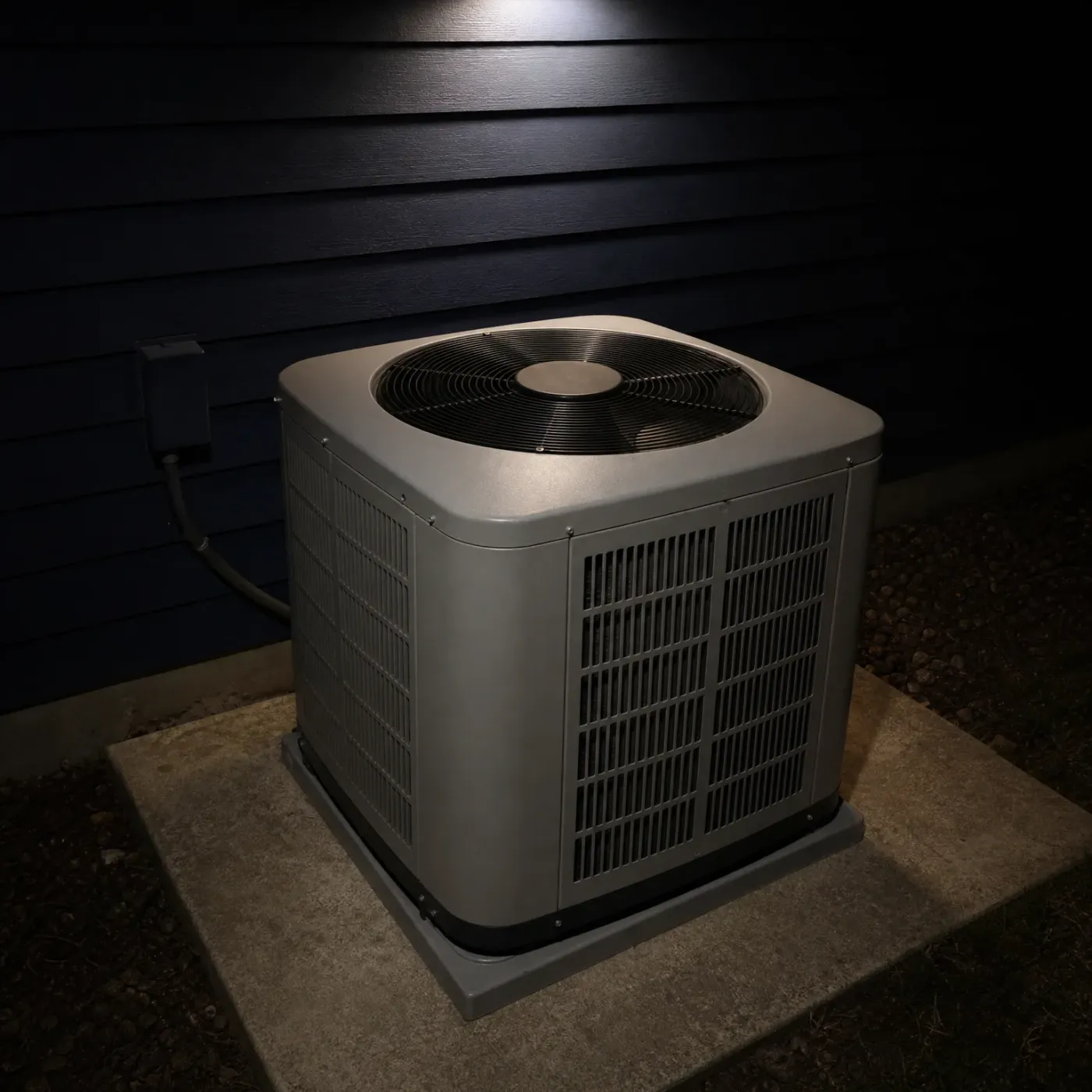
That doesn't mean the heat pump quits. Only about one night a year here reaches 0°F, and field tests of cold-climate heat pumps in occupied homes found backup heat carried just a small share of the load between 0°F and 35°F, and running on backup alone was rare even above 0°F. If a heat pump is installed here, the ENERGY STAR Cold Climate spec is the thing to check for: it requires the unit hold at least 70 percent of its 47°F capacity and still produce 1.75 units of heat per unit of electricity at 5°F, tested by a third party, not claimed by the manufacturer. A unit built to that spec handles a Klickitat County winter very differently than one built to the federal minimum.
A furnace does not have this problem. Its output does not depend on how cold it is outside, so it holds the same capacity on the 27°F nights as on the mild ones.