




A single-story dark brown wood-sided house with a moss-covered low-pitched roof, surrounded by shrubs and tall conifers, seen across a bright green lawn.

Furnace Installation in Longview, WA

Tell us about the job

Takes about a minute. No obligation.

New system or replacementFurnace or heatingCowlitz County, WA
Step 1 of 2

What ZIP code is the job in?

Electricity in Washington ran $34.87 per million Btu in 2024. If your new furnace runs on electricity, that's the rate it's working against, every month, for as long as you own it. A furnace that wastes less power costs less to run, and the difference shows up on every bill, not just the first one. Worth asking any contractor you talk to what efficiency rating they're quoting and what that means for your actual usage here.

10 months
September through June, your furnace is on duty
33°F
the average winter night it heats against
80% AFUE
the federal minimum any new unit must meet
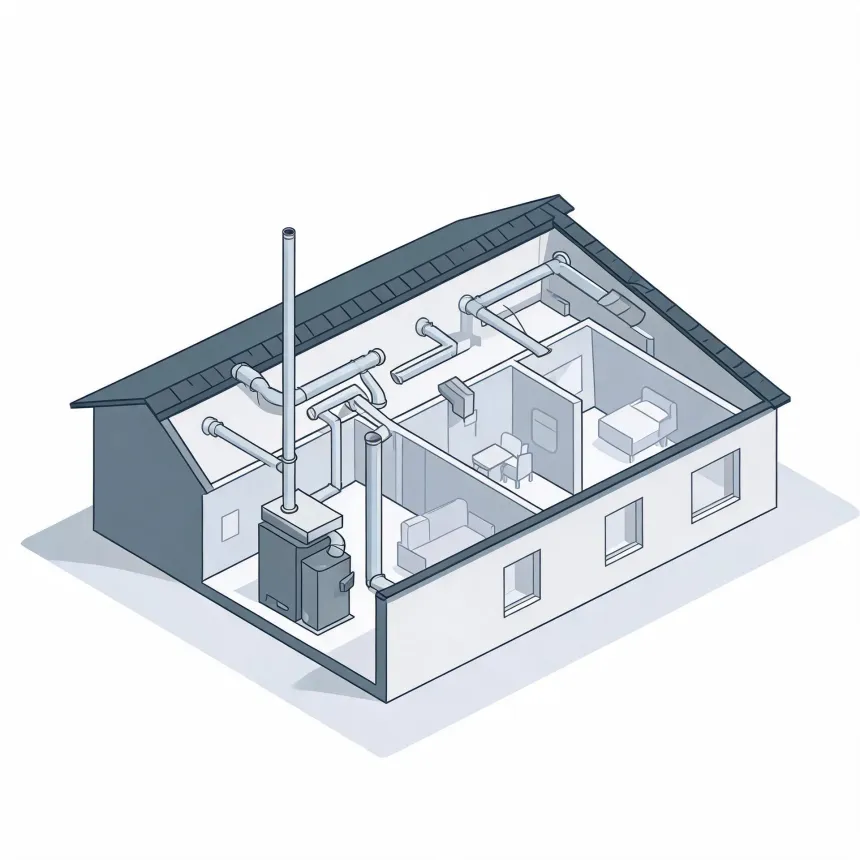
Isometric line illustration of a single-story house cutaway showing interior rooms with furniture, ductwork or piping running along the ceiling, and a boxy furnace unit with a tall vertical flue pipe.
Your furnace works hardest from October through April.

NOAA nClimDiv, 1991–2020 normals

Longview furnaces don't need to be oversized or loaded with extra features to do the job right.

A standard size, properly matched to your house, is what a contractor should be quoting you.

Ten months of heat a year leaves a short window to install before September

Heat runs September through June
Winter nights average 33°F
Climate zone 4C

Heat runs here from September through June, so the furnace is working most months of the year. That long a season is still a reason to size it right, not to size it up. Overnight lows average 33°F in December, January and February. That's an ordinary winter load, nothing a standard furnace sized to your house can't handle without strain. A contractor shouldn't be quoting extra stages or a bigger unit to cover for weather that isn't there.

A new furnace here has to meet real minimums, not just fit the budget

Any furnace installed here has to clear 80 percent AFUE under current federal rules, and Cowlitz County's mixed climate puts real demand on both heating and cooling sides of the system. That's the floor a contractor's quote should already clear. A federal tax credit is available on qualifying new systems, worth asking about before you settle on a model.

Find a contractor
A man in a cap, dark jacket and tan work pants carries a canvas tool bag up white porch steps toward a dark blue paneled front door, with a potted shrub beside the entry.
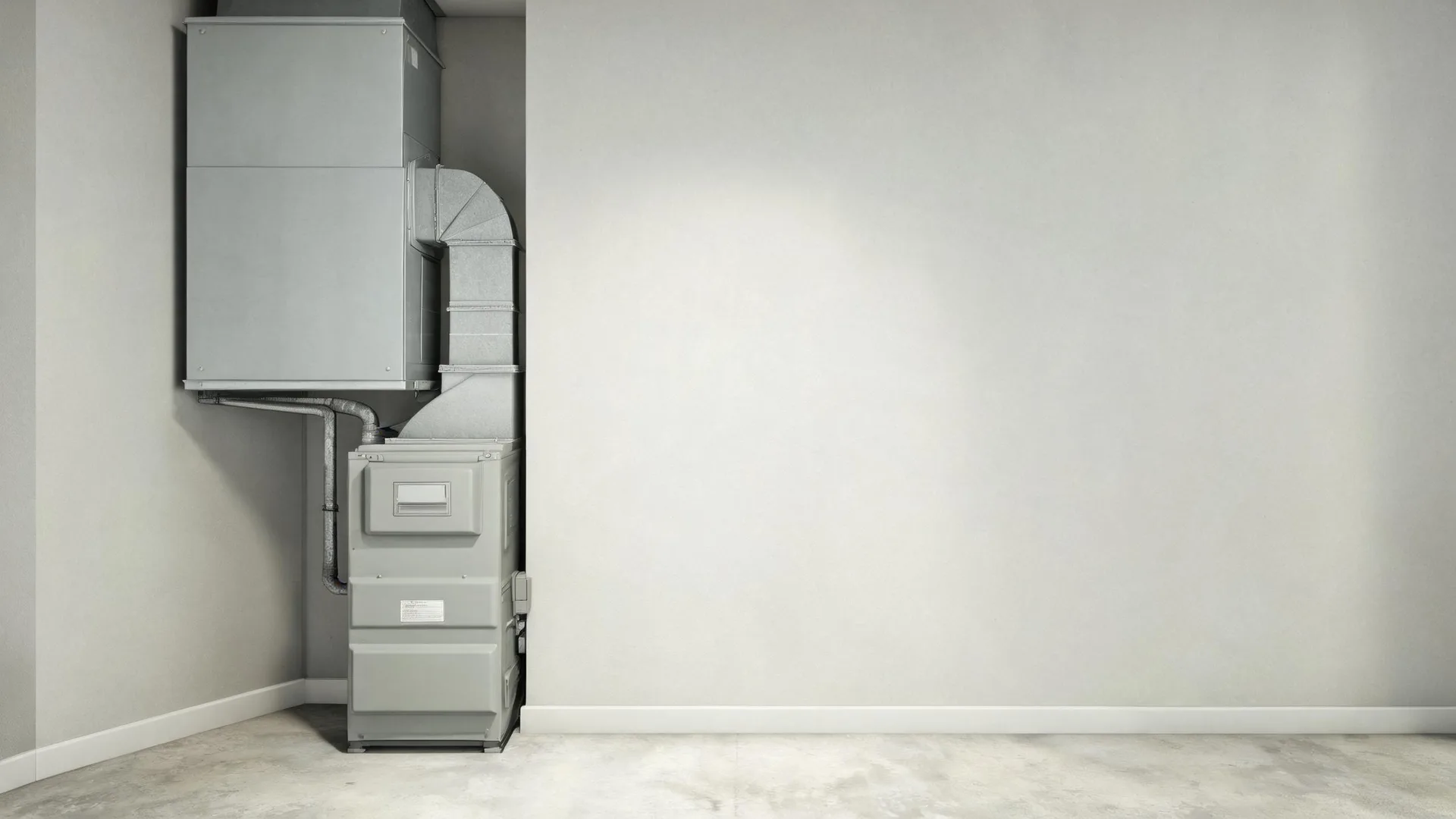
A gray residential gas furnace installed in an unfinished basement, connected to sheet-metal ductwork and PVC pipes.

The rating on the label holds only if the furnace stays clean

That AFUE number on the label tells you how much of the fuel it burns turns into heat in your house, and how much goes out the flue. A higher rating means less waste, and that holds steady for the life of the furnace, unlike a belt or a filter that wears down. What actually drags performance below the rated number is neglect. A dirty burner, a cracked heat exchanger, a clogged filter forcing the blower to strain against it, any of that costs you real efficiency no matter what the label says. Combustion air has to flow in clean and exhaust has to flow out clear for that number to mean anything. That's airflow and burner condition, and it's what a yearly service visit is for.

Sizing is a room by room calculation, not a guess off the old unit

A contractor works out furnace size with a load calculation, adding up the heat lost through your walls, windows, ceiling and floor to see how much the furnace has to replace to keep the place warm. Square footage alone doesn't tell you that, and neither does matching whatever furnace is already in there. The old unit might have been wrong from the start, or sized for a house that didn't have the insulation or windows yours has now.
Too big fails differently than too small

An oversized furnace heats the house fast, shuts off, and starts again soon after. That short cycling wears out the igniter and the blower motor faster, and it leaves rooms far from the furnace colder than the rest of the house because the air never runs long enough to even out. An undersized furnace just runs long and still doesn't keep up on the coldest days. The right size runs longer, steady stretches, and wears evenly.

The old furnace doesn't get reused once a new one goes in. A contractor disconnects the gas line, the venting and the ductwork, then removes the whole unit from the house. If it runs on gas, that line gets capped off safely before anyone leaves. The metal cabinet and the parts inside it get scrapped, since a furnace that's reached the end of its life isn't worth rebuilding or passing on. Removal is usually part of the installation job itself, not a separate call, so it's worth asking upfront whether hauling away the old unit is included in the quote.

Installation day starts with the old furnace coming out and ends with a combustion test on the new one, and most of the time in between goes to things you won't see once the cabinet's back on. The gas line gets connected and checked for leaks before anything is fired up. The vent pipe or flue gets run to meet the new furnace's clearances, since those aren't always the same as what the old unit needed. Ductwork often needs an adapter or a transition piece where it meets the new cabinet, because sizes vary between models even when the tonnage is the same. Once it's hooked up, a contractor runs it through a full heating cycle, checks the temperature rise against what the manufacturer specifies, and confirms the flue is drafting properly before calling it done. None of that shows up on the invoice as a line item, but skipping it is how a furnace ends up with a short life or a carbon monoxide problem nobody catches until it's serious.