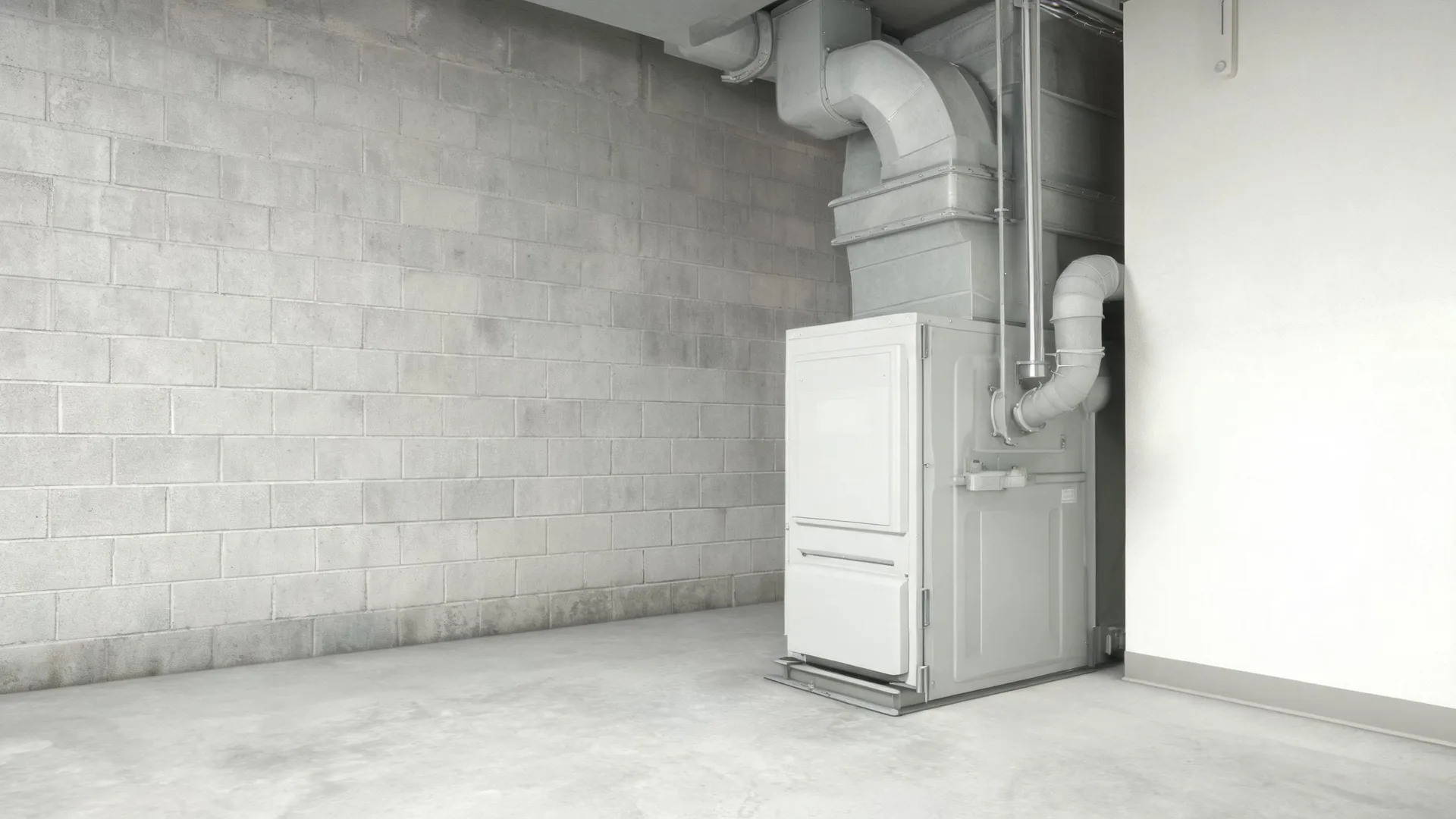
Most homes here run on electric heat
Electricity heats 61.9% of homes in Clark County. Utility gas comes next at 33.3%, with LP gas and fuel oil making up the rest.
Takes about a minute. No obligation.
Electricity heats 61.9% of homes in Clark County. Utility gas comes next at 33.3%, with LP gas and fuel oil making up the rest.
If your furnace runs on electricity or gas already, replacing it with the same fuel type means the circuit or gas line is already in place. Switching fuels for an installation is a bigger project, with new venting or new wiring to plan for.
NOAA nClimDiv, 1991–2020 normals
Electricity in Washington runs $34.87 per million Btu.
A furnace sized right for this house is the way to keep that cost in check, not a bigger or pricier unit.




The efficiency number on a furnace label is how much of the fuel it burns turns into heat in the house, with the rest going out the vent. A higher number means less fuel wasted to make the same heat. That number comes from a furnace running at a steady output in a lab, so it's a ceiling, not a promise of what you'll get. Ductwork with leaks, a filter that never gets changed, or a furnace sized wrong for the house will all pull the real result below that rating. The rating also says nothing about how evenly the heat spreads through the rooms or how often the furnace cycles on and off. A furnace with a strong rating can still feel uneven to live with if the rest of the system around it isn't set up right.
A standard size and efficiency fit fine here. There's no local reason to go bigger or pricier.
Find a contractorA furnace installation is priced as labor and parts, not as a box off a shelf. The unit itself matters, but so does what the crew has to do to get it running right. The plenum has to fit the new cabinet. The ductwork has to tie in clean or get modified where it doesn't. A furnace with a different control board or blower motor may need new wiring run to it. The vent has to meet code for that specific unit, and venting is not the same from one furnace to the next. A straight swap, same fuel, same footprint, same vent path, is the simplest version of this job. Change any one of those things and the labor grows before the furnace is ever bolted in. The furnace's own build adds to it too. A unit with a more complex heat exchanger or a variable-speed blower costs more than a single-stage model, and it may need a condensate drain the old one never had. None of that shows up on the efficiency label. It shows up in what the crew has to do to make that label mean something in your house.
Whoever installs the new furnace disconnects the old one and takes it with them. The cabinet, the heat exchanger, the blower, all of it goes. There's no reason to keep a furnace once it's out of the plenum, and most homeowners don't have anywhere to put one anyway.
If the old furnace ran on the same fuel as the new one, the line or circuit feeding it gets inspected before the new unit ties into it. Wiring that was fine for one control board isn't automatically fine for another, and a gas line that served an older furnace still has to meet code for the one replacing it.
Sizing a furnace comes down to a heat loss calculation, not the square footage of the house. A contractor works through the walls, the windows, the ceiling height, how much of the house faces north, and what's between the living space and the outside air. That math gives a number in Btu, and the furnace gets matched to it. Too big and the furnace heats the air fast, shuts off, and leaves the rooms farther from the vents cold by the time it kicks on again. Too small and it runs constantly trying to catch up, which wears the blower and the heat exchanger harder than a furnace cycling normally. The right size is the one that runs long enough to spread heat evenly and then rests.
Installation day starts with the old furnace coming out, not the new one going in. The crew shuts off gas or power to the unit, disconnects the ductwork and venting, and gets it out of the plenum before anything new goes in its place. Once the space is clear, they check the plenum opening and the duct connections against the new cabinet, because those measurements don't always match from one furnace to the next. The new unit gets set, leveled, and tied into the ducts, the gas line or circuit, and the vent. Then it gets fired up and run through a cycle while the crew checks the flame, the airflow at the registers, and the readings on the control board. A furnace that looks installed but hasn't been run and checked isn't finished yet.