Electricity here runs $34.87 per million Btu
Washington's 2024 rate was among the higher ones homes pay for power. A furnace that wastes heat burns through more of it every winter, and you feel that more here than you would in a cheaper state.
Takes about a minute. No obligation.
Washington's 2024 rate was among the higher ones homes pay for power. A furnace that wastes heat burns through more of it every winter, and you feel that more here than you would in a cheaper state.
When you are comparing furnaces for Yakima, the rating on the unit matters more than it would somewhere power is cheap. A higher-efficiency model costs more going in, but the gap in running cost keeps adding up for as long as you own it.
NOAA nClimDiv, 1991–2020 normals
Yakima County saw 62 winter storms between 2015 and 2024.
A standard furnace is built to handle that. There's no case here for sizing up or paying for more than this house needs.




Half the homes in Yakima County were built in 1977 or earlier, the other half in 1977 or later. That split doesn't point you toward a bigger unit or a different efficiency tier. A furnace is sized to the house it heats, the square footage, the layout, how much glass is in the walls, not to the year it was built. A contractor sizing your furnace will measure your house, not guess from its age. Standard sizing and a standard efficiency rating fit most homes here fine.
Power costs more here, so an efficient system pays you back on every bill.
Find a contractor
That sizing call is a contractor's job, not a guess off a chart. Ask them to run a load calculation on your house, room by room, before they quote a size. A furnace sized a notch too big will short cycle, kicking on and off instead of running steady, and that wears on the igniter and the blower faster than ten months of normal use would on its own.
A furnace warranty usually splits into parts and labor, and they often run different lengths. Some manufacturers void the parts warranty if the installer never registers the unit, so ask who handles that step. Find out too whether the warranty follows the house if you sell it, since that can matter to a buyer later.
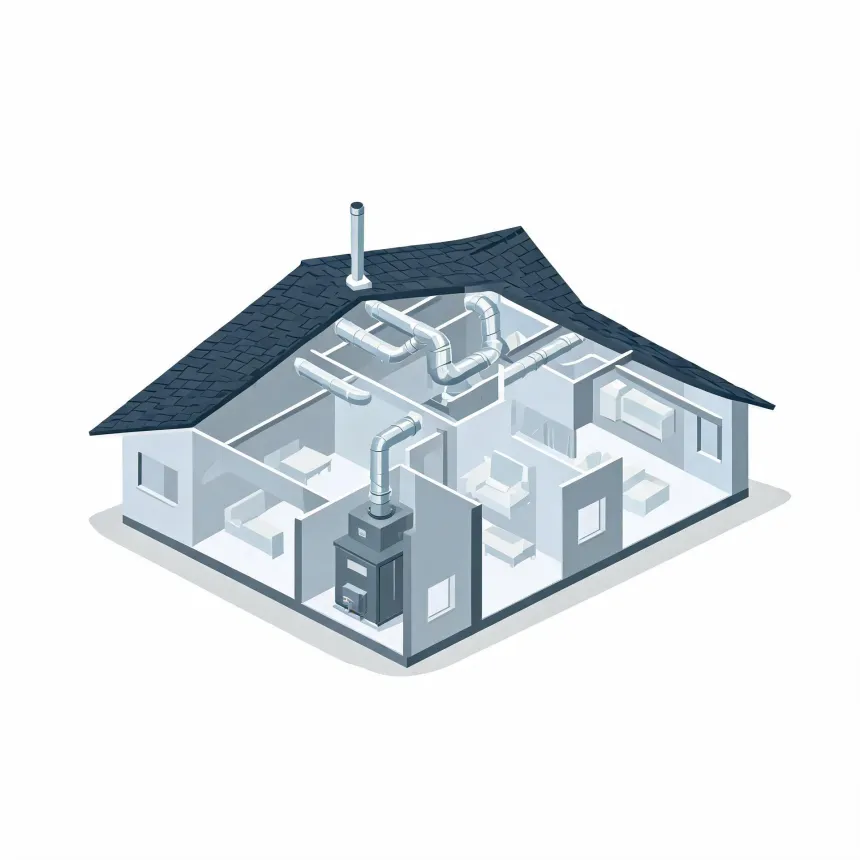
A high-efficiency furnace vents through PVC pipe out a sidewall or the roof, not up a chimney. That means new venting has to be run, and where it comes out matters, it can't sit too close to a window or exhaust it could pull back in. A contractor should be able to tell you exactly where that pipe will go before the work starts, not figure it out on install day.
The unit itself is only part of what you're paying for. Pulling the old furnace and setting the new one is labor. So is whatever it takes to make the new one fit. New venting if you're stepping up to high efficiency. New ductwork or sealing if the old runs are leaking or undersized. New electrical if the furnace needs a dedicated circuit it didn't have before. A straight swap, same size, same vent type, same ducts, is the simplest job a contractor can quote. Change any one of those things and the labor changes with it. Ask the contractor to walk through what's being replaced versus what's being reused, so you know which parts of the quote are the furnace and which are the work around it.
Install day starts with the old furnace coming out. The gas line, the vent pipe and the ductwork all get disconnected first, and that takes longer than people expect. The new unit gets set in place, leveled, and connected to the supply and return plenum. Then the gas line, the vent, and the electrical get tied in one at a time. Once it's hooked up, a contractor runs a startup check. They check gas pressure, they check the temperature rise across the heat exchanger, and they check airflow at the registers, because a furnace moving too little air runs hotter than it should and that shortens the life of the heat exchanger. If the new vent pipe needs a different path out of the house than the old one took, expect some drywall or framing work along with it. A straight swap can wrap in a day. New ducts, new venting, or an electrical upgrade each add time on top of that.