August is the month to catch problems early
Furnaces in Bremerton sit unused most of the summer, then start running again in September. A weak igniter or a failing blower often gets through the summer fine and then fails in the first cold snap.
Takes about a minute. No obligation.
Furnaces in Bremerton sit unused most of the summer, then start running again in September. A weak igniter or a failing blower often gets through the summer fine and then fails in the first cold snap.
If it's short cycling, blowing cold air, or not starting at all this early in the season, that's not a sign to wait and see. With heat needed from September through June, a problem now only gets more disruptive the longer it runs unrepaired.
NOAA nClimDiv, 1991–2020 normals
An old furnace can still be worth repairing if the cabinet, blower and heat exchanger are sound.
Once the heat exchanger cracks or the cabinet rusts through, no repair fixes that and replacement is the only real option.



Half the homes in Kitsap County were built in 1986 or later. If your furnace came with a house from that half, there's a decent chance it hasn't hit the end of its working life yet. A cracked heat exchanger or a rusted-through cabinet are the real reasons to walk away from a furnace, and those usually show up late, not halfway through a system's life. So when something's wrong with a newer furnace, the smarter bet is almost always to get it looked at before writing it off.
A furnace that still has years ahead of it is worth a repair call before anything else. Get it looked at and find out what's actually wrong.
Find a contractor
A furnace that's starting to fail doesn't fail evenly. A cracked heat exchanger gets worse every time it heats up and cools down, because that's metal fatigue, and metal fatigue only goes one direction. A blower motor with worn bearings runs hotter the longer it spins, which wears the bearings faster. Even something as simple as a dirty flame sensor gets coated a little more with each cycle until the furnace stops holding a flame at all. None of these fix themselves by running. The furnace keeps trying to do its job, and that effort is what's wearing down whatever's already weak.
Make sure the thermostat is set to heat and the set temperature is actually above room temperature. Then look at the filter. A filter clogged with dust chokes off airflow, and a furnace starved for air will overheat and shut itself down before it finishes a cycle.
Furnaces have a power switch that looks like a light switch, usually mounted on or near the unit itself, and it's easy to bump or forget was turned off. If that's on, check the breaker panel. A breaker that's tripped but not reset all the way can still look fine without actually feeding power to the furnace.
A furnace usually gives some warning before it quits outright. It might take a while to light, where it used to catch right away. The flame behind the viewing window might look yellow and uneven instead of steady blue. Air coming out of the vents that isn't as warm as it used to be, or a furnace that runs long stretches to get the room up to temperature, both point to something not working the way it should. A burning or metallic smell in the first part of a cycle is worth paying attention to, especially if it doesn't fade. Banging, rattling or a high-pitched squeal when it starts up usually means a part is loose, worn or about to fail, not something that settles down on its own.
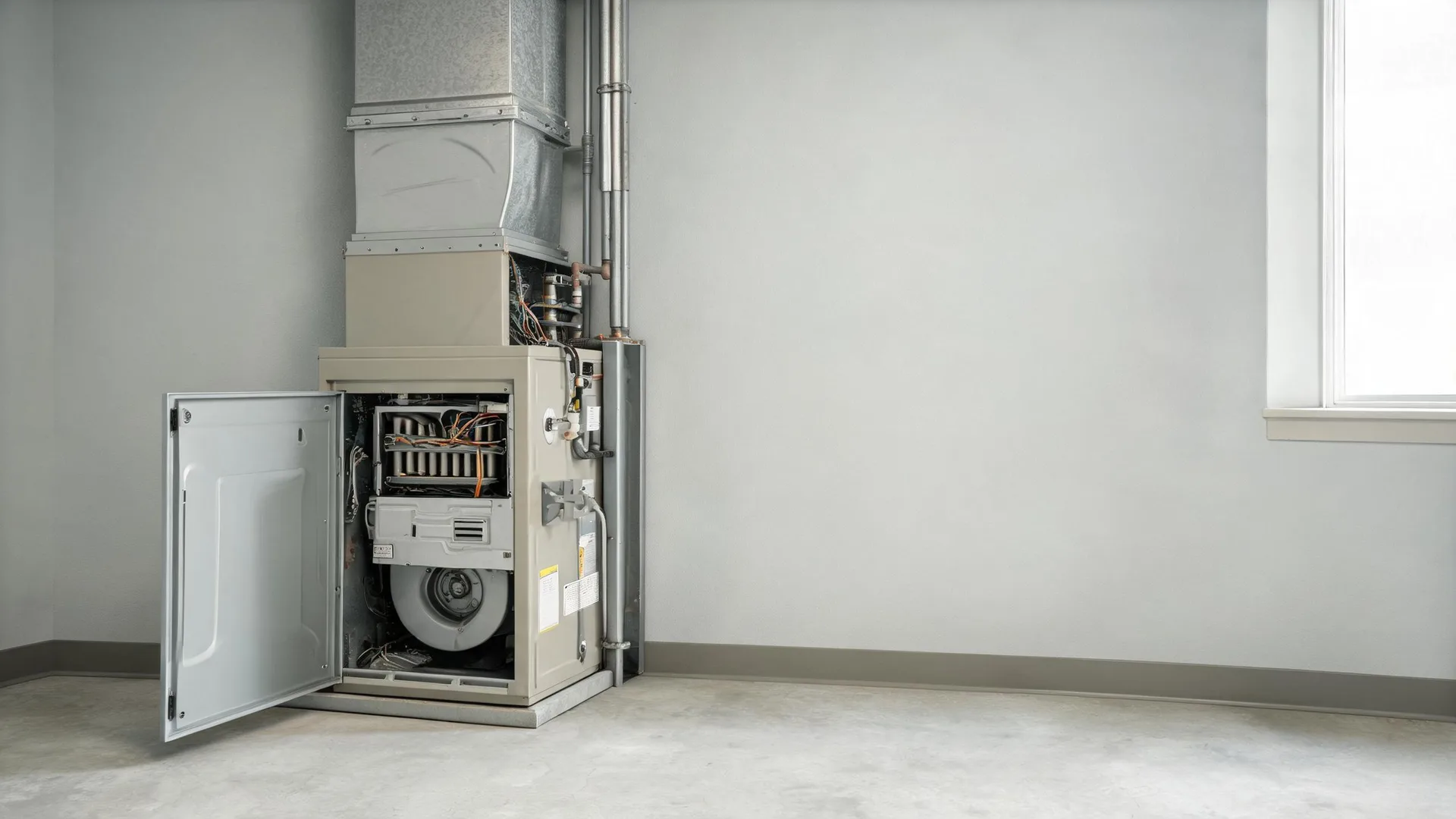
A diagnostic visit starts before any panel comes off. A tech will ask what the furnace is doing, when it started, and whether it happens every cycle or just sometimes. Then they'll run it through a full cycle and watch it work, because some problems only show up once the furnace has been running a few minutes. After that they open the cabinet and check the parts that fail most often. They'll test the igniter and flame sensor, check the blower motor, and look at the pressure switch. They'll check that the gas pressure is correct and make sure the heat exchanger isn't cracked, since that's a safety issue as much as a repair one. By the end they can usually point to the one part causing the trouble and explain what it'll take to fix it.