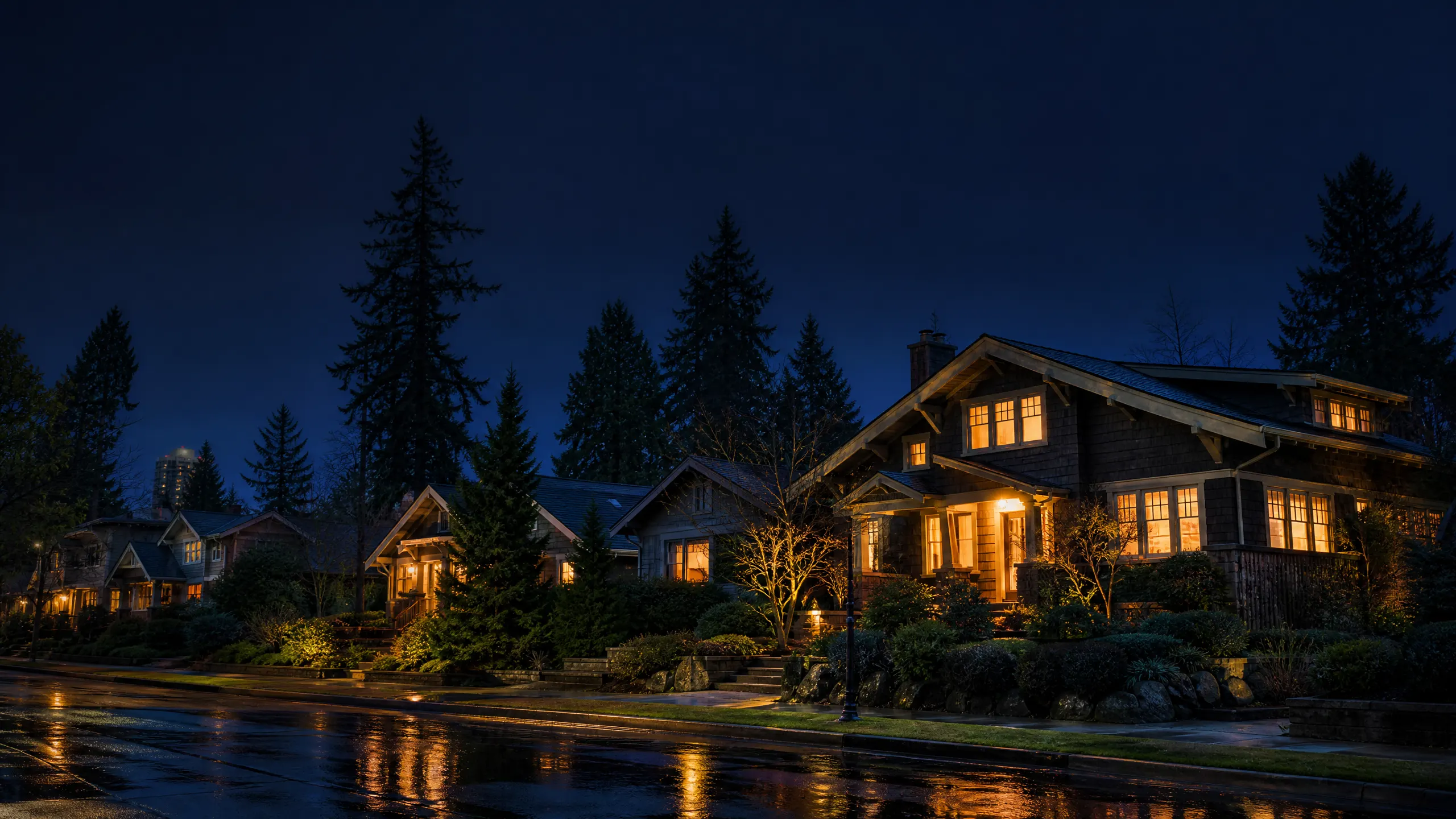
Illuminated craftsman-style houses on a rain-slicked residential street at night, backed by tall evergreen trees.

Furnace Repair in Centralia, WA

Tell us about the job

Takes about a minute. No obligation.

RepairFurnace or heatingLewis County, WA
Step 1 of 2

What ZIP code is the job in?

Storms here are hard on outdoor equipment

Severe weather hits this county more than most, and almost a quarter of Washington households went at least a day without power in 2024. That's wind, hail and downed lines taking a toll on more than just the lights.


A furnace that still runs can still be hurt

If a storm came through and the outdoor unit took debris or a hard knock, that's worth a look even if the furnace is firing fine right now. Some damage doesn't show up until the system has to work hard on a cold night.

10 months
September through June, your furnace is on duty
31°F
the average winter night it heats against
Isometric grayscale illustration of a cutaway house showing an interior furnace with a tall flue pipe and ductwork running to rooms under a partially lifted roof.
Your furnace works hardest from October through April.

NOAA nClimDiv, 1991–2020 normals

A diagnostic starts with the tech asking what the furnace is actually doing, not just that something is wrong.

Short cycling points toward one part. No heat points toward another. A burner that will not light points somewhere else again.

Furnace runs September through June here, on some of the highest power rates around

Heat runs September through June
Winter nights average 31°F
Climate zone 4C
An older furnace, built to handle an older homeHalf the homes in Lewis County were built in 1980 or earlier.

August is the last easy month to catch a problem before the furnace has to carry the house. Most repair calls land in the first cold weeks of September, when the system finally has to run long and hard instead of just cycling on now and then. An igniter that was already wearing out, a flame sensor coated with residue, a blower motor that was straining quietly all spring. None of that shows up on a mild day. It shows up the first night the thermostat asks for more than the part has left to give.

Have the outdoor unit checked before it has to work hard

If your outdoor unit took a hit this past year, get it looked at before the next cold snap finds the problem for you.

Find a contractor
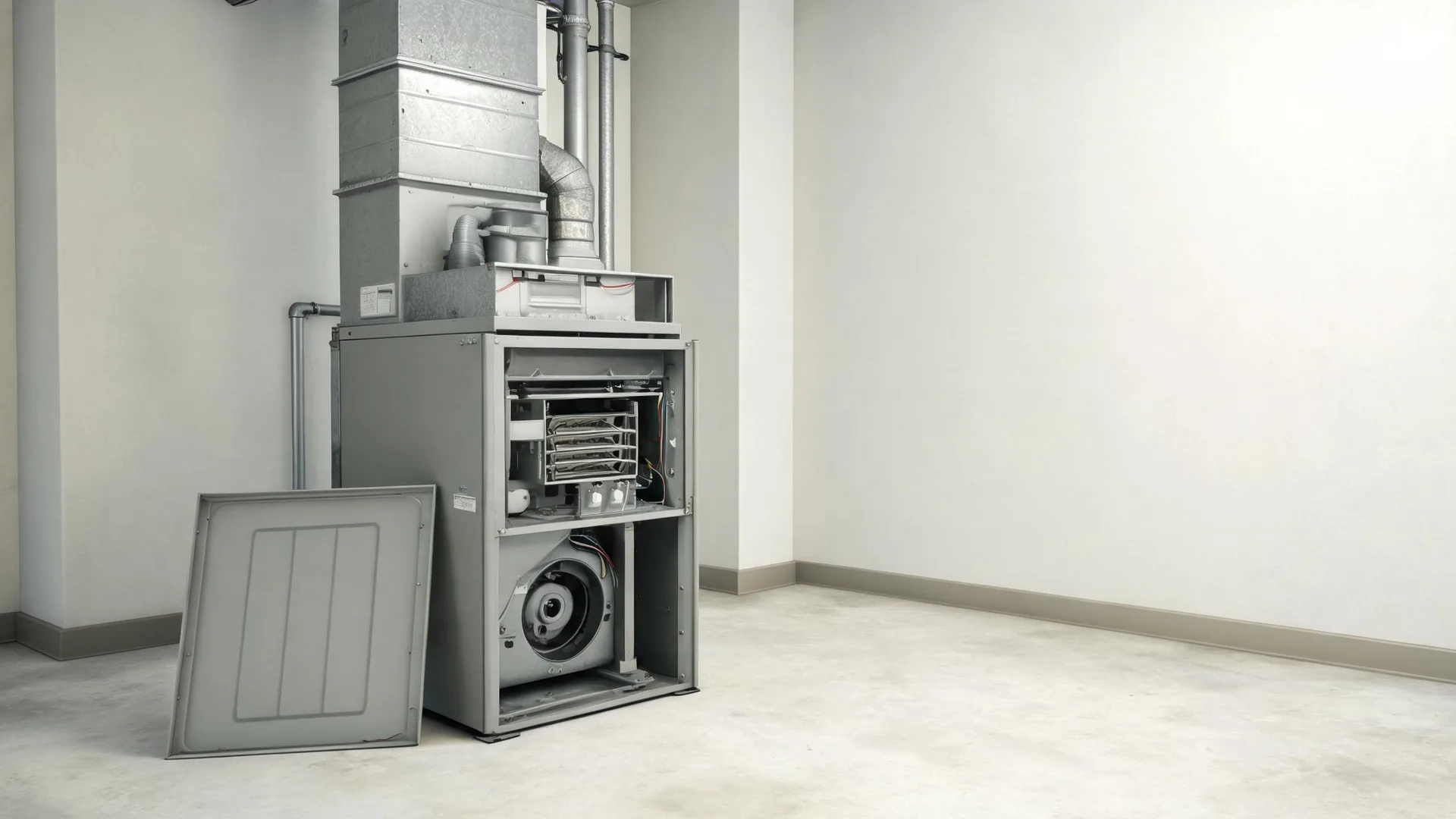
A gray residential gas furnace installed in an unfinished basement, surrounded by ductwork, a metal flue pipe, and a gas supply line.

Running through a problem rarely makes it smaller

A furnace that is already struggling rarely fails all at once. A cracked heat exchanger gets a little worse every time it heats up and cools down. A blower motor with worn bearings runs hotter and louder each cycle until it seizes. A flame sensor coated in residue reads weaker each time it tries to detect the flame, until the furnace shuts itself off for good. None of these fix themselves by running more. Heat and vibration are hard on parts that are already failing, and a furnace that keeps cycling on a bad part is just getting more chances to fail at the worst possible time. Shutting it down and getting the part looked at stops that process. Letting it ride usually means the same repair later, plus whatever it took out on the way down.

Most failures start with the igniter or the flame sensor

The igniter has to get hot enough to light the gas every single cycle, and that heating and cooling wears it out over time until it cracks or just stops drawing enough current. The flame sensor has a different job. It proves to the control board that a flame is actually burning, and a thin coating of residue on it is enough to make it read weak even when the burner lit fine. Both parts fail the same way, a little more each cycle, until one cycle they don't work at all.

A dirty filter causes problems that look like something else

When airflow is restricted, the heat exchanger runs hotter than it should, and the furnace can start shutting off mid-cycle on a high limit switch as a safety measure. That can look like a control board problem or a bad limit switch when the actual cause is upstream. A blower motor working against a clogged filter also runs harder than it needs to, and that extra strain on the bearings shortens its life. A lot of what looks like component failure traces back to airflow that was never the component's fault.

Most people notice a furnace problem by what it stops doing, not what it does. It stops heating evenly, so one room runs cold while the thermostat reads satisfied. It starts short cycling, running for a few minutes and shutting off before the house warms up. It makes a noise it did not used to make, a rattle from the blower wheel or a squeal from a motor bearing starting to go. Sometimes it is smell, a burning dust smell the first time it fires after months off, which is normal for a few minutes and a problem if it does not go away. A furnace that delays before igniting, or clicks and tries a few times before it catches, is already telling you the igniter or the flame sensor is on its way out. None of these are things to wait on. A furnace that is struggling tends to keep struggling until something stops working altogether.

Repair or replacement usually comes down to what else is wrong besides the thing that just broke. A cracked heat exchanger is a straightforward call because that part cannot be repaired, only replaced, and it is tied to the whole unit's age and condition. A failed igniter or flame sensor on a furnace that otherwise runs fine is just as straightforward the other way. The harder cases sit in between, a blower motor or control board going out on a furnace that has already needed a few other repairs. At that point the question is not whether the part can be fixed but whether the next part is close behind it. A tech who has seen the whole system can tell you which kind of call this is.