
A lit mountain lodge-style home at night with evergreen trees, stone accents, and snow-capped mountains in the background.

Furnace Repair in Clarkston, WA

Tell us about the job

Takes about a minute. No obligation.

RepairFurnace or heatingAsotin County, WA
Step 1 of 2

What ZIP code is the job in?

Furnaces in Clarkston run from September through June, about ten months of the year. That's most of the year spent heating, not just the cold snap in January. Overnight lows average 26°F through December, January and February, so the furnace isn't cycling on and off lightly, it's holding that line against real cold, night after night. Asotin County has also seen its share of winter storms, heavy snow and ice that push a furnace to run longer and harder than it would on an ordinary cold night. A furnace working that kind of schedule wears parts sooner than one that only kicks on now and then. When something starts acting up, it's worth having a contractor actually diagnose what's wearing out, rather than guessing.

10 months
September through June, your furnace is on duty
26°F
the average winter night it heats against
53%
of homes here heat with gas, so most furnaces here burn gas
34 winter storms
in ten years, the nights a failure hurts most
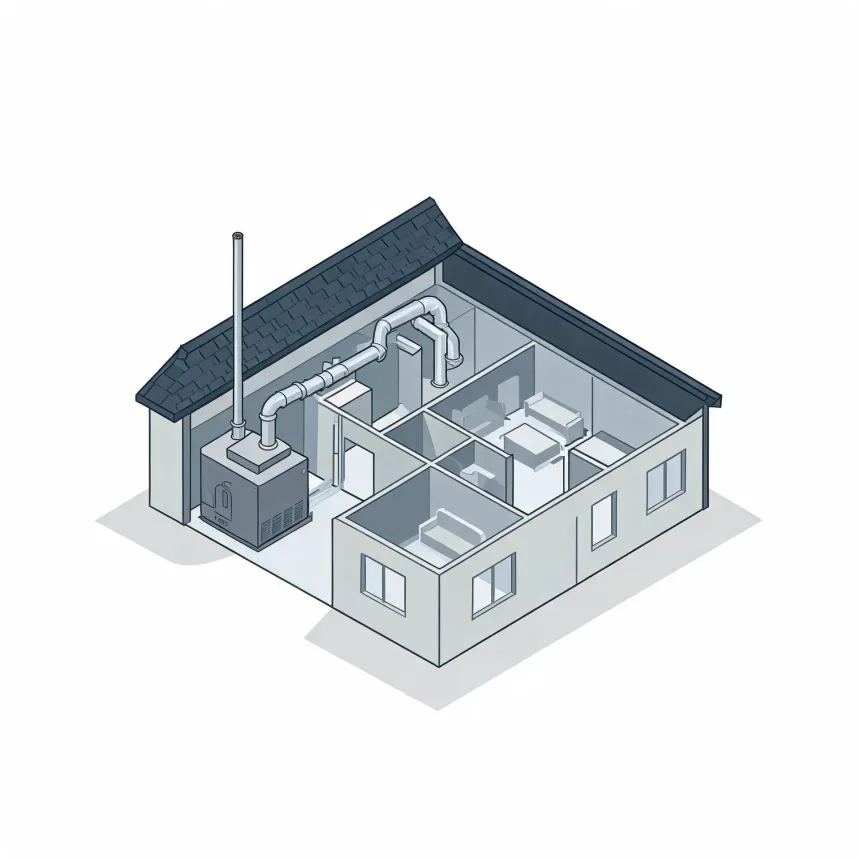
Isometric grayscale illustration of a cutaway single-story house showing interior rooms with furniture, plus an exterior furnace unit with a tall flue pipe and ducting running into the attic space.
Your furnace works hardest from November through April.

NOAA nClimDiv, 1991–2020 normals

Check the thermostat batteries and the switch on the furnace itself before anything else.

A dead battery or a flipped switch looks exactly like a failed furnace, and it rules out the simplest cause first.

Furnaces here start up in September and some homes already have theirs on in August if the weather turns early. That first start after months of sitting idle is when a weak igniter or a failing flame sensor tends to show itself. The part was already going, and the first real call for heat is what finishes it off. Furnaces in Asotin County keep running through June, so there isn't much of the year when the system gets a long rest to hide a problem. Getting a furnace looked at before or right at the start of that September run catches a weak part before it fails on a cold night instead of after.

Get the cause diagnosed, not just the symptom

A furnace running this many months a year doesn't get much downtime to show you a problem before it turns into a breakdown. Have a contractor diagnose what's actually wearing out, so the fix holds through the next storm instead of just the next week.

Find a contractor
A gas furnace with attached ductwork, gas piping, and condensate lines installed in a concrete-block basement.

Left alone, a small problem becomes a bigger one

A crack in the heat exchanger doesn't stay a hairline crack. Heat makes metal expand, and every cycle flexes that crack a little wider until it's big enough to leak exhaust into the air the furnace is supposed to be warming. A slipping blower belt or a bad bearing works the same way, it runs rough instead of failing outright, and rough running wears the motor mount and the bearing itself faster than a quiet one would. Ignore a limit switch that's tripping and resetting on its own and you're asking the heat exchanger to run hotter than it should, which is exactly what cracks it in the first place. None of these get better by running longer. The furnace doesn't rest long enough, this time of year, to stop and heal on its own.

A dirty flame sensor is the most common no-heat call

The flame sensor reads the burner flame to confirm it's lit, and a film of residue builds up on it over time until it can't sense the flame anymore. The furnace shuts itself down rather than run without that confirmation. It looks exactly like something more serious until a contractor actually checks it.

A cracked heat exchanger means the furnace gets replaced, not patched

The heat exchanger is the one part that can't be welded or swapped on its own, because a crack there lets exhaust mix into the air moving through the house. There's no patch that holds against the expansion and contraction it goes through every time the burner fires. A contractor who finds a crack there is telling you it's time for a new furnace, not a repair.

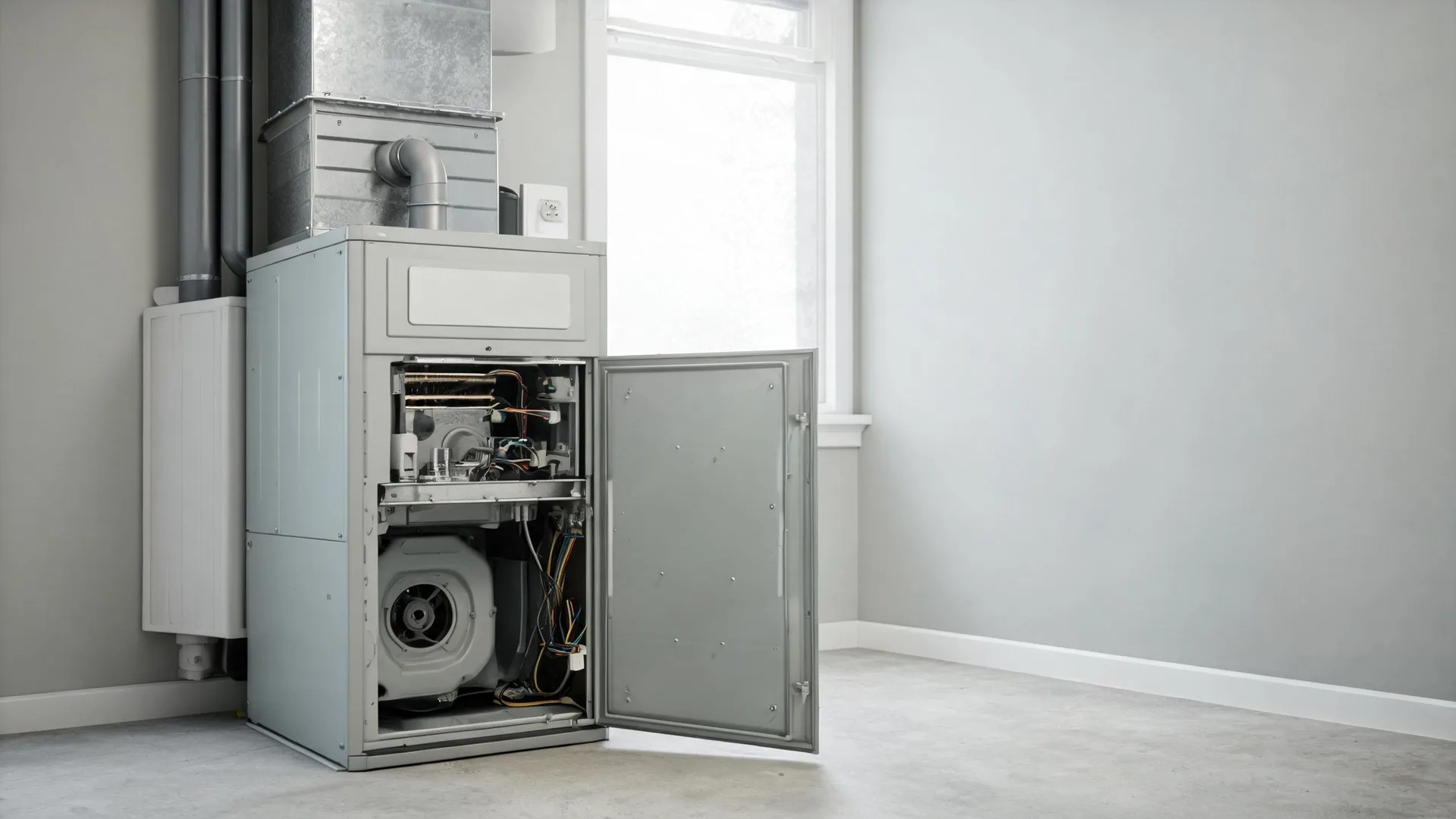
An unfinished basement containing a gray HVAC furnace with ductwork, exposed wooden joists, a concrete floor, and miscellaneous clutter in one corner.

A new furnace would cut about $110 a year off heating for a typical Asotin County home.

  • A new high-efficiency furnace$440 a year
  • An older furnace$550 a year

Estimates for a typical Asotin County home, compared with an older unit built to the previous federal minimum, from EIA household energy data, Washington fuel prices and NOAA climate normals. Your home will differ.

Repair makes sense when one part has failed and the heat exchanger is sound.

Replacement makes sense when the heat exchanger is cracked or the furnace keeps needing parts.

Age is the first thing to weigh, but it's not the only one. An older furnace can usually still be repaired, but each repair is worth less than the last one, because the parts around the failed one are aging too. Think about what actually broke. An igniter or a flame sensor is a wear part, expected to fail eventually, cheap to replace, and fixing it tells you nothing bad about the rest of the furnace. A cracked heat exchanger is different. That's the furnace itself failing, not a part on it, and no repair puts it back together. The other thing worth asking is how many repairs this same furnace has needed lately. One failure is a part wearing out. A pattern of failures, different parts, same furnace, same winter, is the furnace telling you it's done being reliable, even if each individual fix looks small.