





Illuminated craftsman-style houses on a rain-slicked residential street at night, backed by tall evergreen trees.

Furnace Repair in Friday Harbor, WA

Tell us about the job

Takes about a minute. No obligation.

RepairFurnace or heatingSan Juan County, WA
Step 1 of 2

What ZIP code is the job in?

Furnace here runs from September through June, about ten months of the year. Overnight lows average 36°F in December, January and February, so the furnace is working often, not working hard. There's nothing about Friday Harbor that's unusually tough on a furnace. When one starts short cycling or blowing cool air, it's almost always a plain cause. A dirty flame sensor. A clogged filter choking airflow. A draft inducer on its way out. A tech who knows furnaces will recognize the signs fast, and the fix is usually a known part with a known problem, not a mystery.

10 months
September through June, your furnace is on duty
36°F
the average winter night it heats against
5 winter storms
in ten years, the nights a failure hurts most
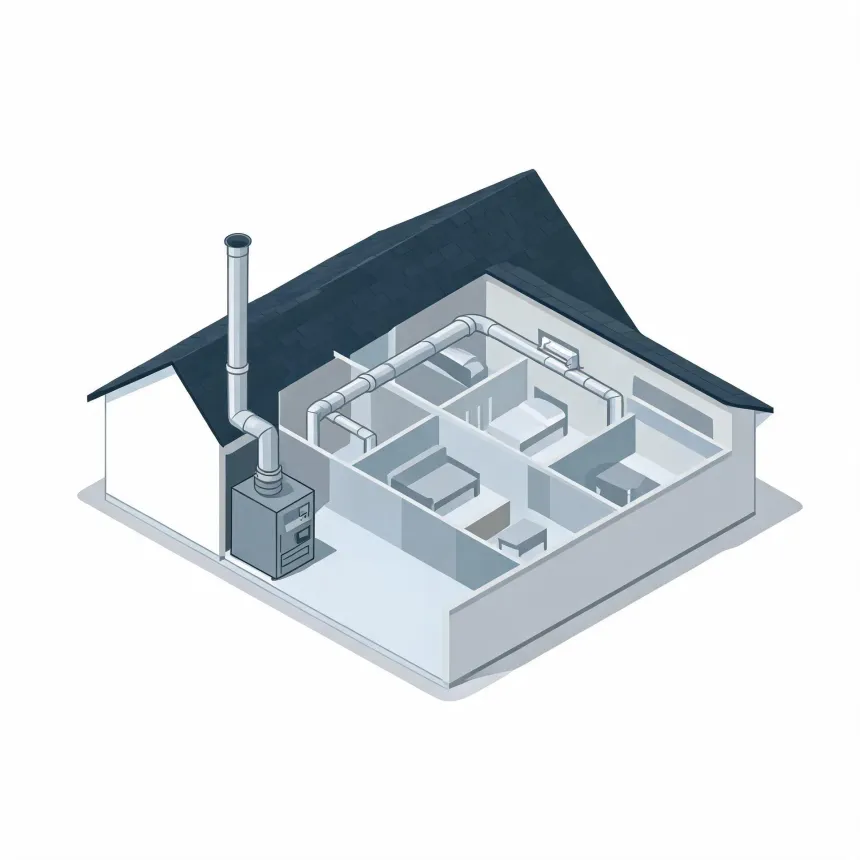
Isometric cutaway illustration of a single-story house with a dark shingled roof, showing interior rooms with beds and furniture, overhead ductwork, and a gray furnace with a tall flue pipe at the exterior wall.
Your furnace works hardest from October through April.

NOAA nClimDiv, 1991–2020 normals

A furnace with a cracked heat exchanger or a shot blower motor is a different call than one with a dirty flame sensor.

One is a part swap, the other is a sign the whole unit is nearing the end, and a tech can tell you which within one visit.

Washington's electric rates make a furnace running wrong expensive to ignore

Heat runs September through June
Winter nights average 36°F
Climate zone 5C

Half the houses in San Juan County were built in 1988 or later. If yours is one of them, the furnace inside it is probably not old enough to be the real problem. A system that age still has years left in it, and the part that's failing is just that, one part. Swapping out a flame sensor or an inducer motor on a furnace with plenty of life left is money well spent. Replacing the whole thing before you need to isn't.

A furnace running wrong isn't cheap to leave alone

At $34.87 per million Btu, a furnace that's short cycling or running longer than it should is burning through electricity for no reason. Get the real cause found and fixed and it goes back to costing what it should.

Find a contractor
A man in a cap, gray work shirt and dark pants, seen from behind, carries a worn canvas tool bag up porch steps toward a dark navy front door beside a potted shrub.
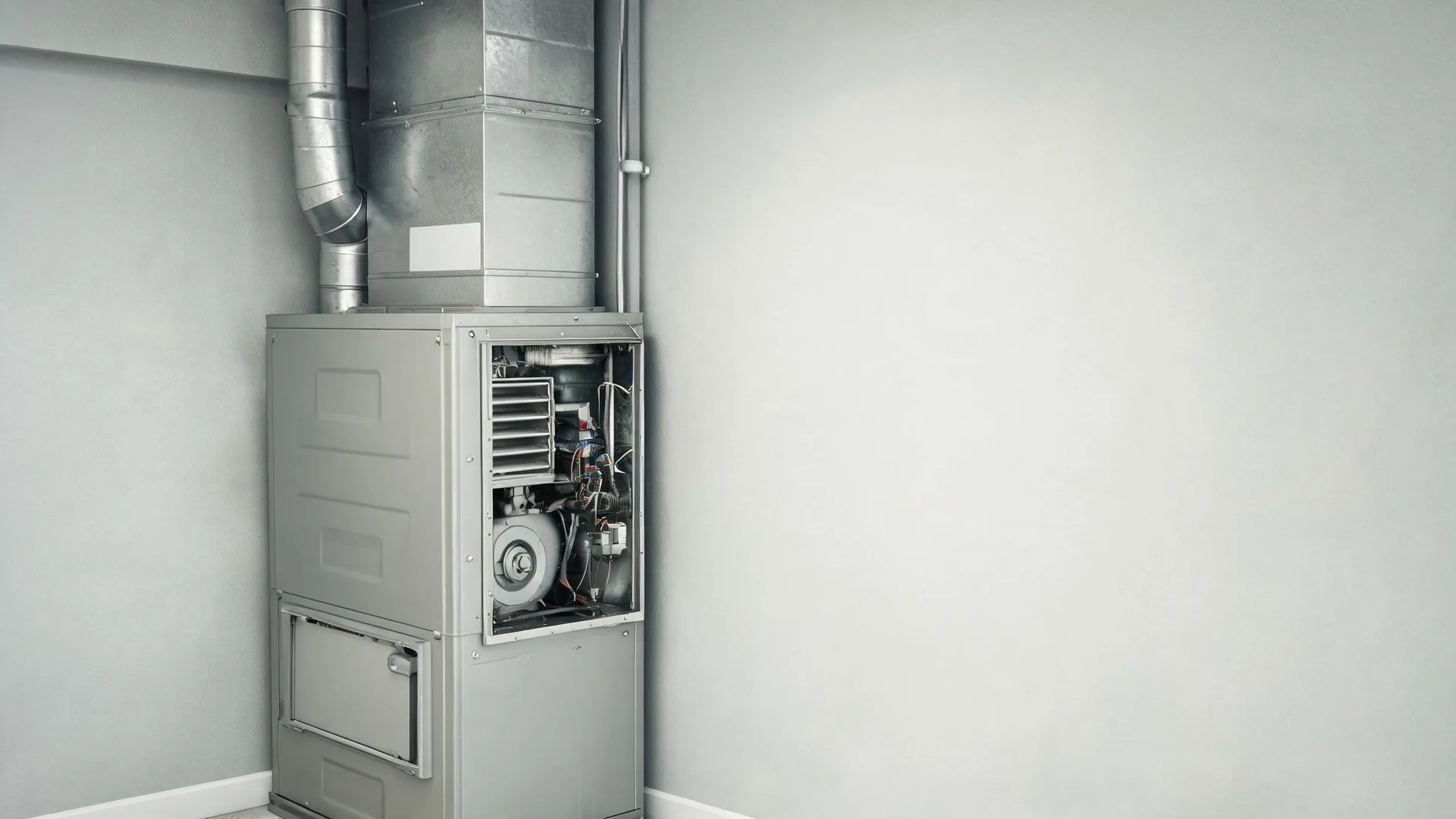
A gray high-efficiency gas furnace installed in an unfinished basement, surrounded by gas lines, a condensate drain, and sheet-metal ductwork.

Small problems don't stay small

A furnace that's short cycling doesn't just waste a cycle and stop. Every start puts the most wear on the parts that are already weak, the igniter, the flame sensor, the draft inducer motor. Each restart is a jolt, and a part already on its way out fails faster under repeated jolts than it would running steady. A cracked heat exchanger is the one that matters most. A small crack flexes with every heat cycle and opens further the longer it runs, and that's a safety problem, not just a worn part. A clogged filter choking airflow makes the blower work harder and run longer to push the same air through, so the strain spreads to the blower motor too. None of this gets better on its own. The part that's struggling now is usually the part that fails outright later, and it tends to quit at night, when the furnace has been running longest.

Check the filter first

Pull the filter and hold it up to a light. If you can't see light through it, air can't get through it either. A blocked filter can make the furnace run long cycles trying to push enough heat through the house, or trip a safety switch and shut the whole thing down. A clean filter is the one fix you can do yourself, and it rules out the most common cause before anyone comes out.
Know what to tell the tech

Check the thermostat is set to heat and the batteries aren't dead, check the breaker and the switch that looks like a light switch near the furnace, and listen to what it does when it tries to start. Does it click and not light. Does it light and shut off again. Does it run but blow cool air. Telling a tech what you saw before they arrive gets them to the actual problem faster than a call that just says it's not working.

Most furnace failures trace back to one of a handful of parts, and they tend to fail in a predictable order. The flame sensor gets a coating of oxidation over time and stops telling the control board a flame is lit, so the furnace shuts itself off a few seconds after starting. The igniter is a thin element that cracks after enough heating and cooling cycles, and once it cracks it either glows weak or doesn't glow at all. The draft inducer motor runs every single cycle to clear the exhaust before the burners light, and that constant use wears the bearings until it gets loud or seizes. A limit switch can also trip from restricted airflow and shut the system down as a safety response, which looks like a failure but is actually the furnace protecting itself. None of these parts fail because of bad luck. They fail because they're the parts doing the most work, cycle after cycle, for years.

A diagnostic visit starts before any panel comes off. A tech wants to know what the furnace was doing when it failed, so expect questions about what you heard and saw. Then the cover comes off and the multimeter comes out. Checking the flame sensor means pulling it and looking at the coating on the tip, then testing it under power to see what current it's actually passing. Checking the igniter means watching it glow on a call for heat and measuring the resistance across it. The draft inducer gets checked by ear first, for grinding or whining, then confirmed by watching whether it builds enough pressure to satisfy the pressure switch. A tech will also pull the filter and check static pressure in the ducts, because restricted airflow causes problems that look electrical but aren't. The whole process is a process of elimination, ruling parts in or out with actual readings until the one that's failing shows itself.