

Heat pump vs furnace in San Juan County, Washington

Find a Local Installer

See real numbers before you choose

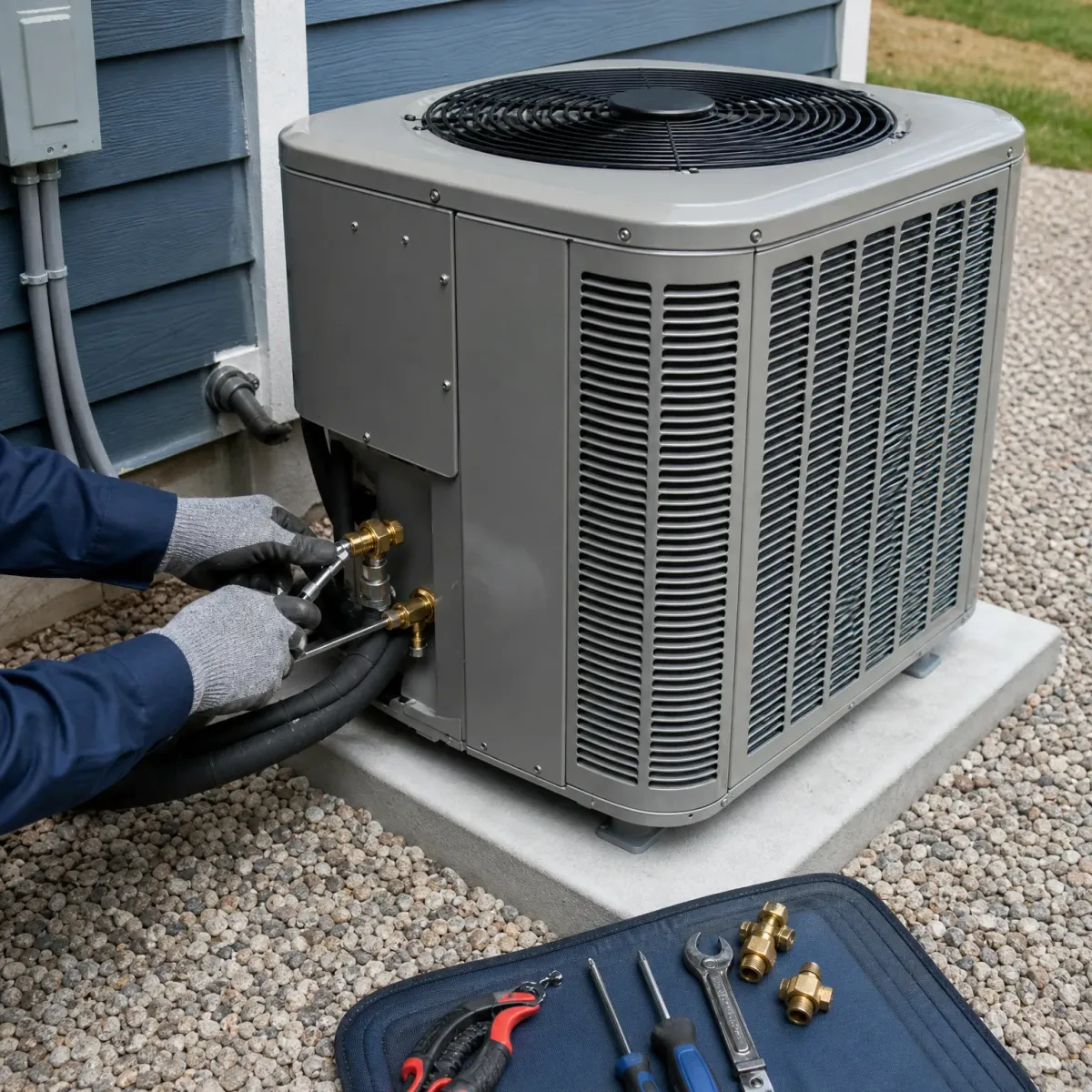
Gloved hands attach a hose with brass fittings to the service valves of a gray outdoor air conditioning condenser on a concrete pad, with a tool roll holding a wrench, screwdrivers, pliers and brass fittings on gravel in the foreground.

Tell us about the job

Takes about a minute. No obligation.

New system or replacementSan Juan County, WA
Step 1 of 3

What kind of equipment?

Which costs less to run in San Juan County?

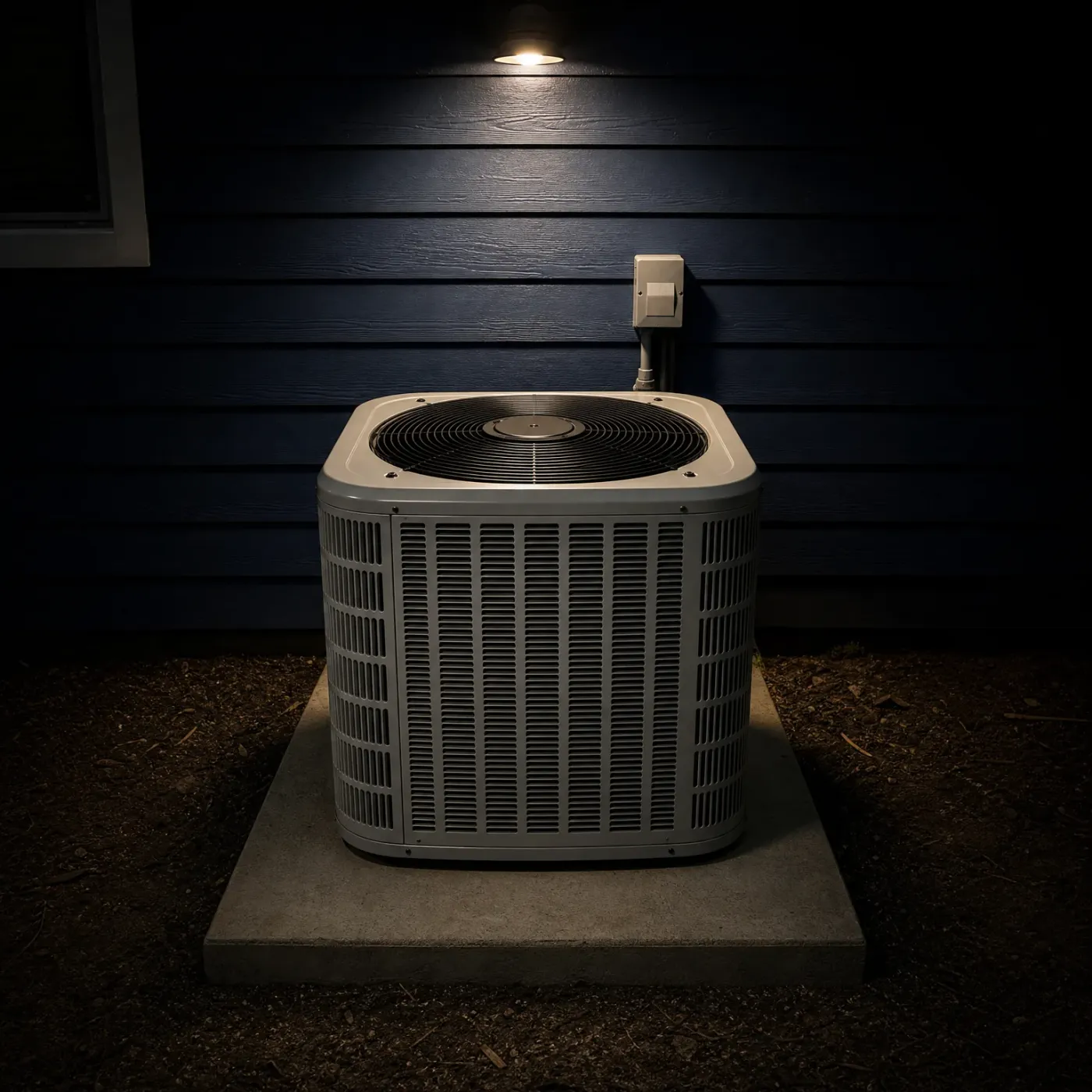
A gray outdoor condenser unit on a concrete pad beside a dark blue horizontal-lap sided wall at night, lit by a wall-mounted light above, with an electrical disconnect box on the wall behind it.

Heat pump

To heat your home here$1.59per 100,000 Btu

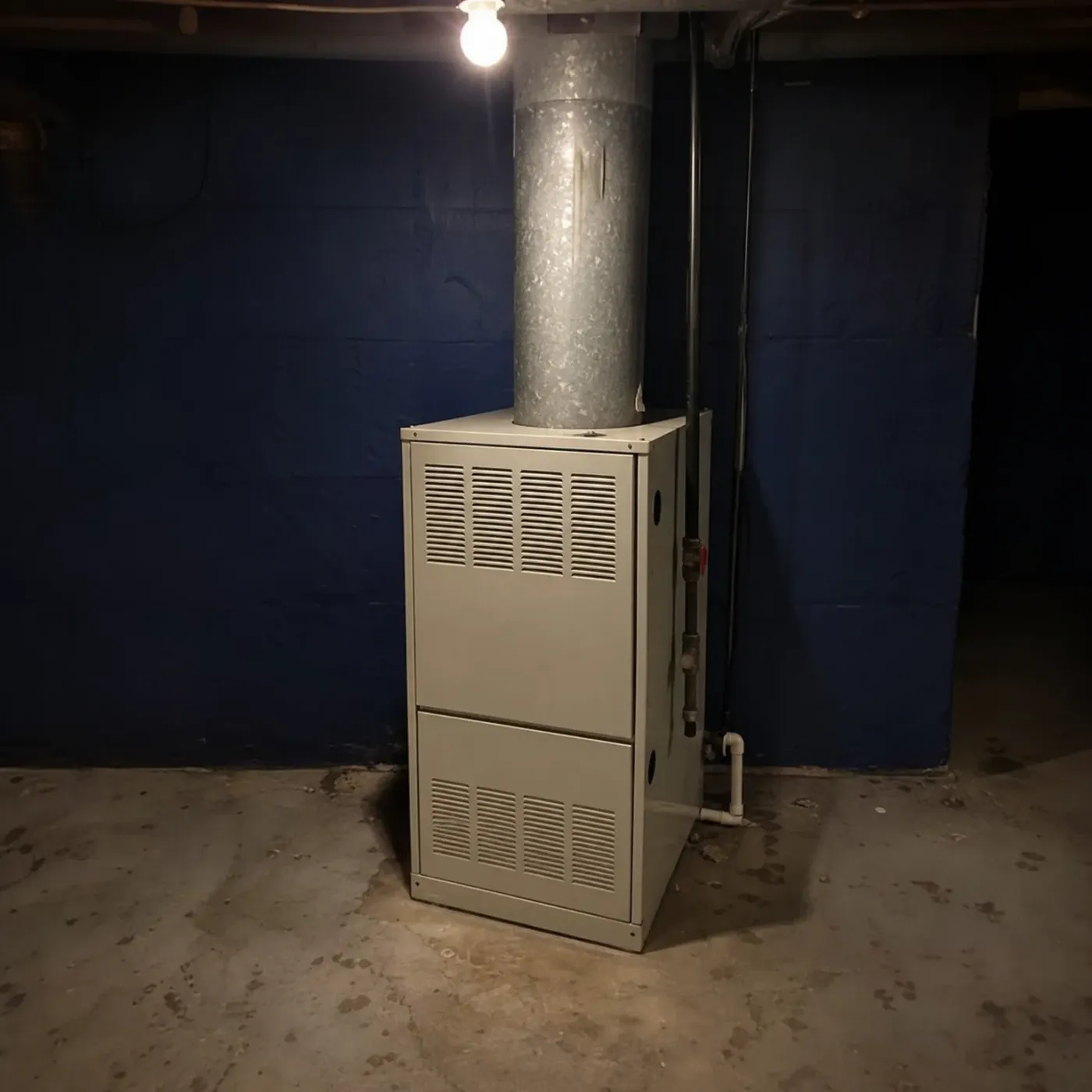
A beige furnace with louvered front panels stands on a concrete basement floor against a blue-painted block wall, with a galvanized metal flue pipe rising from its top and a bare bulb lit overhead.

Furnace

To heat your home here$1.46per 100,000 Btu

At Washington's gas and electricity prices, a gas furnace makes the same heat as a heat pump for at least 8% less.

Btu stands for British thermal unit, the standard measure of heat energy.

Where does a heat pump shine?

  • Made for mild winters

    Winter nights here average 36°F, rarely dropping into the range that gives a heat pump trouble. It can keep pulling heat from that outside air all season without much strain.

    A navy-blue house entry with a wreath on the dark front door, white trim and porch columns, potted evergreen, black rubber boots and a blue mug on the steps, frost on the lawn, and a person in a dark coat walking in the background.
  • Steady, even comfort

    A heat pump runs long and low instead of blasting on and off. Rooms hold an even temperature all day.

    A dimly lit living room with a lit stone fireplace, a navy armchair holding an open book, a cushion and gray fringed throw, a brass table lamp and mug on a side table, and a golden retriever sleeping on a woven rug.
  • Heats and cools in one system

    A heat pump runs the same way all year. It pulls heat into the house in winter and pushes it out in summer.

    Living room with a white-framed sash window overlooking a green garden, a potted plant and books on a wooden bench below, a navy built-in bookcase at left, and a pale sofa with a navy knit throw and blue table lamp at right.

Where does a furnace shine?

  • Fast, strong heat on demand

    A furnace pushes out hot air within minutes of switching on. A cold house warms up fast.

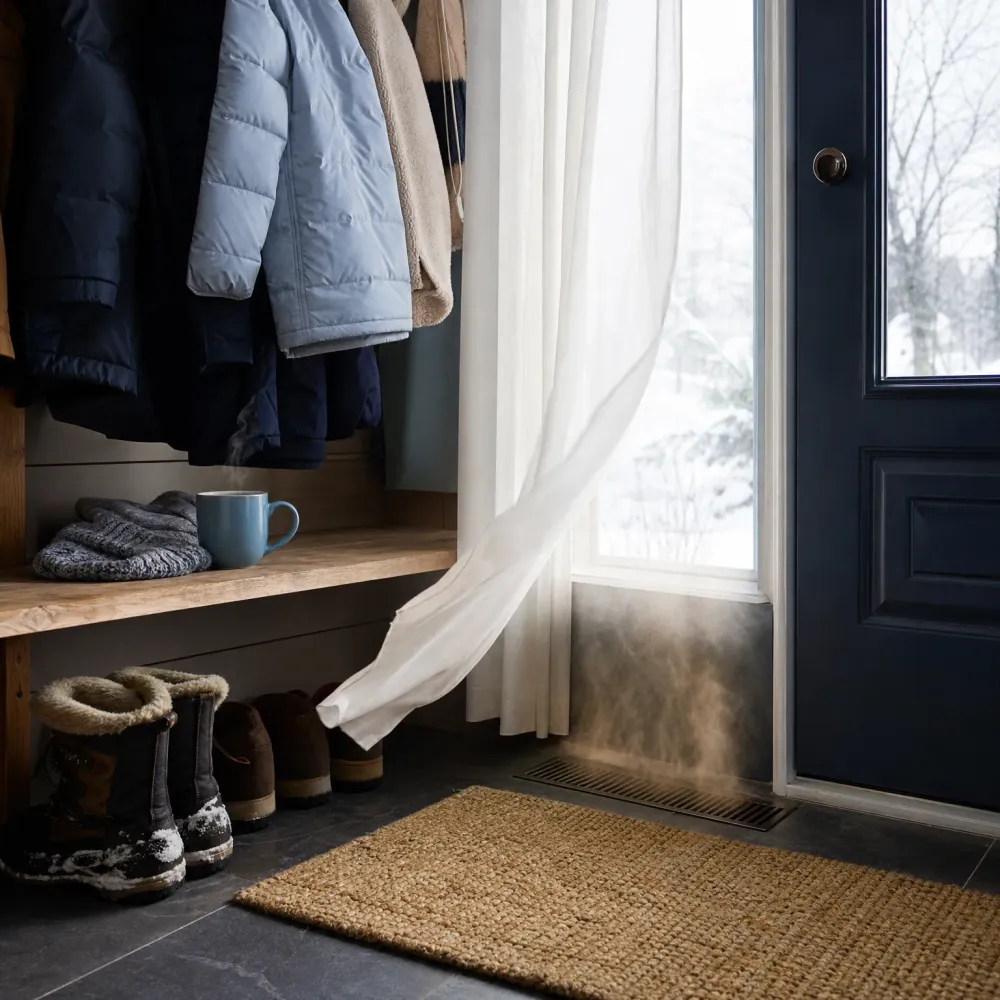
    Entryway with coats hung above a wooden bench holding mittens and a steaming mug, boots on a tile floor, a jute mat, a floor vent with visible warm air, a sheer curtain blowing by a window showing snow, and a dark blue door.
  • Proven, simple, easy to get serviced

    The design is simple and well understood. That keeps service calls short.

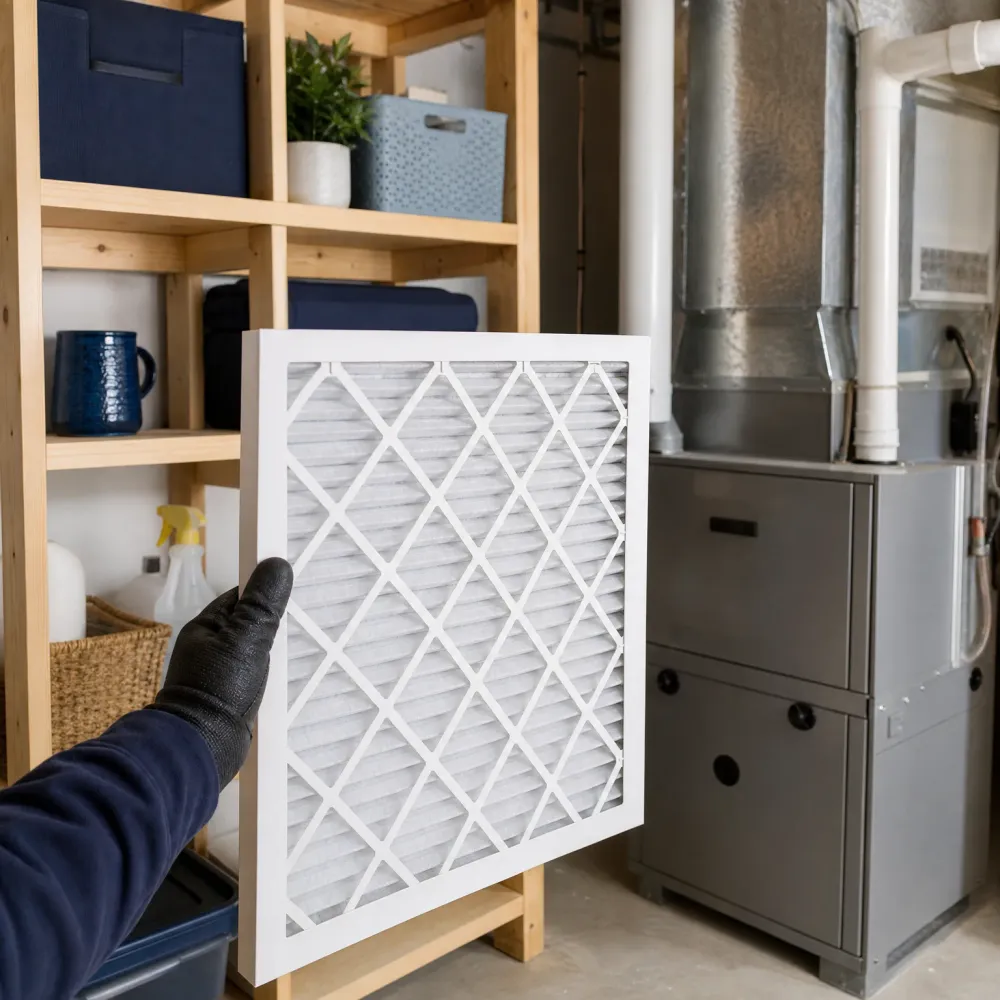
    A gloved hand holds a white pleated air filter in front of wooden storage shelves and a furnace with metal ductwork.
  • Pairs with any central AC

    The ductwork that delivers heat in winter delivers cool air in summer once an AC coil is added.

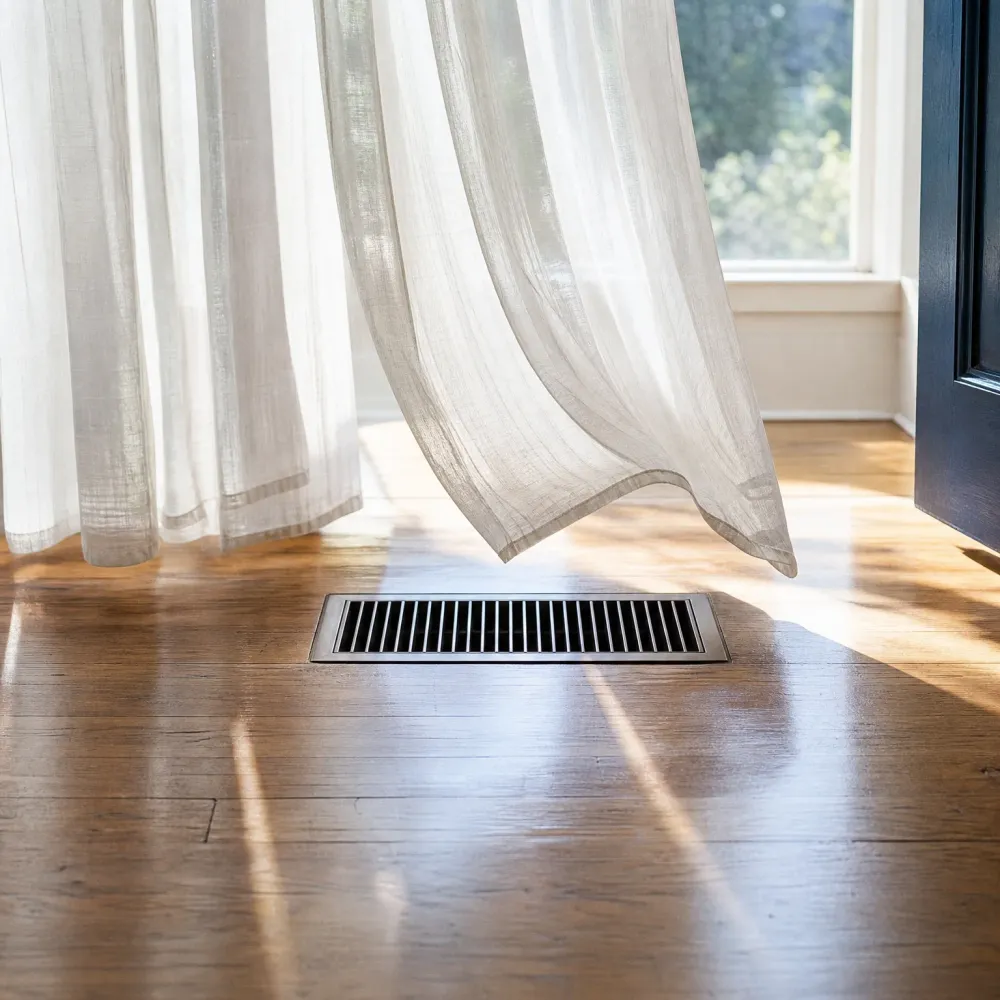
    A metal floor vent set into a hardwood floor beside sheer white curtains billowing near a sunlit window.

A heat pump here has almost no winter to fight

San Juan County barely gets a winter. The overnight low averages 36°F across December, January and February, and it only falls to freezing or below on about 35 nights a year, under a quarter of the nights that heat runs here. That is the mild, steady cold a heat pump is built for. It is not fighting deep freezes most nights, just holding a house a few degrees above where it already sits.

Heat is almost the whole job in this county. Homes run it about ten months a year, September through June, and there is no month warm enough to call for air conditioning. A furnace only heats, so it has nothing to do in the two months outside that stretch, but there is barely anything for a cooling system to do in those two months either. A heat pump's ability to cool goes largely unused here.

On cost to run, the furnace wins, though not by much. A gas furnace makes the same heat here for $1.46 per 100,000 Btu against $1.59 for a heat pump, at Washington's average fuel prices. That is with both machines built to the federal minimum and nothing added for a heat pump's backup heat on the coldest nights. The gap is real but small enough that it should not decide this alone.
A single-story blue house with white-trimmed windows, light blue shutters and front door, and a gray shingled roof, set behind a lawn and stone retaining wall with fallen orange leaves on the wet street and sidewalk under a large autumn tree.

What's already heating these homes

The furnace's edge on running cost only matters if a house burns gas, and here, almost none do. Utility gas heats 2.6% of homes in San Juan County, fewer than one in ten. A new furnace usually means working with whatever fuel line already serves the house, and for most homes here that line was never run.

Electricity is what actually heats this county. It heats 62.3% of homes, a little over three in five. For those houses a heat pump runs on the wiring that is already there. Propane heats another 15.5%, under one in five, and propane costs $26.30 per million Btu, more than double natural gas at $11.65 and still less than electricity's $34.87.

So the running-cost numbers favor a furnace, narrowly, but the fuel it needs is rare in this county. For a house already on electric heat, replacing it with another electric system is the simpler path. A furnace makes the most sense for a house that already has the gas line or propane tank to feed it, if your home came with one.

Sources: NOAA nClimDiv · NOAA 1991–2020 seasonal normals · EIA SEDS 2024 · 10 CFR 430.32 · Census ACS 2020–2024

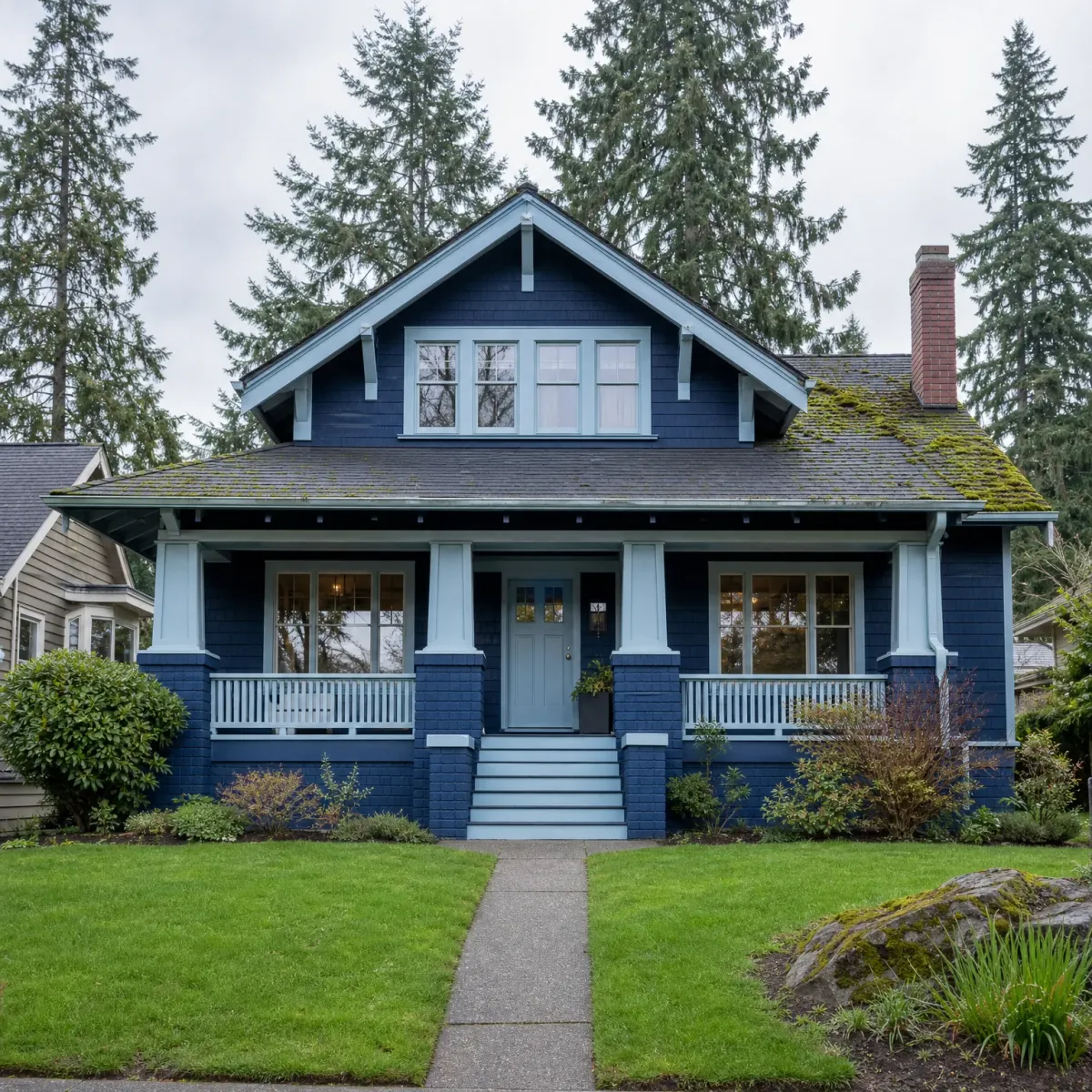
A navy blue Craftsman bungalow with light blue trim, a covered front porch with square columns, a mossy roof, and a brick chimney, fronted by a mowed lawn and concrete walkway with tall conifers behind.

Common questions about heat pumps and furnaces

  • What if my house doesn't have a gas line?

    Most homes here already fit that description. Only 2.6% of homes in San Juan County heat with utility gas, so a furnace here almost always means one burning propane or oil, not gas off a pipeline. Electricity heats 62.3% of homes here, mostly through heat pumps or baseboard, and a heat pump works the same way whether or not a gas line ever reaches the house.

  • What if my house heats with oil or propane?

    Oil and propane both cost more per unit of heat than the gas a furnace comparison usually assumes. Propane runs $26.30 per million Btu in Washington, more than double natural gas at $11.65, and a furnace burning either one doesn't change what it costs to switch to a heat pump. Propane heats 15.5% of homes here and oil heats 2.7%, so replacing either with a heat pump is a common move in this county, not an unusual one.

  • Is a heat pump cheaper to run than a furnace in San Juan County?

    A gas furnace is cheaper to run here, at $1.46 per 100,000 Btu against $1.59 for a heat pump. Both numbers assume Washington's average fuel prices and a machine built to the federal minimum, with nothing added for the backup heat a heat pump needs on its coldest nights. The gap is real but it's not large, about 8%, and it's a running-cost comparison, not an install cost one.