Ten months of work a year
Furnaces in Longview run from September through June. With that little downtime, worn parts show up as soon as the furnace has to work, which in this county is most of the year.
Takes about a minute. No obligation.
Furnaces in Longview run from September through June. With that little downtime, worn parts show up as soon as the furnace has to work, which in this county is most of the year.
An overnight low of 33°F in winter is not hard on a furnace. If yours is acting up, the cause is most likely an ordinary part wearing out, not the weather asking too much of it.
NOAA nClimDiv, 1991–2020 normals
Furnaces in Longview start the season in September.
August is the month to get a weak part looked at, before the first cold night finds it.



Electricity here runs $34.87 per million Btu, which is more than most states pay. A furnace that's limping along wastes that power every day it keeps running that way. A cracked heat exchanger, a dirty flame sensor, a blower working harder than it should, any of that pulls more power to put out the same heat. Furnaces in Longview run most of the year, so that difference shows up on bill after bill. A furnace running right costs less to run than one running wrong, and in this state the gap is bigger than most places feel it.
Washington power is not cheap, and a furnace running on a cracked part or a dirty sensor burns more of it to do the same job. Have it looked at now instead of waiting for the next bill to say so.
Find a contractor
A furnace that's starting to fail doesn't stay at the same level of broken. A flame sensor coated with a little residue still lets the furnace run, just with more short cycles, and every one of those cycles adds a little more coating. A blower motor with a worn bearing keeps turning, but it's working harder to do it, and that strain doesn't heal itself. Keep running the furnace through that and you're asking a struggling part to do its job over and over with no chance to be looked at. Some of what starts small stays small for a while, a cracked heat exchanger can run for a long time before it fails outright, but running it longer doesn't make the crack smaller. The parts that are wearing keep wearing on the same schedule whether you call now or in a month. What changes is how many hours they log in that condition.
Look at the filter first. Pull it out and hold it to the light. If you can't see through it, swap it, a clogged filter chokes airflow and makes the furnace work harder than it should. Check that the thermostat is set to heat and the batteries aren't dead. Walk around the house and make sure no vents are closed or blocked by furniture or rugs. If the furnace has a reset button, usually red, you can press it once, but if it trips again after that, stop and leave it alone.
If the furnace won't light at all, don't keep cycling the power to force it. Repeated attempts to ignite without success can mean a cracked heat exchanger or a gas valve problem, and those aren't safe to chase on your own. Any smell of gas means you shut off the furnace and call for service right away, that's not a checklist item. Same with a furnace that trips its breaker more than once or smells like something burning. Those are jobs for someone with the gauges and the training to open the cabinet safely.
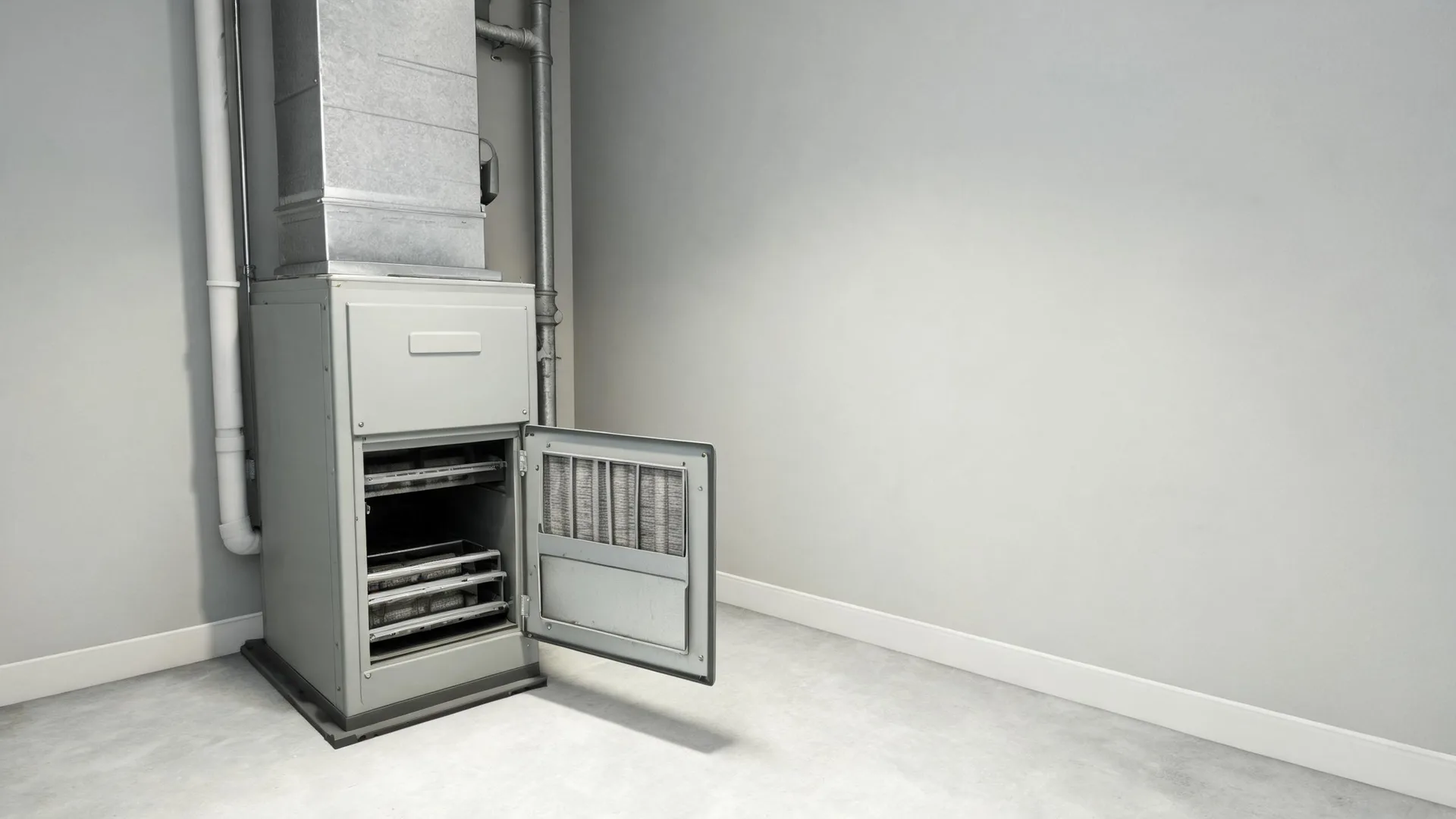
A furnace usually tells you something is wrong before it quits outright. It might take a few tries to light instead of catching right away, or the burners light with a bang instead of a steady whoosh. The blower can start running longer than it used to, or turn on and off in short bursts instead of settling into a steady cycle. Some furnaces blow air that's barely warm, which usually points to a burner or ignition problem rather than the blower. A rattle that wasn't there before, especially right when the blower kicks on, is worth paying attention to instead of turning up the volume on the TV to cover it. Any of these on their own might not mean much, but they tend to show up together as a part gets closer to failing for good.
A diagnostic visit starts with questions. A tech will ask what the furnace was doing, when it started, and whether it's happened before. That points to which parts are worth checking first. Then the panels come off and the gauges come out. Gas pressure gets checked. The flame sensor gets tested for signal strength, not just looked at. The heat exchanger gets inspected with a camera or mirror, since most of it can't be seen from outside. The blower gets checked for the amperage it's pulling, not just whether it spins. Wiring near the control board gets a look too, since a loose connection can act just like a failing part and send the wrong fix down the wrong road. By the end a tech can usually point to the one part causing the trouble instead of guessing at a list of maybes.