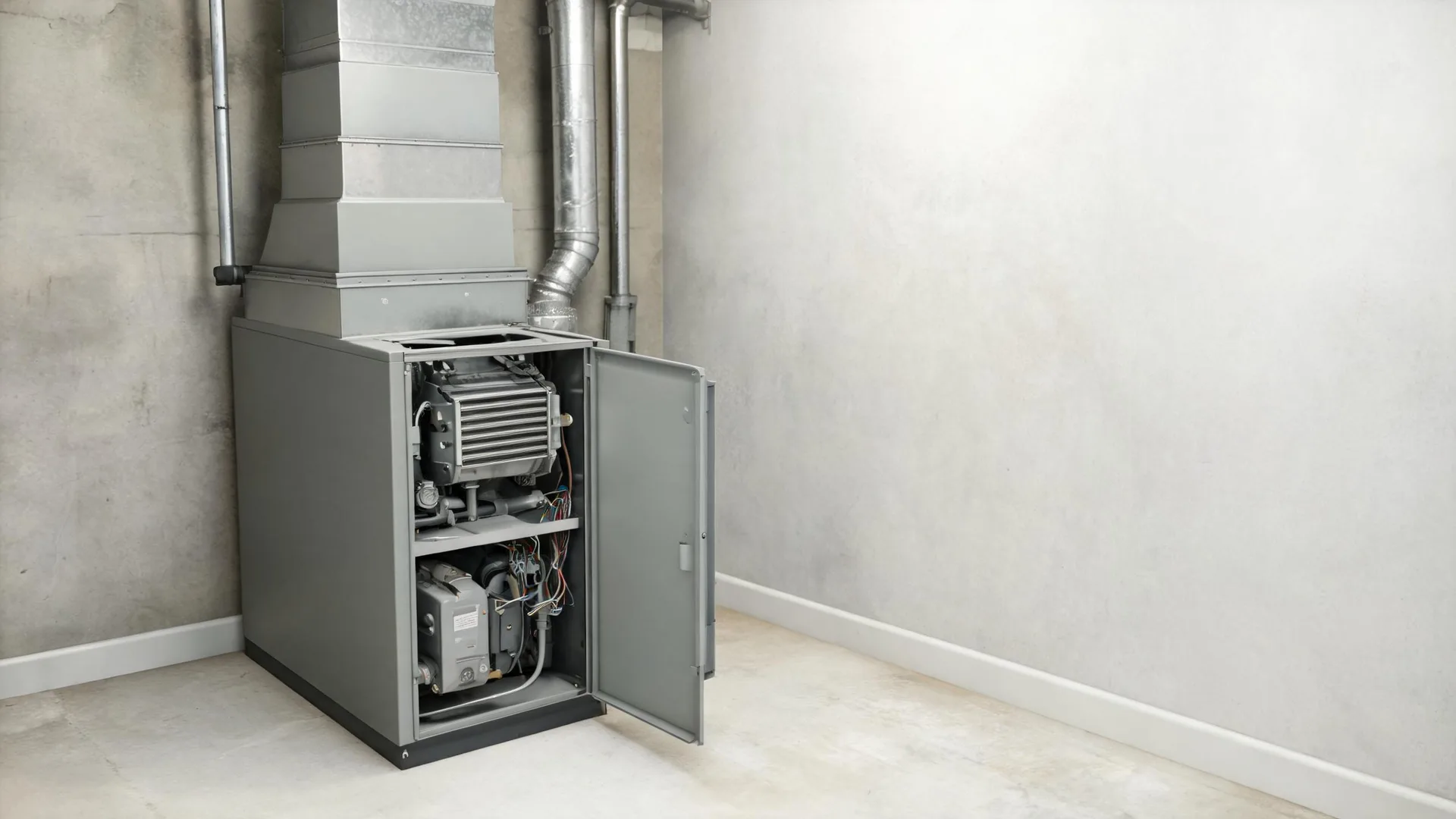
An unfinished basement featuring a grey forced-air furnace with metal ductwork, concrete block walls, exposed wooden joists, and a single hanging bare bulb.

Furnace Repair in Moses Lake, WA

Tell us about the job

Takes about a minute. No obligation.

RepairFurnace or heatingGrant County, WA
Step 1 of 2

What ZIP code is the job in?

The tech watches the furnace run before opening anything

First come questions. When the trouble started, what the furnace does or doesn't do, any smell or sound that showed up with it. Then the tech pulls the cover and watches a full cycle. The igniter glow or the pilot, the flame color, the blower starting up, the pressure switch doing its job. What gets opened up further depends on what that cycle shows.
The visit ends with a specific answer

Not a guess, a part. The tech names what failed and why, and what fixing it actually involves. A cracked igniter or a dirty flame sensor is usually a short job done that same visit. A bad control board or a cracked heat exchanger is a bigger conversation, including whether the furnace is still worth repairing.

8 months
October through May, your furnace is on duty
25°F
the average winter night it heats against
93 winter storms
in ten years, the nights a failure hurts most
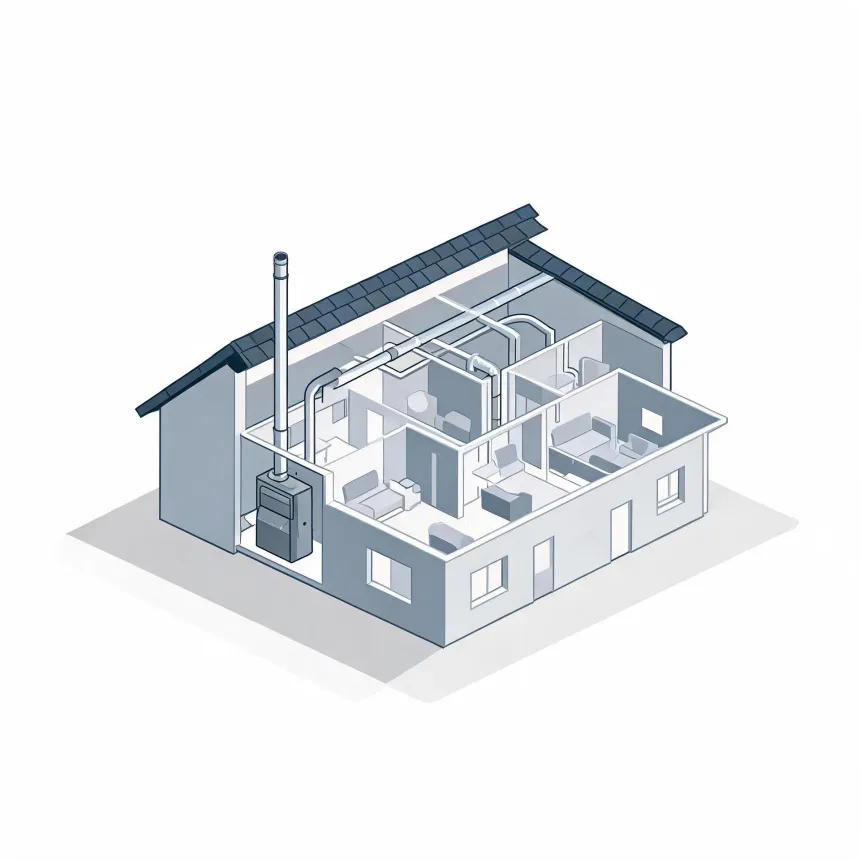
Isometric cutaway illustration of a single-story house in gray tones, showing interior rooms with furniture, ceiling ductwork, and an exterior furnace unit with a tall flue pipe.
Your furnace works hardest from November through March.

NOAA nClimDiv, 1991–2020 normals

A furnace that short cycles is shutting off on a safety switch before it should.

The switch is doing its job. Something else in the furnace is tripping it, and that's the part worth finding.

October starts eight months of heat here, and that first month finds every weak part

Heat runs October through May
Climate zone 5B
Winter nights average 25°F
Power here isn't cheapWashington electricity ran $34.87 per million Btu in 2024, and a struggling furnace burns through it faster

Moses Lake runs its furnace from October through May. That's most of the year on one machine. Overnight lows average 25°F through December, January and February, so once it's on, it's working hard, not just cycling now and then. Grant County has seen heavy snow, ice and blizzards close to a hundred times in the last decade, and that kind of weather pushes a furnace to run longer stretches with no break. A part that's a little worn gives out sooner under that kind of load. Finding out which part, and why, is what makes a repair hold.

Get it looked at early

Problems tend to show up in the first weeks of the season, when the load hits a part that was already weak.

Find a contractor
A gray residential gas furnace installed in an unfinished basement, surrounded by ductwork, a metal flue pipe, and a gas supply line.

This is a long-haul furnace. Get the part named before it quits for good.

When a furnace is running this many hours a day, a short cycle or a cold room is worth a call before it turns into no heat at all. A tech can watch it run and tell you which part gave out, and whether it's a quick fix or a bigger decision.

Check the thermostat and the power first

Make sure the thermostat is set to heat and the setting is above room temperature, not just holding. Check that the furnace switch, the one that looks like a light switch near the unit, is on, and that the breaker hasn't tripped. Some thermostats run on batteries, and a dead set will shut the whole system down quiet, with no warning on the display.

Look at the filter and the vents before anything else

Pull the filter and hold it up to a light. If you can't see through it, that's likely choking airflow and the furnace is working against itself. Walk the house and check that furniture or rugs aren't blocking supply vents or the return. A furnace starved for air can overheat, short cycle, or trip a switch meant to protect it, and clearing the vents sometimes solves it on its own.

A furnace that's struggling doesn't fail quietly. Running a cracked heat exchanger longer lets combustion gases reach places they shouldn't, which is a safety problem, not just a wear problem. A dirty flame sensor that's starting to misread the flame will keep shutting the burner off sooner each time, and forcing it to keep trying wears the ignition system faster than the original problem ever would have. A blower motor running on a failing bearing gets hotter and louder until it seizes, instead of wearing down slow and even. Even something as simple as a clogged filter, left alone, makes the heat exchanger run hotter than it should, and that heat is what eventually cracks it. The part that's struggling now is rarely the part you'll be replacing later if the furnace keeps running past the point it asked to stop.

Age is the first thing to weigh, though not by a calendar so much as by what's starting to go. A furnace that's otherwise sound and needs one part, even a costly one like a control board, is usually worth fixing. Once the heat exchanger is the part in question, the conversation changes, because that part isn't meant to be swapped on its own and its condition says something about everything else in the cabinet. Repeat visits matter too. One failure is just a failure. Several calls across more than one season, even for small things, usually means something upstream is working the rest of the furnace harder than it should, and the next part to give out is only a matter of which one goes first. A tech who's watched the unit run can tell you which case this is, and whether the next failure is likely to cost more than the furnace is worth to keep.