




An unfinished basement containing a forced-air furnace with metal ductwork, exposed wooden ceiling joists, a hanging Edison bulb, and bare concrete floors.

Furnace Repair in Port Angeles, WA

Tell us about the job

Takes about a minute. No obligation.

RepairFurnace or heatingClallam County, WA
Step 1 of 2

What ZIP code is the job in?

Port Angeles gets hit with storms more than most places do. Statewide, almost a quarter of Washington households lost power for a full day or longer in 2024. A furnace needs power to run even if it burns gas, since the igniter, blower and control board all depend on it. When the power drops in the middle of a cold snap and comes back on, that's when a weak igniter or a tripped switch tends to show itself. Hail and wind-blown debris are harder on the parts you can't see from inside the house.

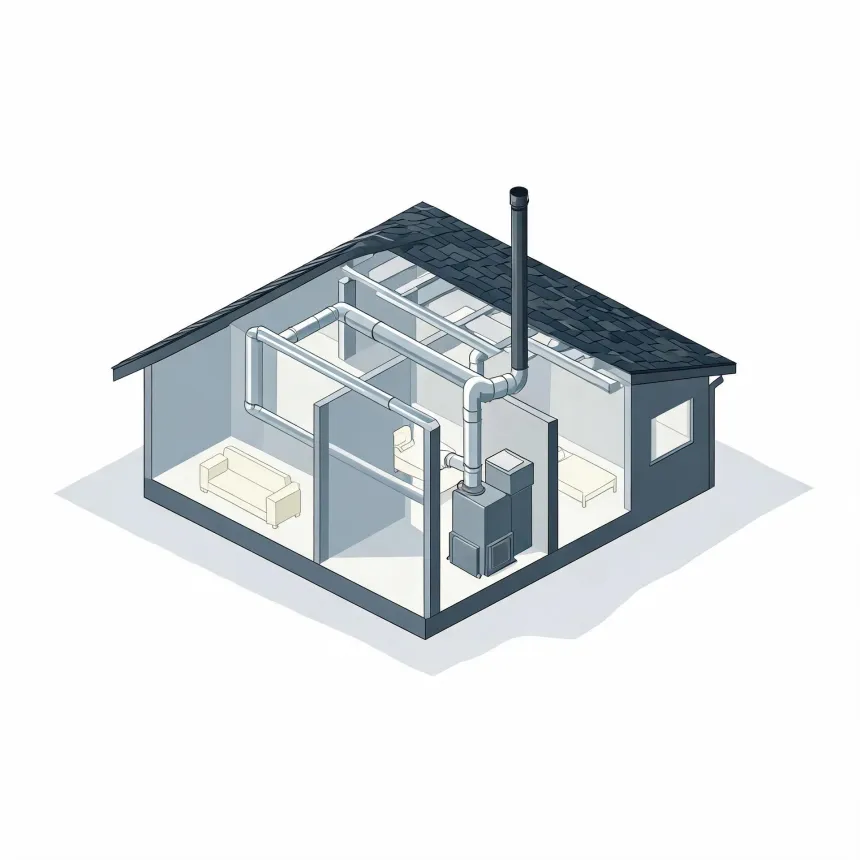
Isometric cutaway illustration of a small single-story house showing a furnace with a flue pipe through the roof and ducting running to rooms containing a sofa, chair and bed.
Your furnace works hardest from October through May.

NOAA nClimDiv, 1991–2020 normals

Furnaces here run through every month of the year.

A furnace that never gets a break off season has no off season to hide a problem either.

Half the furnaces here are younger than the house next door's roof

Half the homes here were built by 1982
Winter nights average 33°F
Climate zone 5C

Washington electricity cost $34.87 per million Btu in 2024, among the higher rates in the country. A furnace that's short-cycling or running longer than it should to hold the house at temperature is burning through that every day it goes unfixed. A cracked heat exchanger, a dirty flame sensor, a blower pulling more amps than it should, all of them show up on the bill before they show up as a breakdown. Waiting through another cold month just adds it to the next one.

Had a storm come through? Get your furnace looked at before it tells you itself

If the outdoor parts of your system took hail or wind-blown debris in the last storm, get a furnace checked even if it still runs. Damage like that doesn't always show up as a breakdown right away.

Find a contractor
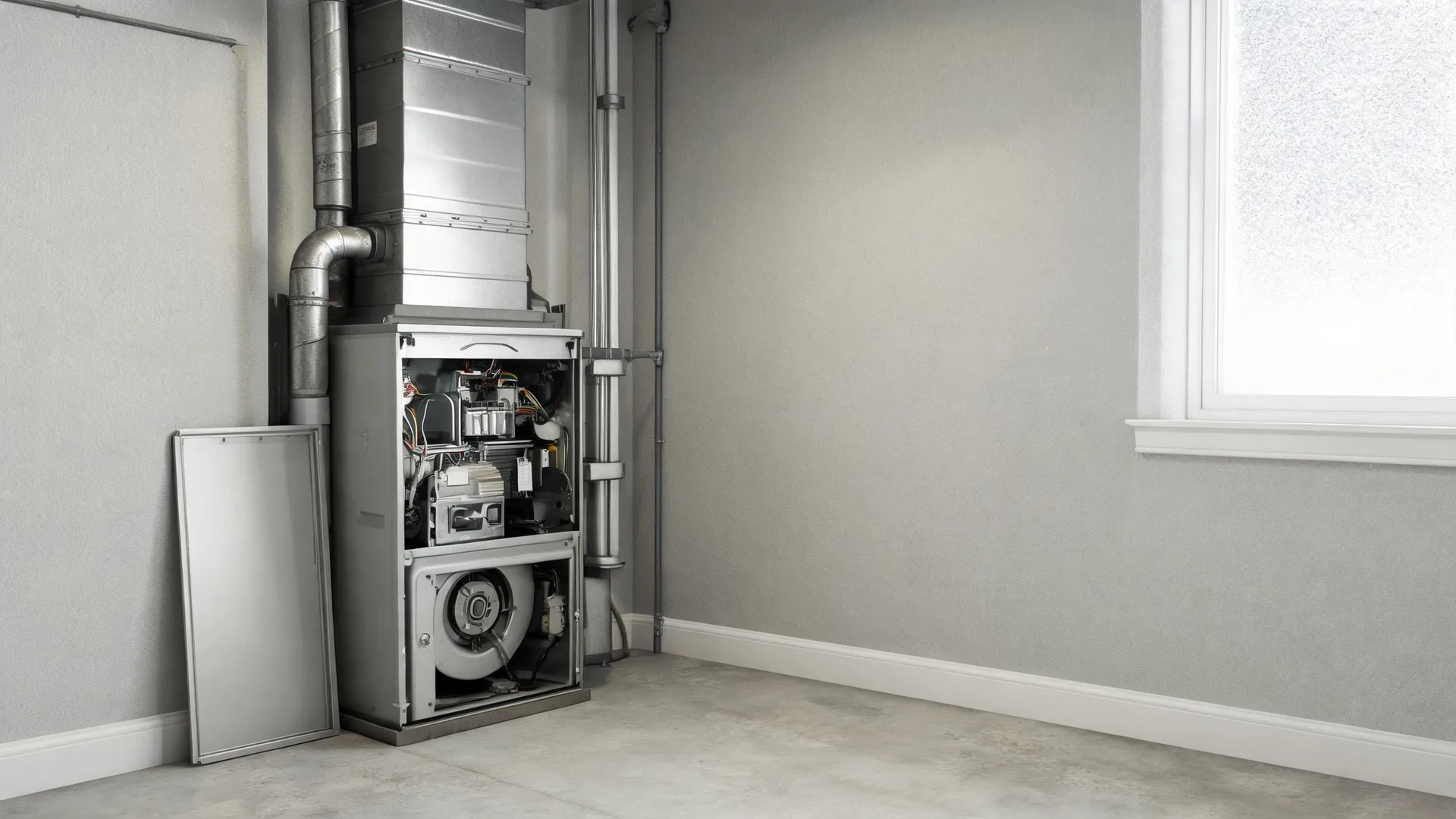
A gray residential gas furnace installed in an unfinished basement, connected to sheet-metal ductwork and PVC pipes.

A furnace tells you before it quits

A furnace rarely quits without warning you first. It cycles on and off more than it used to, each run shorter than the last. The blower gets louder, or it kicks on with a bang instead of a steady start. Air coming out of the vents feels cooler than it should, or takes longer to warm up. Some of this is wear announcing itself before it fails outright, and catching it then is what keeps a worn part from becoming a bigger repair.

Ignition problems are the most common call

A furnace that won't light usually comes down to a dirty flame sensor, a worn igniter or a clogged pilot assembly. The flame sensor collects a film over time and stops reading a flame. The system shuts itself down as a safety measure, even though nothing else is wrong.
Poor airflow wears out everything else

A dirty filter or a blocked vent makes the blower work harder than it should. That strain is what cracks a heat exchanger or burns out a blower motor over the years. Keeping air moving through the furnace the way it was built to is the simplest thing that keeps the rest of it alive.

A furnace that's struggling still has to feed warm air through the house, so it finds a way to keep running even when something inside it is wrong. A cracked heat exchanger gets wider every time it heats and cools. A flame sensor caked with film pulls the furnace into a cycle of shutting off and trying to relight, and each attempt puts more strain on the igniter. A blower working against a dirty filter pulls more amps than it was built for, and that heat has to go somewhere, usually into the motor windings. None of this shows up as a breakdown at first. It shows up as a shorter cycle, a louder blower, a smell that wasn't there before. By the time the furnace actually quits, it's often failing from wear that started weeks earlier and had nowhere to go but forward.

A diagnostic visit starts before any panel comes off. A tech will ask when the problem started, what it sounds or smells like, and whether it happens on startup or partway through a cycle. That tells them where to look first. Next comes a check of the thermostat call, the power to the unit, and the gas supply, ruling out anything simple before going further in. Then the panels come off and the tech checks the flame sensor, the igniter, the pressure switch and the blower motor, testing each one rather than guessing from the symptom alone. A cracked heat exchanger gets checked too, since that one is a safety issue and not just a comfort one. The visit ends with the tech telling you what's worn, what's failing, and what's still fine, so the repair matches what's actually wrong.