
Why winters here decide this
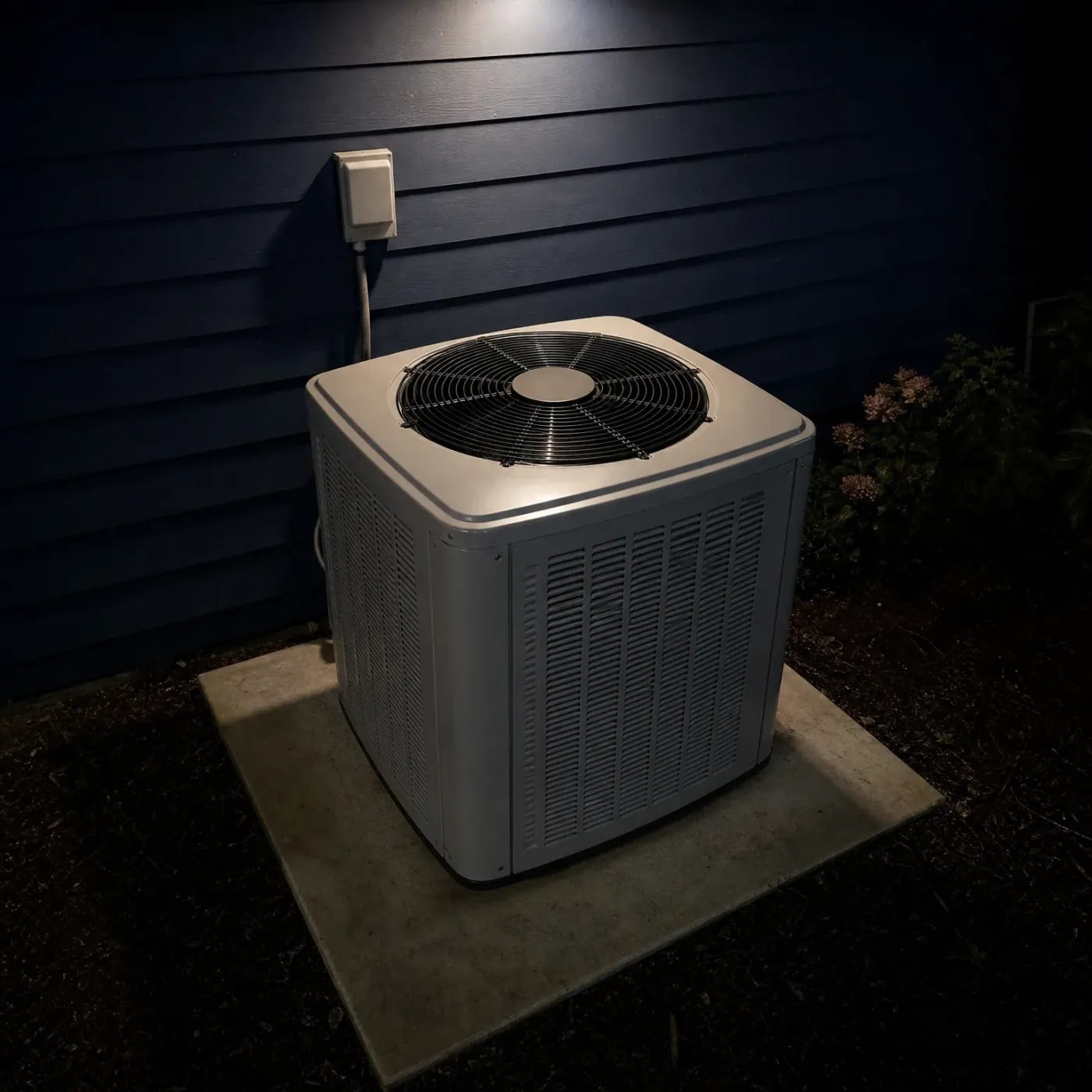
Your furnace or heat pump runs every month of the year here, and the overnight low averages 33°F in December, January and February. That number matters because of where it falls. A standard heat pump starts putting out less than its rated heat below 40°F, and below about 35°F it often needs backup heat to keep up. Clallam County's average winter night is already past both marks. So on a typical winter night here, a standard heat pump is working below its rating, not above it.
This does not mean the cold is severe. The overnight low drops to 32°F or below on about 40 nights a year, under a quarter of the nights the heat runs, and fewer than one of those nights a year sees 0°F. Nothing here is extreme. It is mild, damp cold that sits right in the range where a standard heat pump struggles most, rather than brief, sharp cold it can shrug off and recover from.
A heat pump built to meet ENERGY STAR's Cold Climate mark is tested to hold at least 70 percent of its 47°F heating capacity at 5°F. Field tests of prototype cold-climate heat pumps found backup heat covering only a small share of the output between 0°F and 35°F, and running on backup alone was rare even above 0°F. Clallam County's cold does not go nearly that deep. A heat pump built for cold climates would spend this county's whole winter well inside the range it was tested for. A standard, federal-minimum heat pump was never tested that way, and 33°F is exactly the kind of night where the difference shows up.