





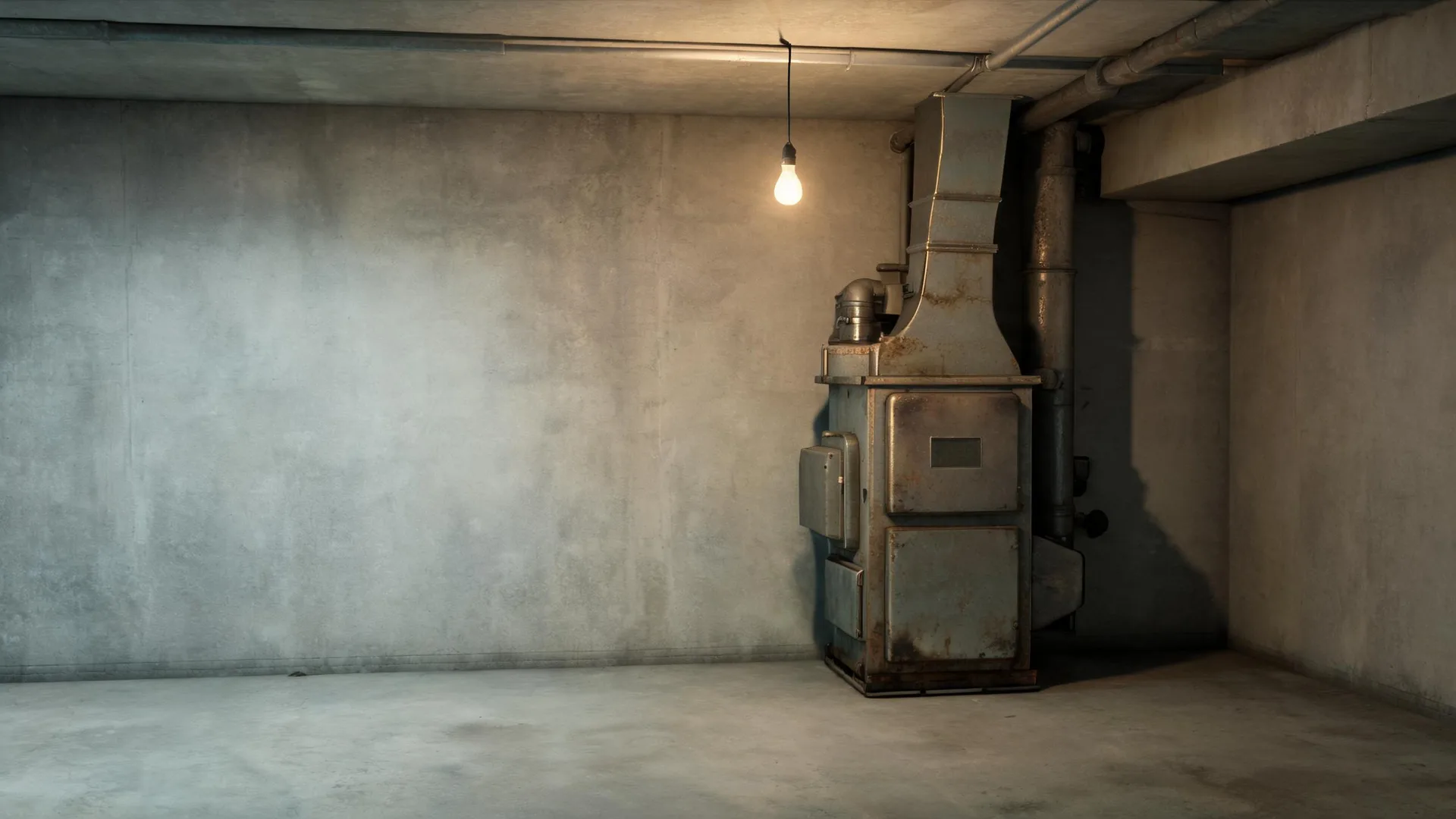
A bare concrete basement containing a gray gas furnace with metal ductwork and a vertical flue pipe, lit by a single hanging bulb.

Furnace Repair in Shelton, WA

Tell us about the job

Takes about a minute. No obligation.

RepairFurnace or heatingMason County, WA
Step 1 of 2

What ZIP code is the job in?

Furnaces in Shelton run nearly ten months of the year, September through June. August is the one month yours gets a real break. That first cold snap in September is when a weak part finally gets tested, and it's often when a furnace that seemed fine all summer stops working. If something was already marginal, the first hard call for heat is what finds it. Getting a furnace looked at before or right at the start of the season catches that problem before you're stuck without heat on a cold night.

10 months
September through June, your furnace is on duty
33°F
the average winter night it heats against
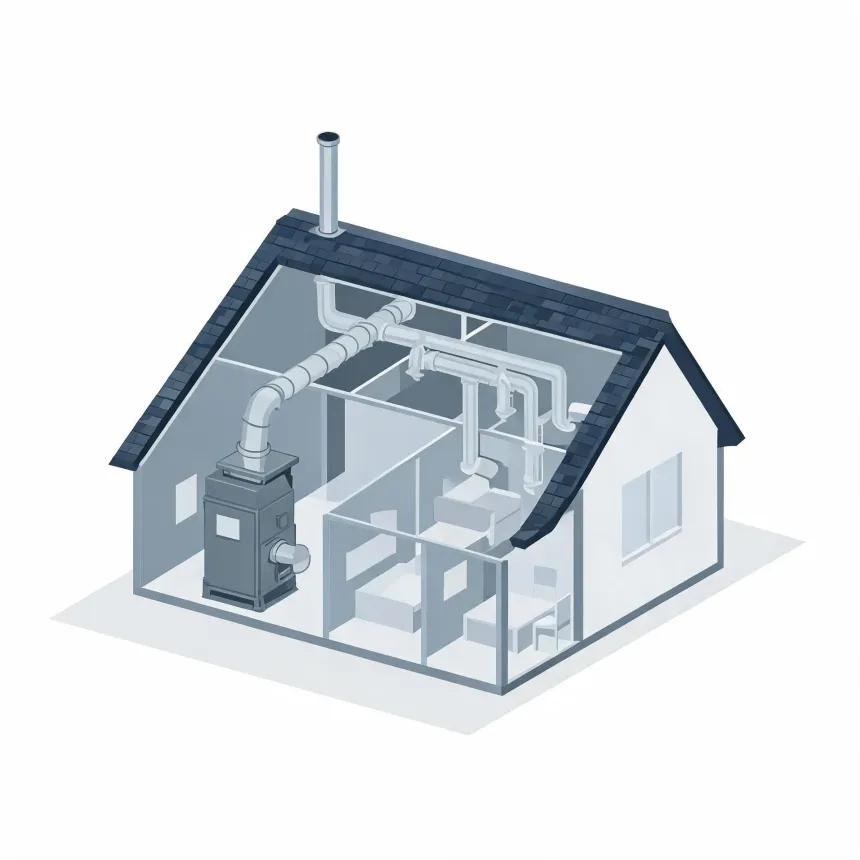
Isometric cutaway illustration of a small house showing a gray furnace unit with a flue pipe through the roof and branching ductwork running to rooms with simple furniture.
Your furnace works hardest from October through April.

NOAA nClimDiv, 1991–2020 normals

Furnaces in Shelton run almost ten months straight, September through June.

A furnace with that little downtime needs the same repair most furnaces need anywhere, just more often.

Electricity here runs $34.87 per million Btu, and this furnace runs nearly all year. A furnace that's struggling burns through that cost every month it runs.

Heat runs September through June
Winter nights average 33°F
Climate zone 4C

Most furnace failures trace back to one of a few parts. The igniter is a common one. It glows to light the gas, and that glowing wears it down a little every cycle until it cracks or stops heating up enough to catch. A flame sensor gets a thin coating of residue over time and starts telling the control board no flame is there even when there is, so the furnace shuts itself down as a safety measure. A pressure switch can fail or just get stuck from dust, and the furnace won't fire without it reading right. Capacitors in the blower motor weaken with age and eventually can't give the motor the push it needs to start. None of these mean the furnace is done. They're wear parts, doing a job that burns them out eventually, and swapping the failed one is the fix.

A furnace that's not running right costs more here every month it keeps running

Shelton's furnace runs almost all year, and electricity here isn't cheap. Whatever is making this one work harder than it should is adding to the bill now, not just when it finally quits. Getting the actual cause found and fixed stops that.

Find a contractor
A man in a gray shirt and tan work pants, seen from behind, climbs porch steps toward a dark blue front door while carrying a canvas tool bag, with a potted shrub to the right.
A gray gas furnace with attached ductwork and piping installed in an unfinished concrete basement.

What to check before you call

Check the thermostat first. Make sure it's set to heat and the number is actually above room temperature. Check the breaker for the furnace, and look for a switch near the unit that looks just like a light switch. That switch gets bumped off or mistaken for a light switch more often than you'd think. Pull the filter and hold it up to a light. If you can't see light through it, that alone can cause short cycling, weak heat, or a furnace that runs but never catches up. If you have a standing pilot, look for the small flame. Relight it if the instructions are posted on the unit. None of this means opening the cabinet or touching gas lines or wiring. If the thermostat, breaker, switch and filter all check out and it's still not heating right, that's the point to stop and let someone look at what's underneath.

A small problem can turn into a bigger one

A cracked heat exchanger starts as a faint smell or a strange sound. Keep running the furnace and that crack spreads under the heat, and what was a part swap becomes a full unit replacement. A clogged burner that keeps firing can scorch the heat exchanger it's feeding. The part that failed first is rarely the only casualty if the furnace keeps running past it.
A furnace working harder wears out faster

When airflow is restricted or a part is going bad, the blower motor and the ignition system strain to make up for it. A motor that runs hot every cycle fails sooner than one that never had to. Shutting the furnace off and calling for a look stops that wear before it spreads to parts that were still fine.

A furnace that needs attention usually says so before it quits outright. It might short cycle, kicking on and off every few minutes instead of running a full heating cycle. It might blow air that never gets properly warm, or warm air that smells faintly scorched or like gas. Listen for a bang at startup, a rattle from the blower, or a clicking that won't stop. A pilot or igniter that won't catch on the first try, or takes several attempts, is wearing out. Rooms that used to heat evenly now have one that stays cold. Any of these on their own is worth a call. Several together mean don't wait.

A diagnostic visit starts before any panel comes off. A tech asks what you've noticed, when it started, and whether it happens on a timer or at random. That changes where they look first. From there they check the thermostat call, pull the panel, and watch a full cycle start to finish. They test the flame sensor, check the pressure switch, and look at the heat exchanger for cracks or scorching. Airflow gets checked too, since a weak return or a clogged filter can mimic a bad part. Once they find the actual cause, they tell you what it is and what it takes to fix, before doing any of the work.