




A rain-slicked suburban street at night lined with illuminated craftsman bungalows and tall evergreen trees.

Furnace Repair in Stevenson, WA

Tell us about the job

Takes about a minute. No obligation.

RepairFurnace or heatingSkamania County, WA
Step 1 of 2

What ZIP code is the job in?

Furnaces in Stevenson run from September clear through June, ten months out of the year. That's most of the year spent cycling on and off, heating a house through nights that average 29 degrees in the dead of winter. A system with that little downtime doesn't get much chance to rest or recover between cycles. The igniter, the blower motor, the heat exchanger, all of it logs hours that a furnace somewhere milder never would. When something starts acting up here, it's rarely bad luck. It's usually wear that caught up with a part sooner than you'd expect, and that's worth having someone look at properly rather than patching over.

10 months
September through June, your furnace is on duty
29°F
the average winter night it heats against
6 winter storms
in ten years, the nights a failure hurts most
Isometric grayscale illustration of a cutaway house showing an interior furnace with a tall flue pipe and ductwork running to rooms under a partially lifted roof.
Your furnace works hardest from October through April.

NOAA nClimDiv, 1991–2020 normals

Electricity in Washington ran $34.87 per million Btu in 2024.

A furnace with a bad igniter or a cracked exchanger runs up that cost every month it's left alone.

September is when the weak part finally gives out

Heat runs September through June
Winter nights average 29°F
Climate zone 5B

Half the homes in Skamania County were built in 1984 or later, so there's a good chance the house came with a furnace that isn't original either. That matters here because a system logging ten months of runtime a year wears faster than the number on the install sticker suggests. A furnace from a newer build has likely seen fewer of those years than an older house would have put on it, even with the heavier use. That's worth knowing before anyone tells you the unit is too old to fix. A bad igniter or a tripped limit switch on a system that young is still just a repair.

Get it diagnosed, not just patched

Get the actual cause found before it's patched over. A part that wore out early will wear out again if the fix doesn't match what's really going on.

Find a contractor
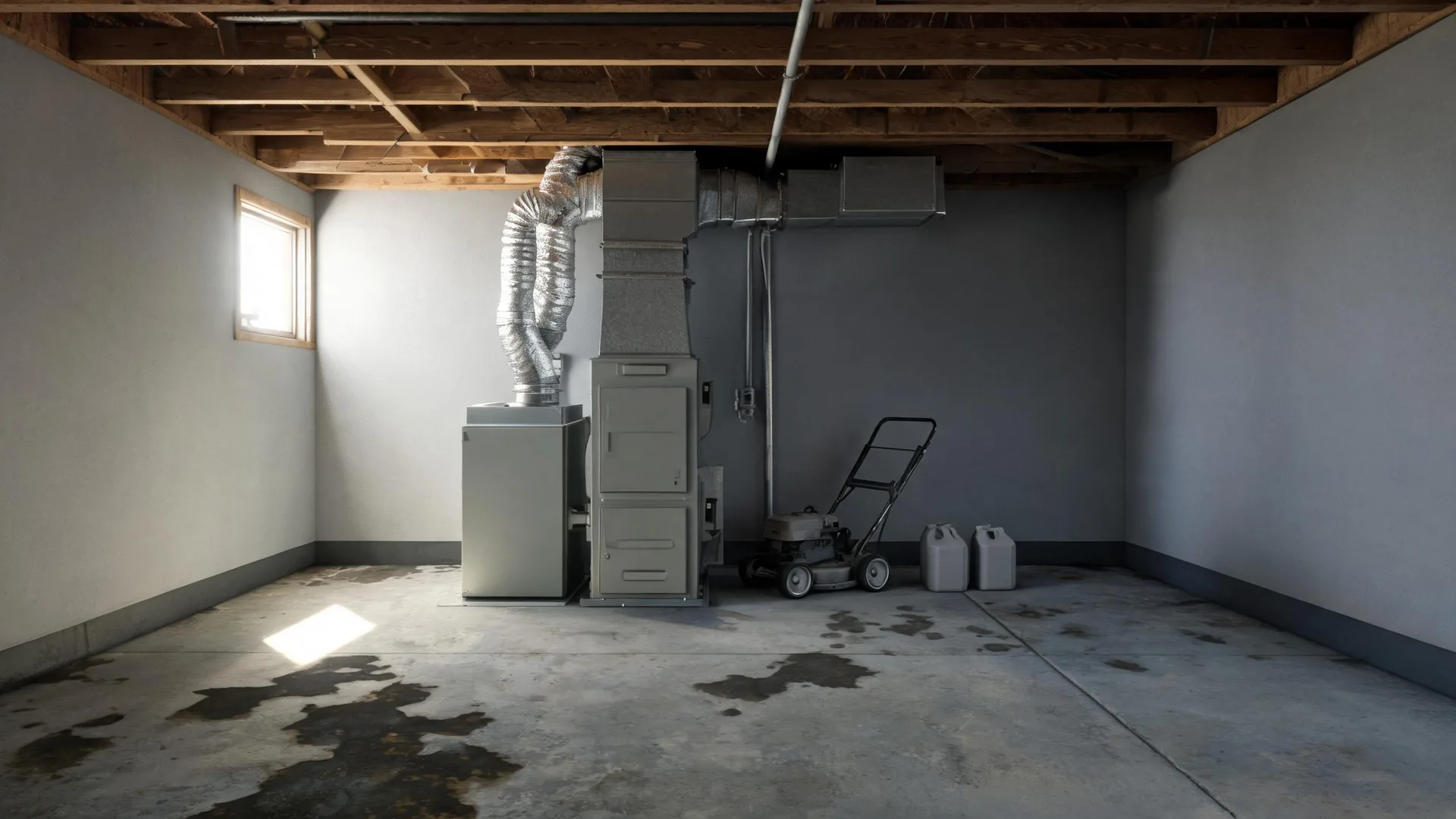
A gray gas furnace with attached ductwork and piping installed in an unfinished concrete basement.

A newer furnace just needs the one part fixed

That's worth knowing before anyone quotes you a new system. If the furnace is newer, most call-outs end with a part swapped, not a unit replaced. Ask what's actually failed before you agree to anything bigger.

The furnace won't light, or won't stay lit

A furnace that clicks and shuts down instead of lighting is usually telling you the igniter is weak or the flame sensor can't see the flame anymore. Short cycling, where it fires up and quits after a minute, points the same way. Either problem gets worse on its own and eventually leaves the furnace unable to start at all.
Sounds and smells are your warning system

A bang at startup usually means gas is building up before it catches, which points to a dirty burner or ignition that's firing late. A burning or metallic smell that doesn't fade after the first few minutes isn't normal and shouldn't be waited out. Both are worth a call before the furnace is run again.

Start with the filter. Pull it out and hold it up to a light. If you can't see light through it, swap it, a clogged filter chokes airflow and can cause the kind of short cycling that looks like a bigger problem. Next check the thermostat batteries and make sure it's set to heat, not just on. Walk over to the furnace itself and look at the switch on the side, it looks like a light switch and sits right on the unit or the doorframe near it. Flip it off and back on, that resets some control boards. Check your breaker panel too, a furnace that won't even try to start sometimes just lost power. If the furnace is gas and has a pilot light, look for the small steady flame behind the glass. None of this fixes an igniter or a cracked exchanger, but it rules out the simple stuff before anyone has to come out.

A repair is worth doing when the part that failed is just that, one part, and the rest of the furnace is doing fine. A new igniter, a new flame sensor, a new limit switch, these are routine, and swapping one doesn't say anything bad about the unit around it. Replacement starts to make sense when the heat exchanger is cracked, since that part isn't sold on its own and isn't meant to be opened up and swapped out. It also makes sense when a furnace needs a second or third repair within a short stretch, because that pattern usually means something upstream is driving the failures rather than one part simply wearing out. A tech can tell you which situation you're in by showing you the failed part itself, not just describing it.