September is the month to catch problems early
Furnaces in Walla Walla County sit unused most of the summer. September is when it's worth turning yours on and seeing how it runs, before you actually need the heat.
Takes about a minute. No obligation.
Furnaces in Walla Walla County sit unused most of the summer. September is when it's worth turning yours on and seeing how it runs, before you actually need the heat.
Once heat runs through October, a part that was already worn tends to fail under the load. That's usually what a repair call in the first weeks of the season turns out to be.
NOAA nClimDiv, 1991–2020 normals
An old furnace can still be worth repairing if the cabinet and heat exchanger are sound.
Check what's actually failed before you write off the whole unit. A new blower motor or control board costs far less than replacing the furnace.



Half the homes in Walla Walla County were built in 1973 or earlier. If your furnace came with the house, it may be old enough that a repair now is not the last thing it needs. That's not a reason to skip the repair. A furnace with a sound cabinet and heat exchanger is usually worth fixing no matter its age. It's just worth asking the contractor straight out how much life is left in the unit before you commit to a bigger repair.
Problems tend to show up in the first weeks of the season, when the load hits a part that was already weak.
Find a contractorA furnace that's been running since the house was built has put in a lot of years by now. If yours has not been replaced, ask the contractor for a straight answer on what's left in it before you pay for anything beyond the repair itself. A worn part is worth fixing. A cracked heat exchanger is not.
Metal that's already split keeps flexing every time the burner fires. Each heat cycle works the crack a little more, and it can go from a hairline split to a real hole that lets exhaust into the air you breathe.
When ignition struggles, the furnace short cycles, lighting and shutting off again and again. That stop start pattern puts more wear on the blower motor and the control board than a furnace running normally ever would.
A furnace that's starting to fail usually tells you before it quits outright. The burner takes a few tries to light, or it lights and then shuts off sooner than it should. Air comes out lukewarm instead of hot, or blows hard in some rooms and barely at all in others. You might hear a bang when the burner fires, which means gas is pooling before it catches instead of lighting right away. A persistent burning or metallic smell is worth paying attention to, not living with. So is a yellow or flickering burner flame where it used to burn steady and blue. None of these mean the furnace is done, but all of them mean something inside it is working harder than it should.
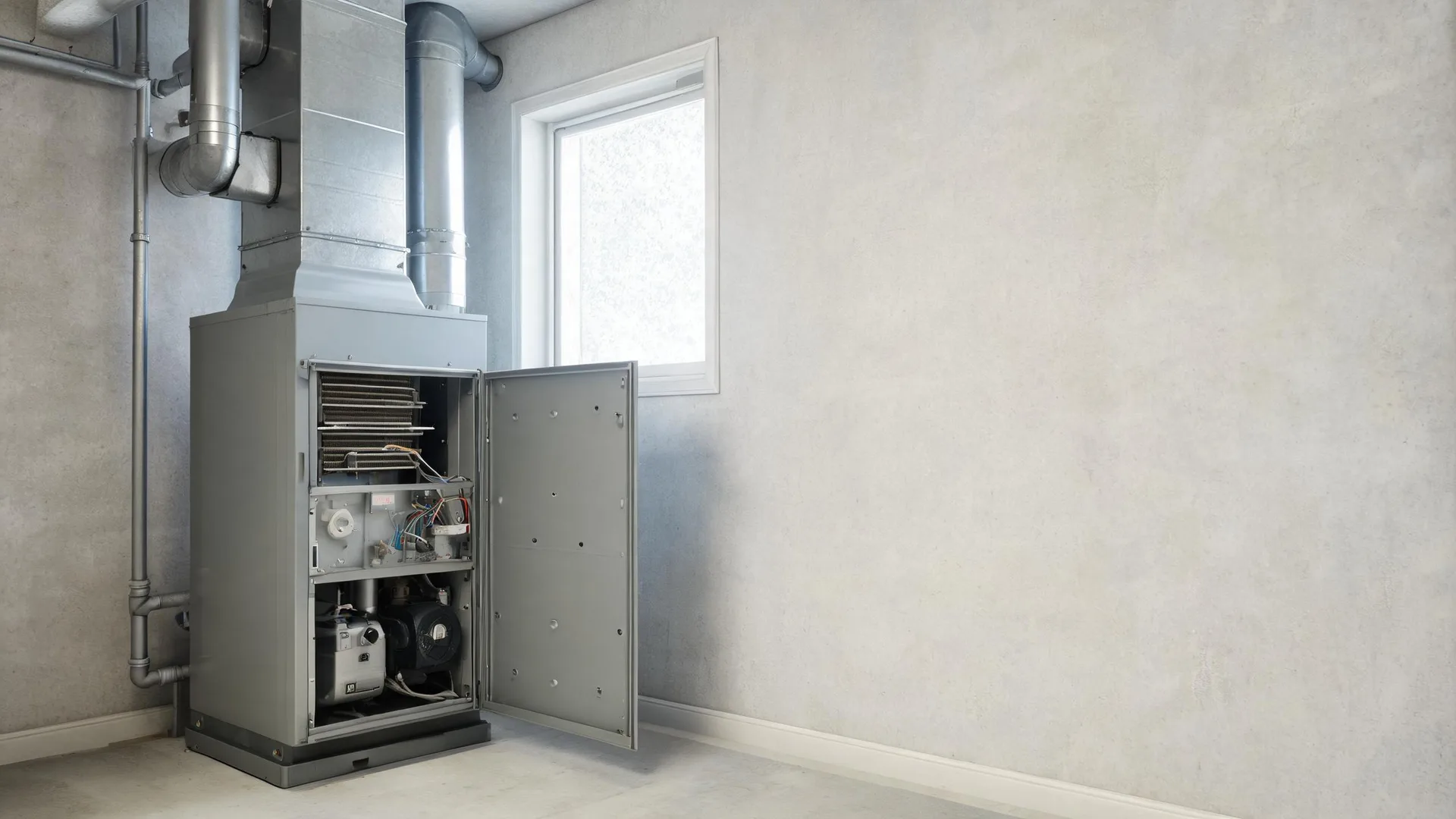
A diagnostic visit starts before any panel comes off. The contractor asks what you've noticed, when it happens, and whether anything changed right before it started. Then the cabinet comes open and they watch the furnace run through a full cycle, start to finish, because some problems only show up at ignition and others only show up once the blower kicks in. They'll check the flame itself, test the igniter or flame sensor for a proper reading, and look at the heat exchanger for cracks or rust-through. A static pressure reading across the filter and ductwork tells them if the system is breathing the way it should. By the end they can usually tell you exactly which part failed, why, and whether it's the only thing wrong.