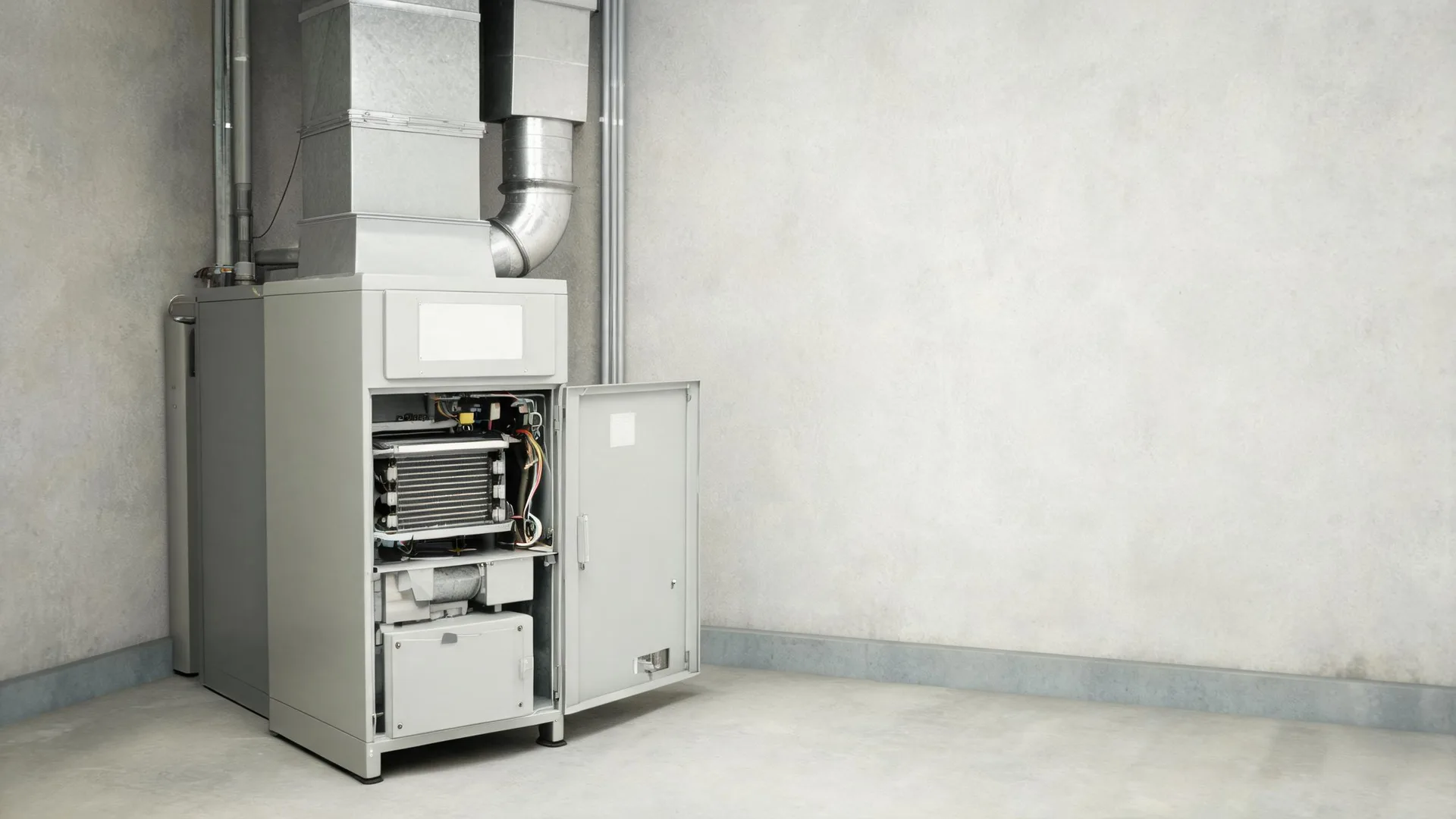
An unfinished basement featuring concrete block walls, exposed floor joists, and a metal forced-air furnace with ductwork near a central pillar.

Furnace Repair in Yakima, WA

Tell us about the job

Takes about a minute. No obligation.

RepairFurnace or heatingYakima County, WA
Step 1 of 2

What ZIP code is the job in?

A cracked heat exchanger gets worse every cycle

Once metal fatigue starts a crack in the heat exchanger, the heating and cooling of each cycle flexes it wider. A furnace that might have run for years with an early repair ends up needing a full replacement if it keeps firing on a cracked exchanger.
A dirty flame sensor leads to a dead furnace, not a small one

A flame sensor coated with residue starts by making the furnace shut off shortly after ignition. Left alone, the control board reads this as a repeated failure and locks the furnace out entirely, turning a quick cleaning job into a no-heat call.

10 months
September through June, your furnace is on duty
24°F
the average winter night it heats against
62 winter storms
in ten years, the nights a failure hurts most
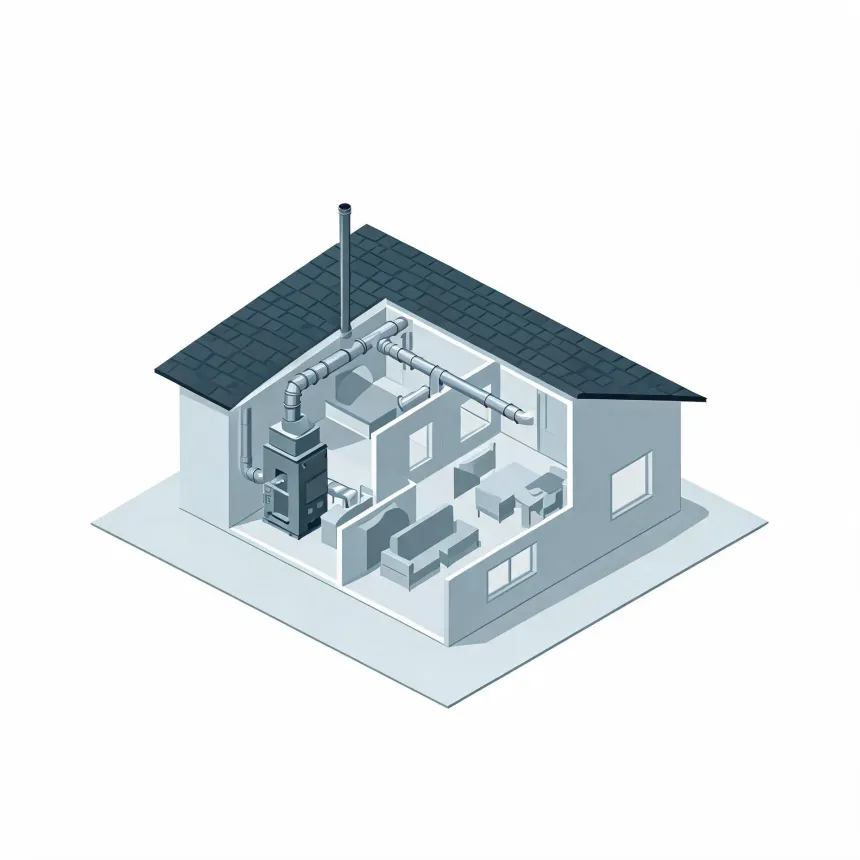
Isometric cutaway illustration of a single-story house with a dark shingled roof, showing a furnace with a flue pipe and branching ductwork running through interior rooms furnished with a sofa, table and chairs.
Your furnace works hardest from October through April.

NOAA nClimDiv, 1991–2020 normals

Half the homes in Yakima County were built in 1977 or earlier.

A furnace that old has usually been swapped out at least once, so the age of the house will not tell you the age of the furnace.

Winter here is routine, not rough, and most furnace trouble is too

84 severe weather events from 2015 to 2024
23% of homes statewide lost power a day or more in 2024
21 damaging wind events from 2015 to 2024

Furnaces in Yakima County start work in September and keep running clear through June. That first month is when a weak part gets found out. A furnace that sat quiet all summer gets asked for a full cycle on the first cold night, and anything marginal, a worn igniter or a failing inducer motor, tends to fail right then rather than easing into the season. Getting a furnace looked at in August, before it starts up, catches that part while it is still a repair instead of a no-heat call once the cold sets in.

A furnace running wrong costs more here every month it keeps running that way

Electricity in Washington ran $34.87 per million Btu in 2024. A furnace that's short-cycling, struggling to ignite, or running longer than it should is burning through that at a worse rate than a healthy one would. Fixing it now stops the bleeding instead of paying for it all winter.

Find a contractor
A gas furnace with attached ductwork, gas piping, and condensate lines installed in a concrete-block basement.

What to check before you call

Before anyone comes out, there are a few things worth checking yourself. Start with the thermostat. Make sure it's set to heat, not just fan, and that the setting is actually above room temperature. Check the filter next. A filter packed with dust chokes off airflow, and that alone can cause the furnace to overheat and shut itself down. If it's gray and stiff instead of white and soft, swap it. Look at the switch on the furnace itself, usually near the door panel, and make sure it's flipped to on. That same door panel has to be seated right or a safety switch won't let the furnace fire at all. If the furnace vents through a pipe to the outside, walk out and check that the vent and intake aren't blocked by anything. Last, check the breaker. A furnace that won't do anything at all, no sound, no light on the control board, is as likely to be electrical as anything else.

The furnace short-cycles or won't stay lit

A furnace that fires up and quits after a minute, then tries again, is usually tripping a safety switch before it should. A flame sensor, a limit switch or a pressure switch reading wrong will all cause this. It is not something to wait out. Each failed start stresses the igniter and the control board a little more.

The sound or smell has changed

A bang, rattle or screech on startup points to something specific. A loose blower wheel, a failing bearing, a worn belt on the older units that still have one. A burning smell that lingers past the first few minutes of the season isn't dust burning off anymore. A scorched or metallic smell means a part is overheating, and that's worth shutting the furnace off rather than running it another night.

Most furnace failures come down to a handful of parts, and they fail in different ways. The igniter heats up and cools down every cycle it runs, and that constant stress is what eventually cracks it. A flame sensor fails differently. It doesn't wear out from age so much as get coated with residue until it can't sense the flame anymore. Blower motors usually go because the bearings wear down, the motor starts running hot, and it either seizes or trips its own safety switch. Pressure switches and limit switches rarely fail on their own. Most of the time they're reacting correctly to something else, a blocked vent or a dirty filter choking off airflow, and replacing the switch without fixing that just brings the same problem back.

A repair makes sense when the part that failed is the only thing wrong with the furnace. A new igniter, a cleaned flame sensor, a replaced blower bearing, all of that brings it back to where it was before. Replacement starts to make more sense once the heat exchanger cracks, because that's not a part wearing out, it's the furnace's core structure failing, and no repair fixes that. The other thing worth weighing is how often the furnace has been breaking down. One failure is usually its own event. A furnace that keeps needing different repairs for different parts is telling you something about its overall condition, not just about whatever quit most recently.