





A lit craftsman-style house at night on a wet residential street lined with evergreen trees.

Heat Pump Installation in Aberdeen, WA

Tell us about the job

Takes about a minute. No obligation.

New system or replacementHeat PumpGrays Harbor County, WA
Step 1 of 2

What ZIP code is the job in?

Electricity heats 74.5% of homes in Grays Harbor County, more than any other fuel. Gas never got much of a foothold here, with utility gas at 9.5% and propane at 4.4%. A heat pump fits that pattern because it runs on electricity like the system it's likely replacing. There's no gas line to deal with, no venting to plan around. For most homes here, that makes a heat pump a straightforward swap rather than a change in how the house gets its power.

10 months
September through June, your system heats
34°F
the average winter night it heats against
71°F
the average summer afternoon it cools against
Isometric line illustration of a cutaway house showing interior rooms with furniture, ceiling ductwork connected to an indoor air handler, and an outdoor condenser unit linked by refrigerant lines.

Winter nights here average 34°F, not the teens or single digits a heat pump deals with in colder states.

A heat pump sized for Aberdeen's mild winters doesn't need to be the top-tier model to keep this house warm.

Ten months of heat a year means barely two months to get this done early

Heat runs September through June
Winter nights average 34°F
Power costs 11.9 cents a kWh statewide
Power that costs less than most placesWashington homes paid 11.90 cents per kilowatthour in 2024

Half the homes in Grays Harbor County were built in 1974 or earlier. That matters less for sizing than you'd think. A load calculation looks at square footage, windows, and insulation, not the year on the permit. An old house with updated windows can need less heat pump than a newer one with a lot of glass facing north. The contractor doing your installation should run that calculation for your house specifically, not guess from its age.

Any new system here has to clear 14.3 SEER2 and 7.5 HSPF2

Grays Harbor County falls under zone 4C, and heat pumps installed here have to meet federal minimums of 14.3 SEER2 for cooling and 7.5 HSPF2 for heating. That narrows the field before you even start comparing brands. A federal tax credit is available on top of that, which helps offset the cost of a unit that meets the standard.

Find a contractor
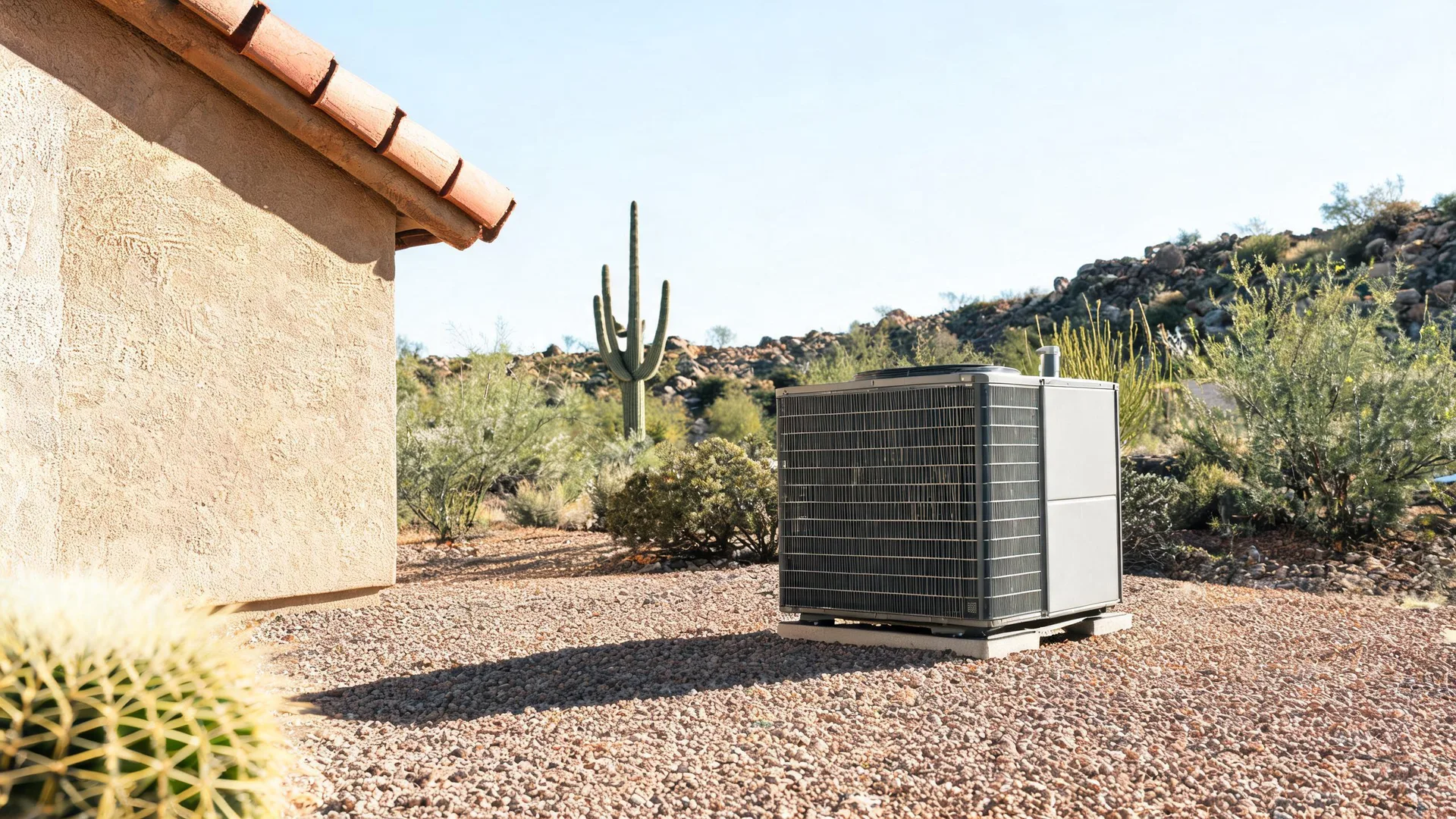
A gray heat pump outdoor unit mounted on a concrete pad next to the stone-accented exterior wall of a house.

What comes out isn't just hauled to the curb

Whatever's getting pulled out still has a charge of refrigerant in it, and that has to be recovered into a tank rather than vented. That's not optional, it's how the refrigerant gets handled. If the old system is a straight air conditioner paired with a furnace, the furnace usually stays and only the outdoor unit and coil come out, since the heat pump is taking over the job the AC used to do. If it's an older heat pump, both the outdoor and indoor sides come out together. Old line sets usually don't get reused. The sizing and the oil inside them matches the old compressor, not the new one, so new lines get run and brazed in rather than tying fresh equipment onto old copper.

The size of the job, not just the unit

An installer has to run refrigerant lines, set the outdoor unit on a pad or bracket, and tie into the existing ductwork or run new line sets for a ductless setup. If the ducts are undersized or leaky, bringing them into shape is part of the job, not an extra. A straightforward swap onto existing lines and ducts is a different job from one that needs new wiring or a dedicated circuit for the air handler.
What the equipment itself is priced on

Heat pumps are priced by capacity and by how the compressor is built. A single-stage compressor costs less than one that modulates and holds a steady temperature instead of cycling on and off. A variable-speed air handler and a smart thermostat add to the price of the equipment itself, separate from whatever the installation takes to put it in.

A heat pump that's too big cools the house fast and shuts off before it pulls the moisture out of the air. The place ends up feeling clammy even at the right temperature. One that's too small just runs constantly and still can't keep up on the coldest nights. Sizing isn't a guess based on square footage alone. A contractor works out the heat loss and heat gain for the house itself, looking at how much warmth escapes through the walls and windows, how much sun comes in, how well it's sealed up. That calculation points to a capacity, and the equipment gets picked to match it. Bigger isn't safer here. The unit that's sized right runs longer, steadier cycles and actually holds the temperature instead of chasing it.

Install day starts with the old equipment coming out. That part goes quick. The slower part is everything that makes the new system work with the house it's going into. The outdoor unit gets set level on a pad or bracket, the line set gets run and brazed to the indoor coil, and the whole thing gets pressure tested before any refrigerant goes in. That test matters because a line set that leaks slowly won't show up as a problem right away. It just shows up as a system that never quite keeps up. Once it holds pressure, the lines get evacuated to pull out moisture and air, then charged to the weight the manufacturer calls for, not just until the gauges look close. The thermostat gets set up to match how a heat pump actually runs, since wiring it like a furnace leads to short cycling. None of that shows once the covers go back on, but it's what decides whether the system runs steady for years or struggles the whole time it's in the house.