Most homes here run on electricity
Electricity heats 60.1% of homes in Kitsap County, more than gas, propane and oil combined. A heat pump fits that setup without any change to the electrical service most houses already have.
Takes about a minute. No obligation.
Electricity heats 60.1% of homes in Kitsap County, more than gas, propane and oil combined. A heat pump fits that setup without any change to the electrical service most houses already have.
Adding a heat pump where electric heat already runs usually means working with wiring and a panel built for it. The contractor doing your install can tell you what your home has and what it needs.
Washington electricity ran 11.90 cents a kilowatt-hour in 2024, below the national average.
A heat pump still cuts your bill next to electric resistance heat, but it takes longer to pay back the more efficient models here.




Kitsap County sits in climate zone 5C, a cool marine zone where heating carries more of the load than cooling does. Any split-system heat pump installed here, if manufactured from 2023 on, has to meet 14.3 SEER2 for cooling and 7.5 HSPF2 for heating at minimum. Those are federal floors, not local extras, so they narrow the field before you even start comparing brands. A contractor quoting a system below those numbers isn't quoting something you can legally install. The federal tax credit for heat pumps is available on top of whatever the unit itself meets, worth checking against the system you're considering.
At 11.90 cents a kilowatt-hour, chasing the highest SEER2 number on the shelf won't pay you back fast here. Picking the unit that's sized right and installed right will do more for you than the rating on the box. That's a conversation for the contractor who'll be standing in your house.
Find a contractorThirty-five degrees is cold enough for a heat pump to work, but it's not extreme cold. The system runs steadily through the winter without having to lean on backup heat strips the way it would somewhere colder. That's less wear, and it means the mid-range unit holds up fine here. Don't pay for the top of the lineup to handle a workload this one won't see.
If the ducts already in place are sized wrong or leak at the joints, the installer has to fix or replace sections before the new system can work the way it's rated to. That labor can outweigh the cost difference between one heat pump and the next size up.
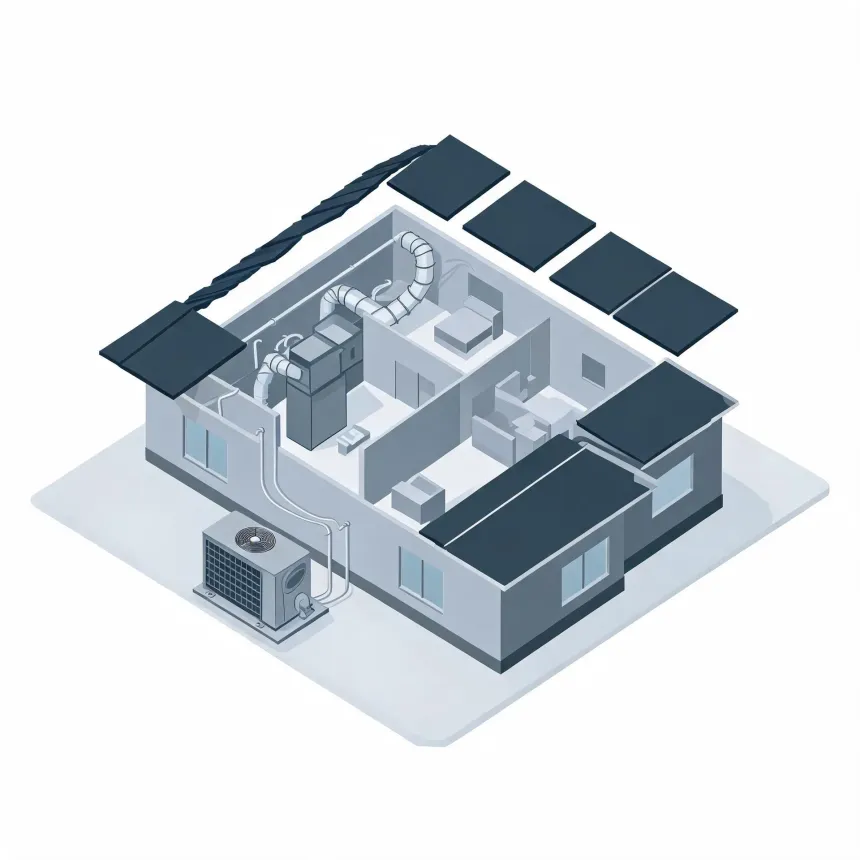
Setting the outdoor unit close to the indoor coil keeps the refrigerant line short and the job straightforward. Running lines through finished walls or across a longer distance means more cutting, more patching, and more time on site before the system ever turns on.
The rating on the label is tested in a lab, not your attic or your basement. SEER2 covers cooling, HSPF2 covers heating, and both assume a certain airflow and a certain duct setup that your house may or may not have. A unit rated higher can perform worse than a unit rated lower if the ducts are leaky or the refrigerant charge is off, because the number on the sticker only holds if everything around the equipment is done right. Systems with the same rating can also behave differently at low output, which matters more for heating than cooling since a heat pump spends long stretches running at partial capacity rather than full blast. The rating tells you what the equipment is capable of under ideal conditions. Whether you see anything close to that depends on the installation, not the sticker.
Installation day starts with the old equipment coming out, then the ground or pad work for the new outdoor unit before anything gets connected. The line set running between the outdoor unit and the indoor coil gets replaced or reused depending on its condition, and that connection has to be leak tested before the system gets charged with refrigerant. If the indoor coil or air handler is changing too, that part of the job touches your ductwork directly, which is where delays usually show up. Electrical work happens alongside the mechanical work, since the new unit may draw differently than what was there before. Once everything is connected, the contractor runs the system through its paces, checking refrigerant charge, airflow, and the switchover to backup heat before calling the job done. A straightforward swap with no duct or electrical surprises wraps in a day. Anything more involved can run longer, and a contractor who tells you that upfront is doing the job right.