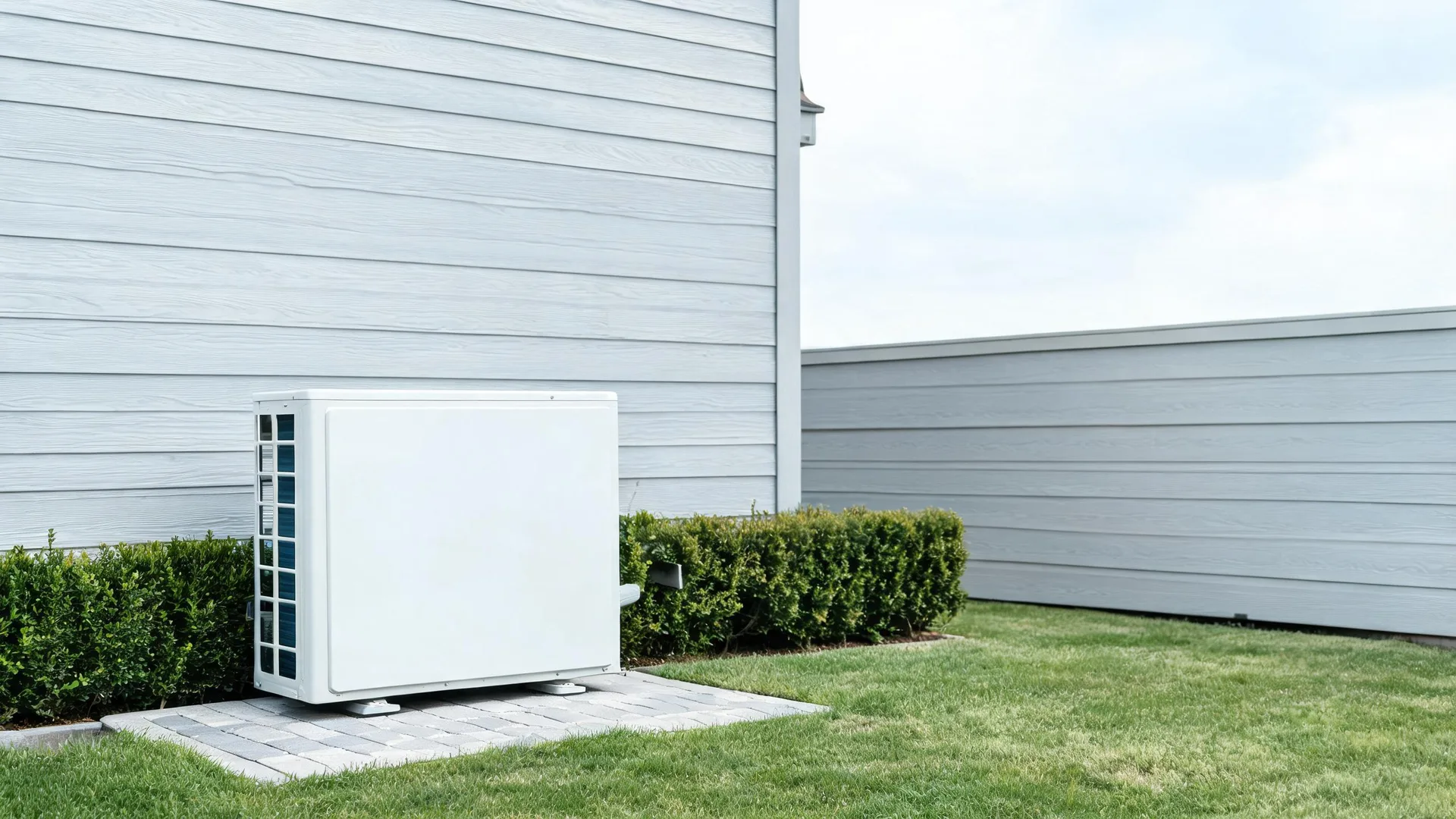
Storms here cut power for days, not hours
Nearly a quarter of Washington households lost power for 24 hours or more in 2024. A heat pump needs electricity to run, so an outage of that length means no heat and no cooling until the lines are back up.
Takes about a minute. No obligation.
Nearly a quarter of Washington households lost power for 24 hours or more in 2024. A heat pump needs electricity to run, so an outage of that length means no heat and no cooling until the lines are back up.
Where the outdoor unit goes matters when wind and falling branches are part of the picture. Worth asking about a setup that can pair with backup power, so a long outage does not leave the house cold.

Washington power ran 11.9 cents a kilowatt-hour in 2024, cheaper than most states.
A high-efficiency heat pump still costs more up front, and cheap power here means it takes longer to earn that back.



Electricity heats 75.8% of occupied homes in Lewis County. Utility gas reaches 8.4%, and bottled or LP gas another 2.9%. That split points straight at the heat pump as the natural fit here, since it runs on the same fuel the house already has coming in. No gas line to plan around, no propane tank to place. The work is sizing the new system to the house and running the electrical to match, not converting the home to a different fuel it was never built for.
Half the homes here were built in 1980 or earlier, half in 1980 or later. That spread does not point to a bigger or pricier system, just one sized to the house it's going into. Mobile homes make up 14.7% of the housing here, and that's a sizing question worth raising too, since the right heat pump for a mobile home is not the same unit you'd put in a site-built house. Get the sizing and the electrical right and the rest of the install is standard.
Find a contractor
Heat here runs from September through June, about ten months of the year. August is what's left to get a new system in before the first cold morning asks something of it. An install with no deadline behind it goes slower and gets checked more carefully than one done after the first hard freeze, when the old system is already down and the house is cold.
A contractor works out the right size by measuring the house. Square footage, window area, insulation, ceiling height, how much outside wall it has, all of it feeds the calculation. The number that comes out is what the new heat pump should match. Matching the old unit instead just carries over whatever mistake was built in the first time.
A heat pump that's too big satisfies the thermostat fast and shuts off before it finishes a full cycle. Short cycling like that means the house never gets steady, even heat. The system also wears out its moving parts faster from starting and stopping so often. A unit sized correctly runs longer, steadier stretches and holds the temperature even.
The old system doesn't get left behind. If it's a furnace, it gets disconnected and hauled out, along with the line set and pad for the old outdoor unit if there was one. If there's an old gas furnace involved, the gas line gets capped off properly, not just shut at the valve. Refrigerant in an old AC or heat pump has to be recovered before the unit is cut loose, not vented, that's a legal requirement, not a courtesy. Once the new heat pump is set and running, the contractor should walk the house and confirm the old equipment is fully disconnected, nothing left live or pressurized behind a wall.
Install day starts outside with the pad and the outdoor unit, getting it set level and connected back to the house with a line set and an electrical whip. That line set gets brazed, then pressure tested before anyone pulls a vacuum on it, because a leak found after the charge goes in means undoing work that was already called finished. The indoor coil usually ties into the ductwork that's already there, so someone is in the attic or crawlspace making that connection while the outdoor work goes on. Once both ends are tied in and tight, the system gets evacuated and charged with refrigerant, and only then switched on. The last part of the day is running it through heat and cooling both, checking the air at the vents and making sure the thermostat is actually talking to the system.