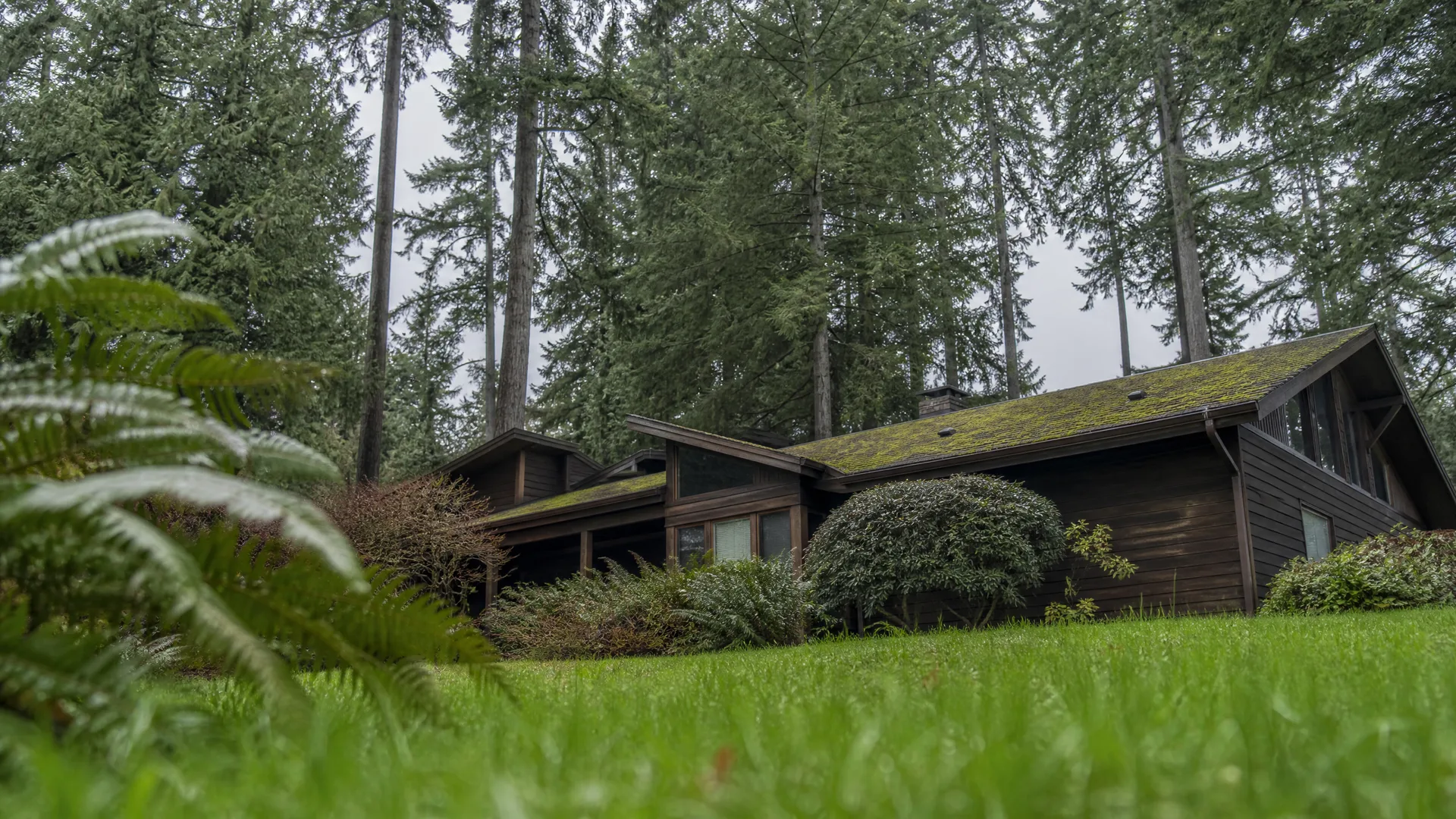






A single-story dark wood-sided house with a moss-covered roof, surrounded by shrubs and tall conifer trees, seen from a sloping lawn with ferns in the foreground.

Heat Pump Installation in Friday Harbor, WA

Tell us about the job

Takes about a minute. No obligation.

New system or replacementHeat PumpSan Juan County, WA
Step 1 of 2

What ZIP code is the job in?

Most homes in San Juan County run on electricity already, at 62.3 percent. Gas barely registers here, at 2.6 percent, with another 15.5 percent on bottled or LP gas and a small share on fuel oil. That matters for a heat pump, because it's an electric system going into a house already wired for electric heat. There's no fuel line to deal with and no venting for combustion. The work is about getting the right equipment sized for your home and the ductwork or wiring it connects to, not switching the house over to a different kind of energy.

10 months
September through June, your system heats
36°F
the average winter night it heats against
71°F
the average summer afternoon it cools against
Isometric cutaway illustration of a single-story house showing interior ductwork, an air handler and rooms, with an outdoor condenser unit connected by refrigerant lines on a plain white background.

A heat pump sized by square footage alone is guessing, not sizing.

The right size comes from a load calculation that weighs your walls, windows and ceiling height against each other.

Power here is cheap, so the payoff is reliability, not the electric bill

Power costs 11.9 cents a kWh statewide
49 damaging wind events from 2015 to 2024
5 winter storms from 2015 to 2024

San Juan County falls under zone 5C, a cool, marine climate where heating is the bigger job over the course of a year. Any split-system heat pump installed here now has to meet 14.3 SEER2 for cooling and 7.5 HSPF2 for heating, the federal minimum for units built from 2023 on. That floor narrows what a contractor can legally install, so the equipment quoted to you should already clear it. A system built to that standard is also eligible for the federal tax credit on heat pump installations, worth looking into once you have a quote in hand.

Install before September, while there's no rush to it

Heat here runs ten months a year, September through June. August is the one month it doesn't. Get a heat pump installed then and it's ready before the first cold morning, with nobody rushing the sizing or the setup to get you heat that night.

Find a contractor
A man in a cap, dark jacket and tan work pants carries a canvas tool bag up concrete steps toward a dark blue front door, with a potted shrub beside the entry.
A gray heat pump outdoor unit mounted on a concrete pad next to a residential house with lap siding and stone accents.

An easy climate to heat in

Nothing here puts a heat pump under much strain. Winter storms hit the county only 5 times in the last ten years, and the overnight low across December, January and February averages 36°F. That's a mild number for a heating system to work against. A heat pump spends most winter nights well above its coldest rated point, not down at the edge of what it can do. That means a well-installed mid-range unit holds up fine here. You don't need the highest efficiency tier to get years out of it. What matters more is correct sizing and a clean install, since problems that show up down the road tend to trace back to that, not to how hard the compressor had to work.

The equipment is one line item among several

The outdoor unit and air handler are only part of the quote. Running new line sets, adding or modifying ductwork, upgrading an electrical circuit to the right amperage, and setting a condensate line all take labor and material on top of the box itself. A straightforward swap onto existing infrastructure costs less than a system going somewhere new.
What's already there decides a lot of it

If the ductwork is sized right and in good shape, a contractor connects to it. If it's leaky, undersized, or was built for a furnace that pushed air differently than a heat pump does, sealing or modifying it adds to the job. The same goes for the electrical panel. An older panel without spare capacity needs work before the heat pump goes in at all.

If the old system is a furnace, it usually stays put. A heat pump handles the cold down to a point, and a lot of installs keep the furnace as backup for the few nights that fall below it, wired to switch over on its own. If it's a straight electric furnace or baseboard heat with no cooling, that equipment typically comes out, since the heat pump covers the same job plus air conditioning it didn't have before. Whatever gets removed has to be disconnected properly. The electrical feed gets capped, old refrigerant lines get pulled if there's no reuse, and any abandoned ductwork gets closed off rather than left open to leak air. A contractor hauls the old unit away as part of the job, so none of it gets left behind for the homeowner to deal with.

When you're comparing quotes, ask what refrigerant each system uses, since that affects what a contractor can service it with years from now and whether parts are easy to get. Ask about the compressor type. A variable-speed compressor adjusts its output to match what the house needs at that moment, where a single-stage unit runs at full blast or sits off. Ask whether the warranty follows the equipment or the installing contractor, since some manufacturer coverage is void if someone else touches the system later. And ask to see the load calculation itself, not just the number it produced. A contractor who can walk you through how they got to that size did the work. One who can't is quoting a guess.