






Illuminated craftsman-style houses on a rain-slicked residential street at night, backed by tall evergreen trees.

Heat Pump Installation in Goldendale, WA

Tell us about the job

Takes about a minute. No obligation.

New system or replacementHeat PumpKlickitat County, WA
Step 1 of 2

What ZIP code is the job in?

Most homes in Klickitat County heat with electricity, at 57 percent. Gas heats 18.8 percent, and propane and oil make up the rest. A heat pump fits that electric majority, since it runs on the same fuel the house is already wired for. Swapping in a heat pump instead of a gas furnace usually means the contractor is working with power already sized for heating, rather than adding a gas line or venting where none existed.

10 months
September through June, your system heats
2 months
July through August, it cools
27°F
the average winter night it heats against
80°F
the average summer afternoon it cools against
Isometric grayscale illustration of a cutaway house showing interior rooms, ductwork and an indoor air handler connected by lines to an outdoor condenser unit on the ground outside.
Your system heats September through June and cools July through August.

NOAA nClimDiv, 1991–2020 normals

Winter storms hit Klickitat County 56 times between 2015 and 2024.

A heat pump sized right for this house will heat it through a normal winter here without added backup.

Electricity here runs 11.9 cents a kWh, so payback on the top-tier model is slow

Power costs 11.9 cents a kWh statewide
38 damaging wind events from 2015 to 2024
6 hail events from 2015 to 2024
Install before AugustHeat season starts in September. August is when this goes in without a rush.

At 11.9 cents a kWh, the extra cost of the highest-efficiency heat pump on the market takes a long time to earn back here. That changes what's worth paying for. A mid-tier model sized correctly for the house will keep the power bill reasonable without the premium price tag. Where it's worth spending more is on the installation itself, the refrigerant charge, the airflow through the ducts, the sizing for this specific house. A right-sized mid-efficiency system installed well will outperform a top-tier unit that's oversized or poorly set up.

A mid-range heat pump holds up fine here

Goldendale winters average 27°F overnight, cold enough to run a heat pump steadily, but not the extreme swings that push a system hard. A unit sized right for this house will do the job without needing a top-tier model to keep up.

Find a contractor
A man in a dark cap, navy long-sleeve shirt and brown work pants, seen from behind, carries a worn canvas tool bag up steps toward a navy front door on a gray clapboard porch with a potted shrub.
A gray air-source heat pump mounted on a concrete pad next to a house with gray vinyl siding, surrounded by gravel and flanked by green shrubs and white hydrangea flowers.

A steady workload, not a hard one

A heat pump here runs steady through the winter rather than cycling hard against sudden swings. That steadier pattern means less wear on the compressor over the years the system is in the house. When something does go wrong, a straightforward repair is usually enough to put it right. Pick a mid-range unit sized for the house and let the installation be where the care goes.

Ask for the load calculation, not a guess

A heat pump sized off the square footage alone can end up wrong in either direction. A contractor should walk the house, check the windows and insulation, and run an actual load calculation before naming a unit size. If someone quotes a system before doing that, ask why.
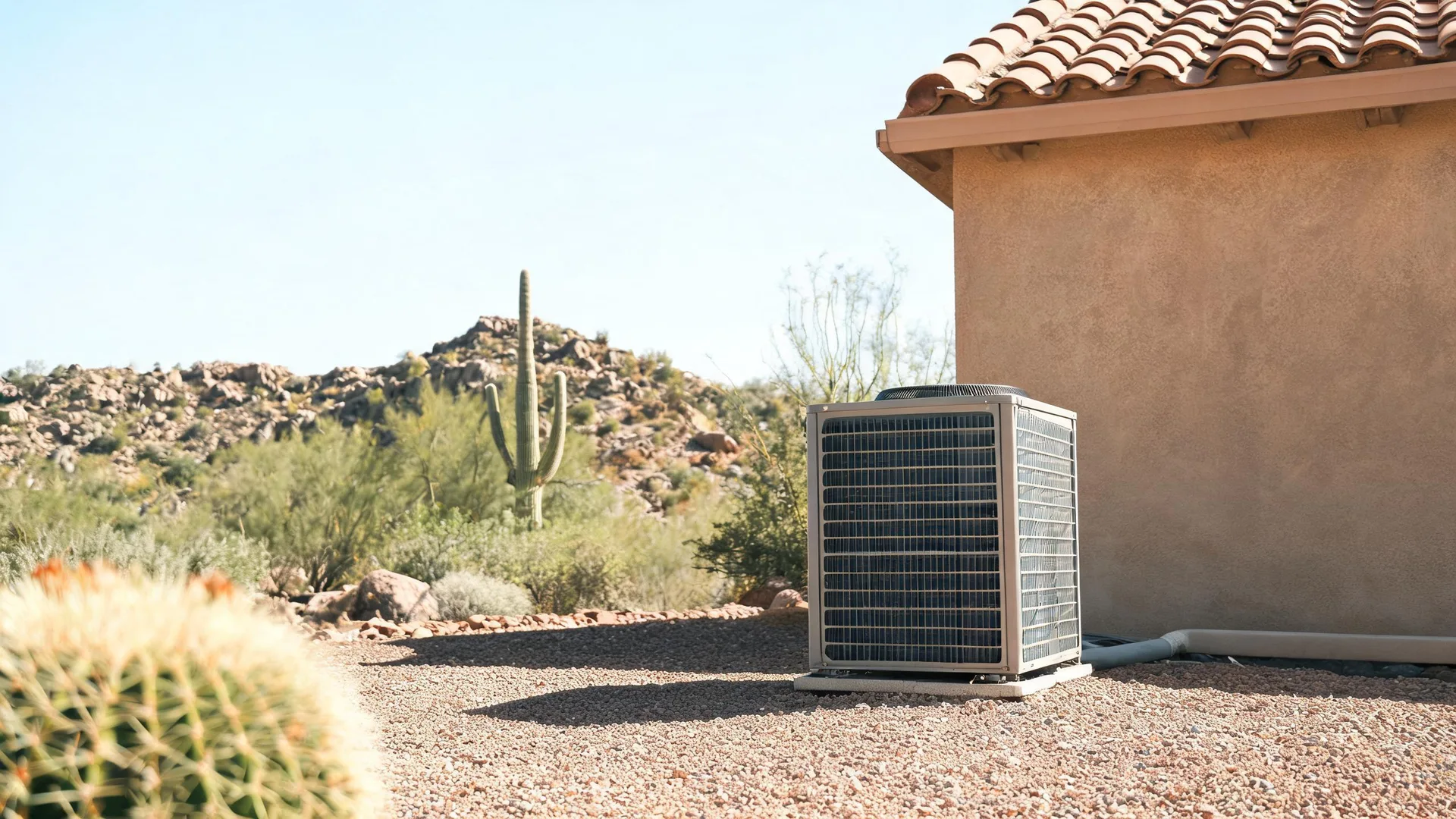
Ask what happens at the coldest point

Every heat pump has a temperature where its heating output starts to drop off, and a point below that where backup heat has to carry the load. Ask what that crossover point is for the specific unit being quoted, and what kicks in below it. That answer tells you more about whether the system fits the house than the efficiency rating does.

The price of a heat pump install comes down to what the contractor has to do to the house, not just the unit on the truck. Running new line sets, adding or resizing ductwork, and upgrading the electrical panel all take time and material beyond the equipment itself. A house with ductwork already in decent shape costs less to convert than one where the ducts are undersized or leaky, because duct work has to happen before the heat pump can do its job right. Labor accounts for a real share of the bill too, since a correct refrigerant charge and a proper airflow setup take more time than just bolting on a box. The condenser pad, the disconnect, the thermostat wiring, all of it adds up, but none of it matters if the unit isn't sized to the house first. A bigger price tag on the equipment doesn't buy a better outcome if the installation underneath it is rushed.

The outdoor unit goes in on a pad set level and clear of the wall, with room around it so air can move through the coil. Inside, the line set gets connected to the air handler or coil, and the refrigerant charge gets checked against what the manufacturer specifies for that length of line, not just topped off and left. Electrical work usually means a dedicated circuit and a disconnect mounted next to the outdoor unit. If ductwork needs sealing or resizing, that happens before the equipment goes in, since a heat pump can only move the air the ducts let it move. Once it's hooked up, a contractor runs the system through a full cycle, heating and cooling, checking airflow at the registers and the temperature split across the coil, before touching the thermostat at all. The thermostat setup comes last, once the contractor knows the system is actually doing its job.